
Stating the pleading obvious (big dairy and the ETS review)

A commenter or two has started to hit back at the NZ Emissions Trading Scheme Review 2011 and the New Zealand Herald editorial Farmers must share burden on emissions for saying that there should be no further delay of the 2015 date when agricultural emissions will enter the New Zealand Emissions Trading Scheme (NZ ETS). The Herald editorial had the temerity to comment on the government’s “extraordinary generosity to farmers” in changing the “modest impositions” of the NZ ETS on agriculture so that it “will become truly timorous”.

David Anderson, who is described as a former editor of Rural News and a communications consultant in “teh” (sic) agribusiness sector, has just had an opinion piece in the Herald (27 September) arguing for further delaying agriculture’s entry into the NZ ETS.

Continue reading “Stating the pleading obvious (big dairy and the ETS review)”
We have the technology, but…

One word sums up the attitude of engineers towards climate change: frustration.” That’s Colin Brown, director of engineering at the UK’s Institution of Mechanical Engineers, writing in the latest New Scientist. Political inertia combines with continuing noise from the vocal minority of sceptics to mean that we are doing woefully little to prevent the worsening of global warming.

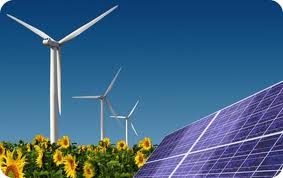
It’s not as if we are lacking the technology:

Engineers know there is so much more that we could do. While the world’s politicians have been locked in predominantly fruitless talks, engineers have been developing the technologies we need to bring down emissions and help create a more stable future.

Wind, wave and solar power, zero-emissions transport, low-carbon buildings and energy-efficiency technologies have all been shown feasible. To be rolled out on a global scale, they are just waiting for the political will. Various models, such as the European Climate Foundation’s Roadmap 2050, show that implementing these existing technologies would bring about an 85 per cent drop in carbon emissions by 2050. The idea that we need silver-bullet technologies to be developed before the green technology revolution can happen is a myth. The revolution is waiting to begin.

The barriers to a low-carbon society are not technological but political and financial, he declares. That’s why at a London conference this month 11 national engineering institutions representing 1.2 million engineers from across the globe decided on a joint call for action to be presented at December’s COP17 climate change conference in Durban, South Africa.

Continue reading “We have the technology, but…”

Get a grip!

[youtube]SI5ulKiZAoE[/youtube]

David Mitchell (on his soapbox) tells it like it is, with an appropriate degree of emphasis. By way of being a place-holder to mark my return to NZ and climate blogging. Currently overwhelmed by the amount of catching up of all sorts that I have to do, but something like normal service will resume shortly. Meanwhile, my heartfelt thanks to Bryan for doing so much work in my absence, to Simon for his thoughtful contributions, and to Glenn and John for keeping the Climate Show ticking over so well. Thanks all!

[Hat tip: Dan at Irregular Climate.]

Support for greening the economy

It’s been interesting to see some NZ Herald articles bearing on the Green Party’s “100,000 green jobs” policy which I discussed a few days ago.

John Armstrong shared my view that the Green’s jobs policy deserved more than the “ritualistic slagging” offered by John Key and Steven Joyce.

National might still claim the Greens do not understand economics. The purpose of yesterday’s policy release was to demonstrate the Greens do understand – and are deadly serious about remedying the economy’s structural weaknesses, though not in a fashion National would favour. Continue reading “Support for greening the economy”

Not good news

My reading this morning didn’t incline me to optimism. I don’t actually need reminding, but in case I did two items underlined that we remain very much on course for a 3 to 4 degree global temperature rise by the end of the century.  A new report published by the Joint Research Centre of the European Commission and PBL Netherlands Environmental Assessment Agency describes a 45 percent increase in global CO2 emissions between 1990 and 2010, reaching an all-time annual high in 2010. Continue reading “Not good news”