The Climate Show #19: A Tale of Two Poles

[youtube]gIWTCd9cwts[/youtube]

La Nina makes a return, Times Atlas Gate (or something like that), the Petermann Glacier break-up, Pirates cause global warming (not really) and Ice adventurer Rob Swan pushes for Green Growth. Gareth is still away but John and Glenn will play, The Climate Show is back for another spin.

Watch The Climate Show on our Youtube channel, subscribe to the podcast via iTunes, listen to us via Stitcher on your smartphone or listen direct/download from the link below the fold…

Follow The Climate Show at The Climate Show web site, and on Facebook and Twitter.

Continue reading “The Climate Show #19: A Tale of Two Poles”

Dismissing Greens’ plan out of hand not justified

The immediate government reaction to the Greens’ announcement yesterday of their “100,000 green jobs” policy was to defend the economic status quo.

The Prime Minister John Key:

“They are talking about putting enormous taxes on New Zealand that would send a lot of businesses bankrupt.”

Transport Minister Steven Joyce weighed in:

“What they’re proposing is to add lots of costs, add lots of taxes and then magically, supposedly, all the jobs would be in place.”

The Greens’ proposals for raising the money to fund the green jobs initiative include a capital gains tax, a temporary levy on income to fund the rebuilding of Christchurch, a cutback on new motorway spending, and a toughening up of the generous subsidies offered by the ETS in its current form. I presume these are the costs and taxes that so alarm Key and Joyce. Continue reading “Dismissing Greens’ plan out of hand not justified”

The Minister’s chart-junk part 2

Simon Johnson guest posts on the mysterious number of emissions units allocated to emitters and a junk chart in the Ministry for the Environment’s Report on the New Zealand Emissions Trading Scheme.

You may recall that I previously commented on the low quality of data presentation in the Ministry for the Environment report Report on the New Zealand Emissions Trading Scheme.

My specific concern was that the report did not clearly indicate how many emission units (NZUs) had been allocated for free to emitters. Or, to say that again but slightly differently, what was the level of subsidy emitters had received in units?

Why am I going on about subsidies? Well, the point of an emissions trading scheme (ETS) is to place a carbon price on emissions. Free allocation of units to emitters unequivocally lessens the incentive effect of the carbon price. So free allocation is unequivocally a subsidy.  The Australian Productivity Commission research report on carbon prices Carbon Emission Policies in Key Economies notes that all emissions policies involve either subsidies or prices and that imposing one measure implicitly imposes the other as well  (page 49). Continue reading “The Minister’s chart-junk part 2”

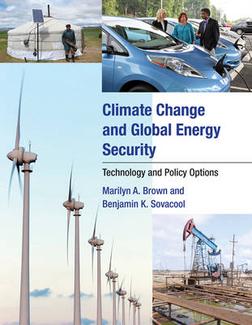
Climate Change and Global Energy Security

Academics Marilyn Brown and Benjamin Sovacool, who have impressive credentials in the field of energy policy, are co-authors of the recently published Climate Change and Global Energy Security: Technology and Policy Options, a substantial and detailed study of a very wide range of technologies covering both the promise of those options and the obstacles to their effective employment.

I was deeply depressed by the time I got to page 64 of the book. That was where the tale of five challenges ended. The authors had enlarged the energy and climate change scope of the book somewhat to identify five challenges threatening the prosperity of future generations: electricity, transportation, forestry and agriculture, waste and water, climate change. They do it thoroughly, and it seemed well-nigh impossible that the growing population of the world could possibly cope with these problem areas. But the reader is counselled in the final paragraph of the chapter not to give up in despair, as the issues can be broken down into more manageable challenges to which technology and policy solutions are readily available. Continue reading “Climate Change and Global Energy Security”

The NZ ETS Review 2011: Clear signals for business as usual

Simon Johnson’s guest post offers prompt comment on the ETS review.

Minister for Climate Change Issues Nick Smith has finally released the delayed report of the NZ Emissions Trading Scheme Review 2011. The 98-page report is titled Doing New Zealand’s Fair Share, The Emissions Trading Scheme Review 2011.

The review panel chaired by former Rogernome David Caygill gave their report to Smith on 30 June 2011. Two and half months later and one week into the Rugby World Cup, Smith has let the report out into the world.

From the title of his press release, Slowing of ETS recommended by Review Panel, I think Smith is pretty happy with the report. It also uses some of Smith’s favourite phrases; such as “Doing our fair share” and balancing emissions reductions with costs to businesses.

“The Panel acknowledges there needs to be an appropriate balance between  managing these short-term costs and providing a clear long-term direction. Given the current international uncertainty and the challenging state of the economy, this means there should be measures in place which ensure the increase in the costs of the ETS occurs at an appropriate pace.” Continue reading “The NZ ETS Review 2011: Clear signals for business as usual”