
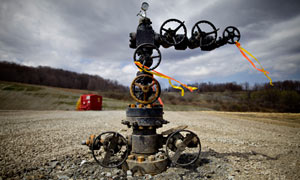
 My heart sinks when I read enthusiastic acclamations of natural gas as a substitute for coal. It releases less CO2 on combustion, we’re told. It is a good bridge to the time when renewable energy is sufficiently developed to take over. And latterly, with the development of fracking, that’s going to be a very long bridge. There are claims that if we can extract all the shale natural gas there’s enough to keep us supplied for 200 years. And in addition there’s the wonderful supply awaiting extraction from methane hydrates in the ocean once we find out how to do it.
The oil and gas companies even hail it as a green fuel. It’s no such thing. Natural gas is a fossil fuel. It releases CO2 when it is burned. It may be preferable to coal, but it is no solution to the crisis we are confronted with. And there is in any case doubt being cast on its superiority to coal, especially when it is obtained by unconventional means. In a paper published in Climatic Change Letters earlier this year Howarth et al evaluate the greenhouse gas footprint of natural gas obtained by high volume hydraulic fracturing from shale formations, focusing on methane emissions. Continue reading “Natural Gas is Not a Green Fuel”
 I read this morning
  The case for putting a price on greenhouse gas emissions from human activity is not arguable. It’s undeniable. But what is arguable is the best way of achieving it in the working of a modern economy. Shi-Ling Hsu, a law professor at the University of British Columbia, argues for a currently less popular way in his newly published book
 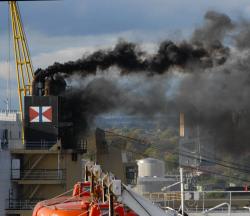 International shipping is responsible for an estimated 3 percent of global greenhouse gas emissions, equivalent to those of Germany, thirteen times those of New Zealand. On current trends they are expected to increase by 150-250 percent by 2050. They are as yet unregulated, trapped for over a decade in a familiar impasse where developed countries argue that all ships must be covered by the same regulation, the norm in the International Marine Organisation, but most developing countries insist that any regulation respects the principle that developed countries must lead the fight against climate change, known in the UN Framework Convention on Climate Change as ‘common but differentiated responsibilities’.
 We seem to have convinced the world that we’re right up in the forefront when it comes to tackling climate change.