
The Crime of Ecocide

I was active in Amnesty International at the time when the International Criminal Court was being debated and we lobbied hard for its establishment. In view of all the obstacles it seemed a minor miracle that it finally gained enough member state support to get under way. It is by no means the universally acknowledged authority that it should be, but it is functioning and playing an important role in the modern world. I was therefore interested to see reported on the NZ Herald website the proposal of a visiting lecturer that crimes against nature, or “ecocide”, should be recognised as the fifth crime the court should be given responsibility for, along with genocide, war crimes, crimes against humanity and crimes of aggression which make up its current areas of jurisdiction.

Polly Higgins is the British environmental lawyer who actively promotes the concept. She is currently on a lecture tour of New Zealand and Australia, where she will be a speaker at the Brisbane Writers’ Festival. Her book Eradicating Ecocide was published last year. As reported in the Herald Higgins argued corporations should have a duty of care, or the same responsibility as individuals to behave in their daily lives – without recklessness or harm. Continue reading “The Crime of Ecocide”

What Motivates the Scientist Deniers?

There wasn’t room in my review of James Powell’s book The Inquisition of Science to comment on one or two aspects of the book in the detail I’d have liked, and I’ll take up one in particular in this supplementary post. In a chapter titled The Anatomy of Denial he has an interesting short discussion on the motivation of the scientist deniers. The denial campaign depends on having some scientists to whom it can point in confirmation of its arguments, and they have duly been forthcoming, albeit few of them actively engaged in climate science. Powell’s analysis confirms what others have discovered, but he puts it freshly and it’s worth highlighting regularly.

Some of the scientist deniers he sees as simply contrarian by nature, revelling in being different. Every field of science has had its contrarians with provocative ideas. Most of the ideas may be wrong, but even so they can advance the science by stimulating new experiments and new questions. Contrarians may sometimes play a valuable role as devil’s advocate, but they may also simply and repeatedly be wrong. He notes wryly that if Freeman Dyson were to accept global warming no one would pay any attention to him since he would merely be one of tens of thousands contributing to the scientific consensus, almost any one of whom would know as much as he. By denying it, he lands on the cover of the New York Times Magazine and is lauded for intellectual courage. In Powell’s extended discussion of Dyson’s denial in an earlier section of the book he quotes Dyson acknowledging that Hansen, whom he accuses of consistently exaggerating the dangers of global warming, has all the credentials established by his hundreds of published papers. Continue reading “What Motivates the Scientist Deniers?”

Tar Sands Action Draws to a Finish, But More to Come says McKibben

“Be here on Saturday September 3rd. You don’t need to get arrested. There will be people getting arrested but we’re to also have a big rally and … its going to be a beautiful finish to phase one of this campaign. After that stay tuned…this is a fight we might actually have some chance of winning and so we’ve got to keep the pressure seriously on.”

That’s Bill McKibben in this short street interview. Spare them a thought on Saturday.

[Youtube]JW61td6VJvc[/youtube]

Energy Strategy in Denial of Climate Change Reality

From a climate change perspective the New Zealand Energy Strategy 2011-2016 is hopelessly compromised by its determination to exploit all the oil and gas that can be found, including deep sea methane hydrates. Take a look at this extract, the second paragraph in the strategy document:

“Globally, there are two energy challenges: energy security and responding to climate change. Responding to these challenges is a major undertaking. Renewable sources of energy will help us meet these challenges, but we need to be realistic and acknowledge that there is no single answer. For the foreseeable future, fossil fuels will continue to be an important part of the global energy mix.” Continue reading “Energy Strategy in Denial of Climate Change Reality”

The Anti-Science of the Republican Party Terrifies

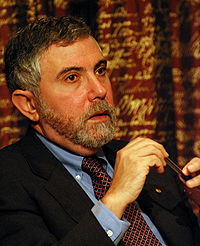
Paul Krugman in a New York Times column on Sunday gave voice to the fear that must haunt any aware observer of the anti-science tide currently sweeping through the American Republican party. “It should terrify us,” were his words. I’m not an American, but it certainly terrifies me, all the more for the recognisable lineaments which seem to be manifesting themselves in the Australian right and are unmistakeable in the New Zealand ACT party which is in coalition with the government and apparently welcome back next time.

Krugman looks at two serious contenders for the Republican party nomination to run for President, Rick Perry and Mitt Romney. Continue reading “The Anti-Science of the Republican Party Terrifies”