
120% Pure Subsidy

Nick SmithLast week, (29 September 2011 to be precise), Green MP Kennedy Graham was questioning Climate Change Issues Minister Nick Smith over his apparent lack of consistency on subsidies for fossil fuel industries. Graham was wondering why Nick Smith and Climate Change and Trade Negotiations Minister Tim Groser were happy on the one hand to oppose billion dollar subsidies to fossil fuel industries on the international stage, while on the other hand have the New Zealand Emissions Trading Scheme include subsidies in the form of generous free allocation of emissions units to big industrial emitters of GHGs.

Nick Smith replied:

“…this Government is not providing subsidies to greenhouse gas polluters. I remind the member that we are the only country outside the EU to have an emissions trading scheme. Our aluminium smelter in Bluff is the only aluminium smelter in the world to face any price at all for its greenhouse gas emissions”.

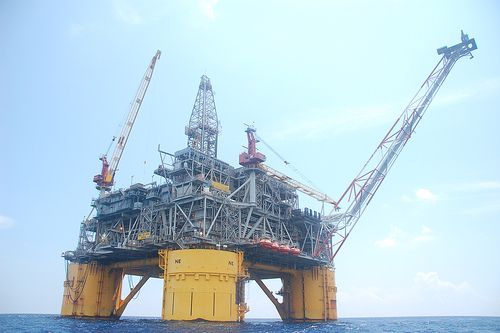
Lets examine this assertion in two parts; that the Tiwai Point Aluminum Smelter, receives no subsidies from Government and it faces a carbon/GHG price.
Continue reading “120% Pure Subsidy”

Water, water everywhere…

New Zealand’s response to the water crisis in Tuvalu and Tokelau is making headlines. Foreign Minister McCully announced yesterday:

Tuvalu has declared a state of emergency relating to water shortages in the capital, Funafuti, and a number of outer islands. A New Zealand Defence Force C-130 left this morning to take supplies and personnel to Tuvalu. The supplies include two desalination units as well as water containers. Two Ministry of Foreign Affairs staff on board, including our Wellington-based High Commissioner, will remain in Tuvalu to help assess needs on the ground. New Zealand will be working with partners and other donors to consider the best medium-to-long-term response options.

Tuvalu, with 11,000 inhabitants, is not the only island nation in trouble. Tokelau, with 1400 inhabitants, has declared a state of emergency because fresh water supplies might run out in a few days. Samoa is rationing water also.

There appears to be a reasonable probability that there is a causal link between the drought and water scarcity affecting the islands and climate change.

Continue reading “Water, water everywhere…”

The blind leading…

Evidence this week that the New Zealand Energy Strategy, trumpeted by the government as a key to the country’s prosperity, is making good on its promise to advance oil and gas exploration.  The NZ Herald carried a report of a meeting on Monday of high-powered global oil and gas exploration companies hosted by New Zealand Petroleum and Minerals, a division of the Ministry of Economic Development. It’s described as push to encourage new interest in the country’s under-explored frontier basins.

It was no doubt a decorous occasion, attended by representatives of prestigious exploration companies, some of them state-owned. Duncan Clarke, of Global Pacific & Partners, is the strategic consultant engaged to facilitate the discussion of a new competitive bid round process for allocating exploration rights. He says the government is “very open”. It’s asking the companies “what do we have to do to get you here”?

Continue reading “The blind leading…”

SOS tour adds Lakes dates; Wratt in Wellington

The Saunders Oram and Salinger climate roadshow continues to rumble on through the spring, and news reaches me that they’ve just added talks in Queenstown and Wanaka on Thursday Nov 3 to their already crowded itinerary. Venues are still to be arranged, but the Queenstown talk will be in the afternoon and the Wanaka talk in the evening. All the latest details (including a confirmed gig on Waiheke Island) are in this information sheet. Jim tells me they’ve been getting very good attendances — 70 in the recent Kaiapoi session and 70 at Omakau (probably the highest per capita attendance of the lot). By the end of November they will have completed a remarkable 37 presentations. Hats off to all three of them…

Wellingtonians with a lunch hour free on Thursday (6/10) might like to note that Dr David Wratt, Director of the NZ Climate Change Centre and NIWA’s Chief Scientist (Climate) will be giving a presentation on Assessing Scientific Knowledge about Climate Change as a part of the NZ Climate Change Research Institute’s seminar series. Time: 12 – 1pm in Cotton Building 304 on VUW’s Kelburn Campus. David will cover developments since AR4 and discuss the process of putting AR5 together. Contact Liz Thomas at the NZ CCRI for more information.

Butterfly futures flutter by

James Hansen’s latest discussion paper begins and ends with Monarch butterflies. He watches some on his property in Pennsylvania as they prepare to leave for their migration to Mexico and reflects on the prospects for their survival as a species as global warming takes hold. The Monarchs cross Texas on their way south, a difficult path this year over desolate, baked-out territory. Which leads Hansen to a spirited denunciation of “well-oiled Governors and Senators in Texas and Oklahoma” who assert that global warming is a hoax and help business-as-usual CO2 emissions to continue.

He addresses the question of whether the drought and fires in Texas can be attributed to global warming. The media have remained largely silent this year on possible connections between extreme weather events and human-made climate forcing, and Hansen asks whether scientists should be making more effort to draw public attention to the human role in climate anomalies.

Continue reading “Butterfly futures flutter by”