How to believe in impossible things

Despite the huge number of mutually contradictory claims denialists make, there is something they all have in common: no matter how much green ink a they use in their writing, denialists never formally criticise each other.

The term cognitive dissonance was coined by Leon Festinger, a psychologist who (in 1954) infiltrated a UFO cult that had been promised a ride into space to avoid a great flood. The UFOs didn’t show. But instead of the cult imploding they turned instead to self justification and denial as they learned, via automatic writing from God, that their goodness had persuaded Him to call it all off.
Continue reading “How to believe in impossible things”

A hard road

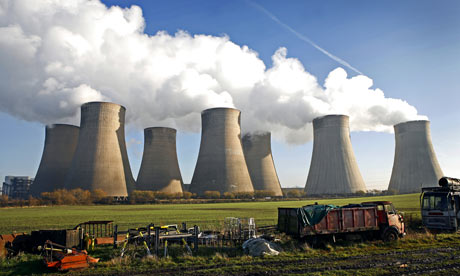
The jury may have found the climate protestors at Ratcliffe-on-Soar coal power station guilty of conspiracy to commit aggravated trespass, but the judge in his sentencing yesterday clearly showed a good deal of sympathy with the offenders. The 18 activists received sentences ranging from 18 months conditional discharge to 90 hours unpaid work. Two of them received modest fines. Judge Jonathan Teare conceded the public may consider his sentencing “impossibly lenient”. But he said he had been put in a highly unique position given the moral standing of the campaigners.
“You are all decent men and women with a genuine concern for others, and in particular for the survival of planet Earth in something resembling its present form.

“I have no doubt that each of you acted with the highest possible motives. And that is an extremely important consideration.

“There is not one of you who cannot provide glowing references from peers or professionals. And if I select some of the adjectives that recur throughout they are these: honest, sincere, conscientious, intelligent, committed, dedicated, caring.”

Continue reading “A hard road”

Warm year passing

2010 was the fifth warmest year in the long term New Zealand record, and December the third warmest, according to figures released by NIWA and analysis by Jim Salinger. Salinger’s rankings are based on the revised “seven station series”. According to Jim:

[December] was 1.6 °C above the 1971-2000 average and the third equal warmest with 1988. Only 1934 and 2005 December’s were warmer, with the average temperature being 18.5 and 17.5 °C respectively.

This capped off another warm year, with an average temperature of 13.1°C, making 2010 the fifth warmest year nationally since the seven station series began in 1906. Only 1971, 1998, 1999 and 2005 have been warmer with temperatures of 13.2, 13.4, 13.4 and 13.1°C respectively.

NZ’s warmth is being helped along by a strong La Niña in the tropical Pacific, bringing warm moist air down towards the country. NIWA’s climate summary for the December has all the weather details and local statistics. Their annual summary for 2010 will be available soon.

World on the Edge

Lester Brown has for years been unwavering and persistent in drawing attention to the gathering environmental dangers humanity faces and pointing to the alternative practices which might yet save us from the worst effects. His widely read Plan B books have appeared at regular intervals throughout the last decade. I reviewed the fourth of them on Hot Topic in 2009. A new book now published is shorter but no less urgent, as its title indicates: World on the Edge: How to Prevent Environmental and Economic Collapse.

He points to three areas where the foundations of human civilisation are under severe threat, particularly because of the effects on food production. Water is being overpumped from aquifers and the world’s farmers are losing the water war, with dangerous consequences for food production as harvests consequently shrink.  Soils are eroding and deserts expanding on an alarming scale, resulting in lowered soil fertility and contraction of land available for farming. Global warming is bringing a climate instability to which agriculture is not adapted, the threat of sea level rise which will shrink rice harvests in vulnerable areas, and changes to water supply from mountain glaciers already affecting farming negatively in some places.

Continue reading “World on the Edge”

de Freitas: politics cloud his understanding of climate science

The southern summer silly season is here, and newspapers are desperate for copy. That’s about the only good reason I can think of for the nation’s biggest-selling newspaper, Auckland’s NZ Herald, giving Chris “unreliable witnessde Freitas yet more space to re-run some tired old climate sceptic arguments under the headline Emotion clouding underlying science of global warming. Doubt is his product, and he tries very hard to sound reasonable as he spins his tale. It’s a pity then that the Auckland University associate professor not only misrepresents the evidence, but gets it so badly wrong that he’s an embarrassment to his department.

Continue reading “de Freitas: politics cloud his understanding of climate science”