
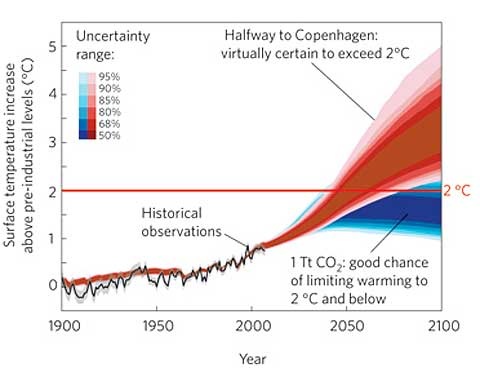
Climate scientists and those working in associated fields have established a clear picture of human-caused climate change and what it is likely to mean in the future. The basic information is readily understandable. It’s alarming in what it portends and a rational human society would by now be well on its way to the change of direction which would reduce the need for alarm. But we are not well on the way and there’s little urgency in our approach to the issue. Wide public alarm is rarely even voiced, let alone a stimulus to determined action. The science may be clear, but its appropriation by society at large is obviously no straightforward matter.
Can the social sciences help us? I was attracted by the title of a recently published book, Engaging the Public with Climate Change: Behaviour Change and Communication, edited by three academics, Lorraine Whitmarsh, Saffron O’Neill and Irene Lorenzoni. In its twelve chapters a couple of dozen social researchers and practitioners look at how climate change can be constructively woven into public perception and action. The writers are clear about the urgent need to tackle climate change, but the book doesn’t offer strong advocacy so much as close investigation of the dynamics at work in obtaining and supporting positive public engagement.

 Pursuing the last drop of oil should not be on the agenda of any country which takes climate change seriously. That’s why I applaud the Greenpeace and Te Whanau a Apanui action in endeavouring – successfully for a time – to stop the Petrobas seismic testing vessel off the East Cape. Potential danger to the marine environment is one of the reasons for the protest, and in the thinking of Greenpeace climate change is the other. The action is part of their longer term campaign against new oil and coal development in favour of a clear orientation to the clean technology which would show New Zealand was serious about moving to a low-carbon world.