Another open thread. You can discuss anything climate-related here — plus I will move off-topic comments here from other threads.
Category: Climate science
Earle: everything in the oceans at risk
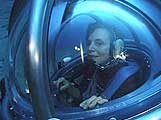 “We are committed to developing deepwater energy supplies offshore.†Those blunt words from the US Administration were put to oceanographer Sylvia Earle by Stephen Sackur late in a captivating BBC Hardtalk interview I watched a few days ago. What chance, he asked, did her message about the plight of the oceans stand in the face of the determination of governments to exploit the massive fossil fuel sources under the oceans?
Before giving her response I’ll briefly provide a little context. Sylvia Earle is a famed oceanographer who 40 years ago headed the first team of women so-called aquanauts in an underwater habitat programme. She was chief scientist at NOAA in the early nineties, has continued to be engaged in deep ocean exploration, was named Time magazine’s first ‘hero for the planet’ in 1998 and received the 2009 TED Prize. Now in her mid-seventies she continues to be a strong advocate of marine reserves and ocean protection and exploration generally. Earlier in the Sackur interview she’d explained how the ocean dominates the way the world works and pointed out that most of life on earth, in terms of both volume and diversity, is in the ocean. She’d outlined some of its importance for our own life. Imagine, she said, what changing the chemistry of the ocean might do.
The Climate Show #9: Barry Brook, hot spots and melting ice
[youtube]74mE-MXCJ7k[/youtube]
With the terrible events in Japan uppermost in everyone’s mind, this week’s Climate Show goes nuclear, examining the prospects for the future of nuclear energy with Professor Barry Brook from the University of Adelaide. John Cook looks at what the tropical troposphere hot spot really means, and Gareth and Glenn look at mass loss from the Greenland and Antarctic ice sheets, a record ozone hole over the Arctic, and review last winter’s climate numbers.
Watch The Climate Show on our Youtube channel, subscribe to the podcast via iTunes, or listen direct/download here:
Follow The Climate Show at The Climate Show web site, on Facebook and Twitter.
Show notes below the fold.
Continue reading “The Climate Show #9: Barry Brook, hot spots and melting ice”
Cambridge on ice
[youtube]M5nXSC1woLU[/youtube]
From Cambridge University: the director of the Scott Polar Research Centre, Prof Julian Dowdeswell talks about his job. He has to visit Greenland and Antarctica to measure glaciers, so there are lots of pretty pictures to watch. Not a bad job, even if the implications of what he’s finding (Greenland outlet glaciers doubling in speed) are worrying…
Garnaut: no reticence on risk
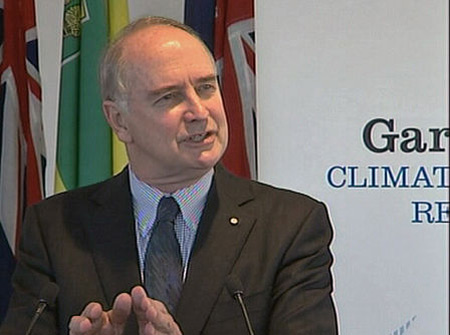 I appreciated the candidness with which economist Ross Garnaut introduced and concluded his recently released update on the science of climate change, one of a series of updates to his 2008 Review which have been commissioned by the Australian government. In the introduction he explains how he began his original Review with no strong views and no more than a common knowledge of climate change science. He read a fair bit of climate science in the course of preparing the Review, including paying due attention to sceptics with genuine scientific credentials, and his investigations led him to the premise for his Review that “on a balance of probabilities†the central conclusions of the mainstream science were correct.
Since then he has moved in his thinking to regard it as highly probable that most of the global warming since the mid-20th century is human-caused. Further, he declares that he would now be tempted to say that those who think that temperatures and damage from a specified level of emissions over time will be larger than is suggested by the mainstream science are much more likely to be proven correct than those who think the opposite.