 What do New Zealand government members really think about the chasm between their claims on the one hand to be addressing climate change and their insistence on the other that we must take every opportunity to expand our fossil fuel mining industry? I listened to a recent Radio New Zealand interview with Tim Groser, the Minister responsible for international climate change negotiations, in which he discussed the outcome of the Durban conference. He sounded committed to the reduction of greenhouse gas emissions. He was respectful of the science. He affirmed that the progress so far made was inadequate, but thought it possible that Durban might turn out to have been a critical turning point by getting all the big emitting countries on the mitigation bus. He sometimes sounded the “real world” theme, but not to the extent of suggesting that the whole process was doomed to failure. He was positive about renewable energy potential. One might disagree with some of his perspectives, but there was no suggestion that he was not serious about the need for the world to move to low-carbon economies.
Yet back in New Zealand Groser is a Minister in a government which is planning to increase the exploration and exploitation of fossil fuels, claiming that they offer immense financial benefits that we would be foolish to forego. These fuels will release greenhouse gases into the atmosphere either in the countries to which they are exported or here. When pressed on the issue the excuses offered include that emissions in other countries are the responsibility of the users of the fuels, not the suppliers, that within New Zealand our Emissions Trading Scheme will somehow result in the satisfactory offsetting of the harm done by the emissions, and that if we don’t mine fossil fuels others will and we will suffer an unfair economic disadvantage.
I find it impossible to mentally inhabit these two worlds simultaneously. A world in which we are working sincerely to a drastic reduction in greenhouse gas emissions, and a world in which we are vigorously pursuing the extraction of every last bit of fossil fuel we can locate. Am I lacking mental agility? Or is there doublethink going on in government?
Continue reading “Doublethink: doubleplus ungood”

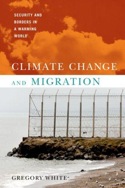 It’s all too easy for wealthy America and Europe to treat climate-induced migration as a border security issue. Gregory White, Professor of Government at Smith College in Massachusetts, argues in his recent book Climate Change and Migration: Security and Borders in a Warming World that a security-minded response to the phenomenon is both inappropriate and unethical. It’s not a judgment the book rushes to; White provides ample and thoughtfully-presented material in its support.
 The 2011 Climate BS Awards (where BS stands for Bad Science) have just been announced by Peter Gleick and the Pacific Institute [
 ‘Tis the
  I warm to any writer who identifies the solution to climate change in the simple terms employed by