 In this guest post, Mark Lynas, author of Six Degrees, High Tide and The God Species, advisor to the president of the Maldives, analyses the outcome of the Durban conference and what it means for the future of international climate negotiations. It’s one the best and most detailed accounts I’ve come across, from someone at the heart of the action. This article was first published at his personal blog.
Following the marathon negotiations session at Durban, all the delegates should now be back home – and if not quite rested, certainly ready to assess the outcome with the benefit of some distance. In this (rather long) post I will look at the key documents agreed in the Durban outcome, and try to offer some sense of what they mean for the climate regime, and for the climate. (Apologies for some jargon, and for unexplained acronyms, which should be familiar to anyone following the negotiations, and without which this post would be even longer still.)
The Durban mandate
During the second week of COP17 the South African presidency operated an ‘Indaba’ system of high-level meetings, where an options paper was gradually whittled down into a decision text on the crucial issue of the future legal form of the UNFCCC regime. Various iterations of this paper produced some rollercoaster ups and downs from the perspective of a small islands state delegate (as advisor to the President, I once again joined the Maldives delegation). The final version, agreed in the small hours on Sunday 11 December — nearly 48 hours after the COP was supposed to have concluded — is titled ‘Establishment of an Ad Hoc Working Group on the Durban Platform for Enhanced Action'(PDF link).
Continue reading “The verdict on Durban – a major step forward, but not for ten years”
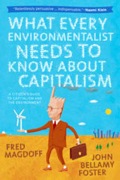 A couple of months ago when the publishers sent me a review copy I’d requested of The Ecological Rift: Capitalism’s War on the Earth they enclosed another shorter book in case I might like to review it as well. I thought from the title it was possibly too similar to The Ecological Rift to warrant a further review. And it is similar in its broad thesis. But it’s also short and punchy, and encouraged by Naomi Klein’s recommendation of it as “relentlessly persuasive” and “indispensable” I read it through and decided to give it mention on its own account. The title is What Every Environmentalist Needs to Know about Capitalism. It’s written by Fred Magdoff, professor emeritus of plant and soil science at the University of Vermont, and John Bellamy Foster, one of the authors of The Ecological Rift.
 The Institute of Professional Engineers New Zealand (
 Grid tie solar power is becoming a no-brainer! Photovoltaic (PV) solar power generation has made enormous advances over just the last two years. The cost of panels and assorted gear has fallen dramatically so that in NZ grid tie solar systems in the 2KW peak power range can be purchased for under NZ$10,000 (including GST) from many outfits.