
Simon Johnson’s guest post offers prompt comment on the ETS review.
Minister for Climate Change Issues Nick Smith has finally released the delayed report of the NZ Emissions Trading Scheme Review 2011. The 98-page report is titled Doing New Zealand’s Fair Share, The Emissions Trading Scheme Review 2011.
The review panel chaired by former Rogernome David Caygill gave their report to Smith on 30 June 2011. Two and half months later and one week into the Rugby World Cup, Smith has let the report out into the world.
From the title of his press release, Slowing of ETS recommended by Review Panel, I think Smith is pretty happy with the report. It also uses some of Smith’s favourite phrases; such as “Doing our fair share” and balancing emissions reductions with costs to businesses.
“The Panel acknowledges there needs to be an appropriate balance between managing these short-term costs and providing a clear long-term direction. Given the current international uncertainty and the challenging state of the economy, this means there should be measures in place which ensure the increase in the costs of the ETS occurs at an appropriate pace.” Continue reading “The NZ ETS Review 2011: Clear signals for business as usual”
 The case for putting a price on greenhouse gas emissions from human activity is not arguable. It’s undeniable. But what is arguable is the best way of achieving it in the working of a modern economy. Shi-Ling Hsu, a law professor at the University of British Columbia, argues for a currently less popular way in his newly published book
 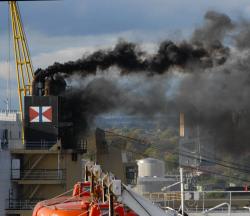 International shipping is responsible for an estimated 3 percent of global greenhouse gas emissions, equivalent to those of Germany, thirteen times those of New Zealand. On current trends they are expected to increase by 150-250 percent by 2050. They are as yet unregulated, trapped for over a decade in a familiar impasse where developed countries argue that all ships must be covered by the same regulation, the norm in the International Marine Organisation, but most developing countries insist that any regulation respects the principle that developed countries must lead the fight against climate change, known in the UN Framework Convention on Climate Change as ‘common but differentiated responsibilities’.
 Nelson-based algae company