
We have the technology, but…

One word sums up the attitude of engineers towards climate change: frustration.” That’s Colin Brown, director of engineering at the UK’s Institution of Mechanical Engineers, writing in the latest New Scientist. Political inertia combines with continuing noise from the vocal minority of sceptics to mean that we are doing woefully little to prevent the worsening of global warming.

It’s not as if we are lacking the technology:

Engineers know there is so much more that we could do. While the world’s politicians have been locked in predominantly fruitless talks, engineers have been developing the technologies we need to bring down emissions and help create a more stable future.

Wind, wave and solar power, zero-emissions transport, low-carbon buildings and energy-efficiency technologies have all been shown feasible. To be rolled out on a global scale, they are just waiting for the political will. Various models, such as the European Climate Foundation’s Roadmap 2050, show that implementing these existing technologies would bring about an 85 per cent drop in carbon emissions by 2050. The idea that we need silver-bullet technologies to be developed before the green technology revolution can happen is a myth. The revolution is waiting to begin.

The barriers to a low-carbon society are not technological but political and financial, he declares. That’s why at a London conference this month 11 national engineering institutions representing 1.2 million engineers from across the globe decided on a joint call for action to be presented at December’s COP17 climate change conference in Durban, South Africa.

Continue reading “We have the technology, but…”

Support for greening the economy

It’s been interesting to see some NZ Herald articles bearing on the Green Party’s “100,000 green jobs” policy which I discussed a few days ago.

John Armstrong shared my view that the Green’s jobs policy deserved more than the “ritualistic slagging” offered by John Key and Steven Joyce.

National might still claim the Greens do not understand economics. The purpose of yesterday’s policy release was to demonstrate the Greens do understand – and are deadly serious about remedying the economy’s structural weaknesses, though not in a fashion National would favour. Continue reading “Support for greening the economy”

The Climate Show #19: A Tale of Two Poles

[youtube]gIWTCd9cwts[/youtube]

La Nina makes a return, Times Atlas Gate (or something like that), the Petermann Glacier break-up, Pirates cause global warming (not really) and Ice adventurer Rob Swan pushes for Green Growth. Gareth is still away but John and Glenn will play, The Climate Show is back for another spin.

Watch The Climate Show on our Youtube channel, subscribe to the podcast via iTunes, listen to us via Stitcher on your smartphone or listen direct/download from the link below the fold…

Follow The Climate Show at The Climate Show web site, and on Facebook and Twitter.

Continue reading “The Climate Show #19: A Tale of Two Poles”

Dismissing Greens’ plan out of hand not justified

The immediate government reaction to the Greens’ announcement yesterday of their “100,000 green jobs” policy was to defend the economic status quo.

The Prime Minister John Key:

“They are talking about putting enormous taxes on New Zealand that would send a lot of businesses bankrupt.”

Transport Minister Steven Joyce weighed in:

“What they’re proposing is to add lots of costs, add lots of taxes and then magically, supposedly, all the jobs would be in place.”

The Greens’ proposals for raising the money to fund the green jobs initiative include a capital gains tax, a temporary levy on income to fund the rebuilding of Christchurch, a cutback on new motorway spending, and a toughening up of the generous subsidies offered by the ETS in its current form. I presume these are the costs and taxes that so alarm Key and Joyce. Continue reading “Dismissing Greens’ plan out of hand not justified”

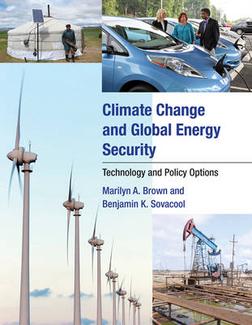
Climate Change and Global Energy Security

Academics Marilyn Brown and Benjamin Sovacool, who have impressive credentials in the field of energy policy, are co-authors of the recently published Climate Change and Global Energy Security: Technology and Policy Options, a substantial and detailed study of a very wide range of technologies covering both the promise of those options and the obstacles to their effective employment.

I was deeply depressed by the time I got to page 64 of the book. That was where the tale of five challenges ended. The authors had enlarged the energy and climate change scope of the book somewhat to identify five challenges threatening the prosperity of future generations: electricity, transportation, forestry and agriculture, waste and water, climate change. They do it thoroughly, and it seemed well-nigh impossible that the growing population of the world could possibly cope with these problem areas. But the reader is counselled in the final paragraph of the chapter not to give up in despair, as the issues can be broken down into more manageable challenges to which technology and policy solutions are readily available. Continue reading “Climate Change and Global Energy Security”