
Down by the seaside

This year’s NZ Climate Change Centre conference, to be held at Te Papa in Wellington next month, focusses on sea level rise, and how communities can adapt to the inevitable encroachment of the ocean. The organisers have laid on some excellent speakers, include Aussie oceanographer and sea level expert John Church, as well as many directly involved with the issues raised by sea level rise in New Zealand. The conference programme aims to:

  • Present the latest science of sea-level rise associated with climate change, including the role of polar ice-sheet melt
  • Present a synthesis of recent projections for sea-level rise and discuss the uncertainties associated with these projections
  • Identify anticipated impacts on New Zealand coastal environment and infrastructure resulting from climate change
  • Discuss whether adaptive risk management for adapting to sea-level rise will be adequate given the ranges projected and their uncertainties
  • Stimulate discussion of how end-users can manage present and future coastal issues and how social and bio-physical scientists, central and local government, and infrastructure operators can work together with communities to build resilient systems
  • Describe approaches that have been taken to planning coastal futures, which take into account community and resource-user needs underpinned by plausible climate change projections, adaptive approaches to manage uncertainties, and sound approaches to developing coastal policies.

Sounds like a very worthwhile couple of days. It’ll be interesting to hear what the “synthesis of recent projections for sea-level rise” suggests we’re in for, so if any HT readers are planning to attend, I’d be very happy to carry some conference reports.

For what it’s worth, in my view two numbers and one uncomfortable fact are of prime importance. We’re committed to warming, and therefore to sea level rise. The peak level of atmospheric CO2 that we reach (unless we can cut it very quickly after the peak by active carbon removal) will set the final quantum of sea level rise the planet will experience. The latest paleoclimate evidence suggests that current CO2 levels are putting us on course for an eventual 20 metres of sea level rise. Pick your final CO2 concentration, and calibrate against times past. At 300 ppm in the last interglacial, sea level was 6 metres higher than present.

The consequence of where we end up on the atmospheric carbon scale is a long term inevitable and uncomfortable commitment to continuously increasing sea level. It might be enough for some purposes to consider only a metre or two over the the next century, but if you’re planning to rebuild a city, perhaps you should look a little further ahead. Fascinating discussions are in store in Wellington, I confidently predict…

I was lucky enough to attend (and speak) at last year’s conference ((The proceedings of last year’s forum are now available from the NZ CCRI.)), and I’m sure that this year’s effort will be just as worthwhile.

[Zep]
Helter smelter: NZ Aluminium Smelters wins the 2011 Roger Award

Simon Johnson reports that NZ Aluminium Smelters/Rio Tinto Alcan NZ have just won the 2011 Roger Award for Worst Transnational Corporation operating in Aotearoa/New Zealand, for milking the NZETS.

Every year the group Campaign Against Foreign Control of Aotearoa (CAFCA) awards a Roger Award for bad multinational corporate behaviour. Past winners have been Warner Brothers for the Hobbit film employment law change and British American Tobacco.

Readers may recall I wrote some posts about the excessive allocation of free emissions units from the NZ Emissions Trading Scheme to NZ Aluminium Smelters/Rio Tinto Alcan NZ.

I concluded that in 2010 the Rio Tinto Alcan NZ received 135% more emissions units than it needed for its greenhouse emissions, as an undisclosed amount of units were to compensate it for undisclosed ETS-related electricity costs. In other words, Rio Tinto Alcan NZ would pay a higher ‘carbon’ price if it was exempt from the NZ ETS, as they would at least be paying some ‘carbon’ price as a ‘downstream’ electricity user.

Continue reading “Helter smelter: NZ Aluminium Smelters wins the 2011 Roger Award”

Aquaflow: next-gen biofuels a commercial reality

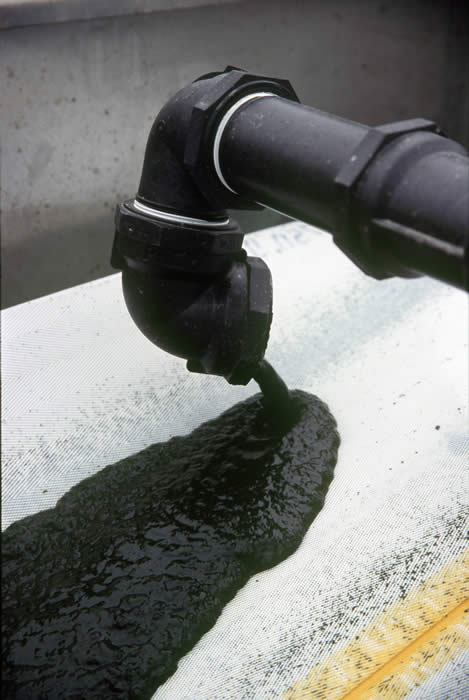
Positive news this week from the Nelson-based algae company Aquaflow whose fortunes we have followed on Hot Topic over the past three years. I last reported on them in August 2011, when they had signed an agreement for joint testing and evaluation with Texas-based CRI Catalyst Company (CRI). Now they have announced a full technology cooperation agreement with that company which they believe leaves them poised to make refining next generation biofuels a commercial reality in New Zealand and in overseas projects within the two to three years it takes to build a refinery.
That’s big news if it comes to fruition. Director Nick Gerritsen says: “We should be able to produce renewable hydrocarbon fuel that is equivalent to fossil fuel at a cost that is highly competitive with the current per barrel price of crude oil.” He adds that New Zealand could turn its biomass into enough carbon-neutral biofuel to meet its renewable fuels requirement within ten years.

Continue reading “Aquaflow: next-gen biofuels a commercial reality”

Hansen’s righteous cause

The latest communication from James Hansen to his email list this week was a sharp reminder that the New Zealand Government’s commitment to the pursuit of unexploited fossil fuels is part of widespread malpractice.

The global stampede to find every possible fossil fuel is not being opposed by governments, no matter how dirty the fuels nor how senseless the energy strategy is from long-term economic and moral perspectives.

The specific case that Hansen focuses on is the Alberta tar sands. He has some chilling statistics.

Continue reading “Hansen’s righteous cause”

NZ ETS to be watered down (again), but emissions news good

New Zealand’s new Minister for Climate Change Issues and chief climate negotiator, Tim Groser, yesterday announced the government’s intended changes to the Emissions Trading Scheme following last years ETS Review. There will be a limited period for consultation (to May 11) on the proposals before legislation is put before Parliament. The consultation document (PDF) and meeting dates are available here. Key points:

  • Agriculture’s entry to the ETS may be delayed beyond 2015.
  • There will be no increase to the $25/tonne unit price cap.
  • The “two for one” transitional provision for big emitters will be phased out more gradually.
  • The government will give itself powers to auction emissions units.
  • There will be a review of the allocation of carbon credits to pre-1990 forests to take into account the changes to the forestry regime agreed in Durban last year.

Groser also announced the release today of New Zealand’s net emissions position for the 2008-12 Kyoto reporting period, now expected to be a surplus (that is, under NZ’s target) of 23.1 million tonnes, up from 21.9 mt in 2011.

News that agriculture may continue to escape carbon constraints is hardly surprising, given the government’s reluctance to annoy its heartland farming and agribusiness supporters, but it appears willing to risk confrontation with Maori forestry interests on pre-1990 carbon credit allocations. My view is that this tinkering around the edges of the scheme is designed to put the ETS into a kind of domestic political holding pattern until the shape of future international arrangements begins to emerge. Groser doesn’t want to frighten the horses until he absolutely has to, as this quote from Brian Fallow’s piece in the NZ Herald today might be taken to indicate:

Preferences for changing areas of the policy would vary a lot depending on what assumptions were made about the future carbon price, Groser said.

“If you think it will remain at the current low levels, you will reach one set of conclusions. Take a different view of the trajectory of the carbon price – and above all, this is a long game we are playing – and you may reach quite different conclusions.”

Getting international action on emissions reductions is certainly turning out to be a long game. We can only hope that it doesn’t turn into the diplomatic equivalent of a timeless test, and that the climate system is kind enough to give us time to play it. I’d not want to bet on either proposition.