
 I watched TVNZ’s Q+A on Sunday with dismay. Phil Heatley, the Minister of Energy and Resources, was interviewed about the New Zealand government’s intention to increase oil, gas and coal exploration and mining. The emphasis of the interview was on the environmental issues, yet not a word was said about greenhouse gases or climate change. The environmental questions discussed were not unimportant, but they were easy for the Minister to swat away with talk of how Taranaki’s environment has not been seriously impacted by drilling, of how fracking is confined to suitable deep rock formations, of how careful the Government is to balance the interests of the environment against the economic gains to be had from the exploitation of our mineral resources, and so on.
What would the Minister have said if he was asked how the Government can justify pushing for increased fossil fuel exploitation in the light of the global warming to which the burning of these fuels will contribute? I have a fair idea what he would have said, but he wasn’t asked. The fact that he wasn’t bothers me as much as his likely answer if he had been. Because it seems to indicate that the overwhelming question is either not perceived or deliberately avoided by journalists running a major current affairs programme.
 Tim Groser, the new Minister for Climate Change Issues, is adamant in his defence of the intention to further delay bringing the agricultural sector into the Emissions Trading Scheme beyond the current date of 2015 unless there are adequate abatement options open to them by then and unless other countries step up to the mark with mitigation measures. His remarks
  New Zealand’s new Minister for Climate Change Issues and chief climate negotiator, Tim Groser, yesterday
 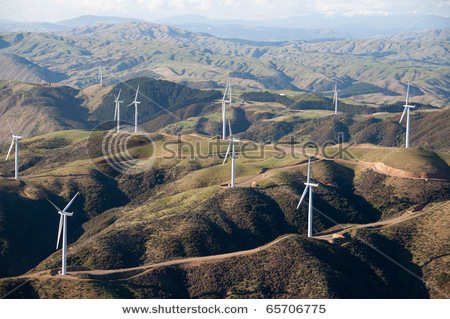 The NZ Wind Energy Association (NZWEA) has a published a new report setting out their vision for the coming years, Wind Energy 2030: the growing role for Wind Energy in New Zealand’s electricity system (