 I am regretfully giving up writing regular posts for Hot Topic. Age-related macular degeneration, an eye disease affecting central vision, has been advancing for some years and has come to the point where reading of the kind on which I have depended for my posts has become difficult and laborious. It’s four years since Gareth invited me to contribute to Hot Topic and I have been grateful for the opportunity. The full seriousness of climate change dawned on me about seven years ago and though for a time I had some opportunity to voice my concern through the pages of the Waikato Times, that terminated when the paper started talking about the need to ‘balance’ what I regarded as a straightforward communication of mainstream science.
Happily Hot Topic suffers from no inclination to balance science with denial. It has given me the chance to use the time available to a retired person to read and then review many books and reports by climate scientists and science writers and experts in associated fields. It has also allowed me to express the hopes and fears that mingle in the mind of anyone who understands the urgency of the climate crisis, and to chastise leaders who think we can somehow both mitigate climate change and burn all the fossil fuels.
I turned 80 this year, and my concern over climate change only grows with advancing years. I’m more pessimistic than I was four years ago about the possibility of significant action being taken soon to rein in emissions. But the urging must continue and the science be respected. Gareth stands out in the New Zealand setting for his commitment on both these counts and I have felt fortunate to be associated with his efforts and the support of the intelligent and knowledgeable commenters and contributors which Hot Topic enjoys.
Gareth adds:
It’s been my great privilege to provide a platform for Bryan’s writing over the last four years. In that time he has reviewed dozens of books (click the book reviews tab to get an idea of just how prolific he has been), held the government to account for its wrong-headed policy making and failures of vision, and provided a carefully considered and highly valuable moral perspective on the problem we all confront. If Hot Topic has achieved anything in recent years, it is in no small part due to his efforts — not least in keeping the blog running when I disappeared overseas or on holiday.
Thanks for all your words, Bryan, and the very best of wishes for this latest phase of your retirement.

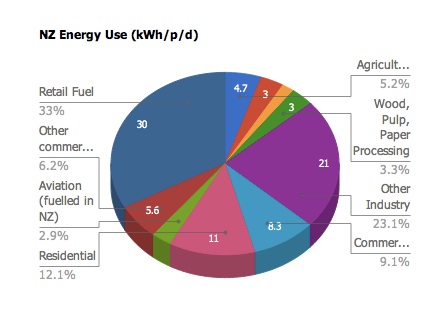
 Welcome to the ninth post in the Sustainable Energy without the Hot Air – A New Zealand Perspective series. Today we’re summarising the numbers on the various renewable energy options in New Zealand (and finding they’re more than sufficient!). For the background to the work please our introductory post
  Of all the consequences of human-caused global warming, sea level rise has always held special alarm for me in its inexorability, its extension into the future, and the enormous disruption it threatens to centres of high population and essential infrastructure. Scientist