
 Last week business lobby group Pure Advantage launched [Herald, Stuff] a specially commissioned report, Green Growth: Opportunities for New Zealand, which presents, they say, “an exhaustive, objective economic argument for embracing green growth”. The report was produced by a London-based economics consultancy in conjunction with the University of Auckland Business School, and is the culmination of two years work to identify the most effective ways of implementing green growth business strategies in NZ.
Launching the report, Pure Advantage (PA) chairman Rob Morrison said:
We firmly believe on the basis of this significant macroeconomic report that New Zealand has the potential to generate billions of dollars in new high-value economic growth, whilst at the same time improving New Zealand’s environmental performance.
Morrison said that PA intends to use the report as “a basis to establish, in consultation with industry, seven industry-specific green growth programmes”. The seven key ‘advantages’ are (links go to PA web explanations):
- Home Advantage: Retrofitting an efficient building environment;
- Geothermal Advantage: Creating a significant geothermal export industry
- Agricultural Advantage:
Investing in sustainable and efficient agricultural technologies - Waste-to-Energy Advantage: Installing bio-energy and waste-to-energy infrastructure
- Biofuel Advantage: Establishing a woody mass biofuel and bio-products industry
- Smart Grid Advantage: Installing the building blocks of a smart grid
- Biodiversity Advantage: Establishing a world-class biodiversity driven ecotourism and conservation education programme.
PA note that the report was “not driven by environmental idealism or fear of climate change”, yet the recommendations look a lot like the sort of joined up thinking on environment and emissions policy that has been so lacking from the present government. By making the business case for green growth, perhaps PA can start a bottom-up change of economic direction that will do for NZ what the government will not. It’s certainly a worthwhile effort, but while there are other lobby groups out there promoting rampant population growth as the way to stop economic decline, it will continue to be an uphill struggle.
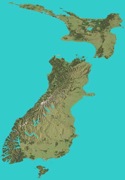 Welcome to the fiftheenth post in the Sustainable Energy without the Hot Air – A New Zealand Perspective series. After our previous posts on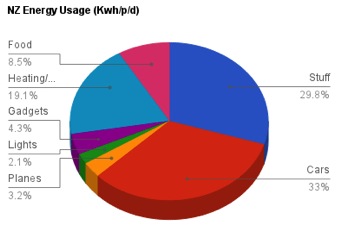
 The New Zealand government has announced that the country will not join the second commitment period of the Kyoto Protocol (CP2), but will instead make voluntary commitments within the Kyoto framework [
 In this post Simon Johnson aka Mr February channels his inner General Westmoreland and his Vietnam flashbacks to look at National’s latest change to the New Zealand Emissions Trading Scheme (NZETS). Parliament has just (8 November) passed amendments that indefinitely defer any greenhouse gas obligations for agriculture and indefinitely discount obligations to industries.This is a ‘last helicopters off the Saigon hotel roof’ point in the sad history of the always-doomed-to-fail New Zealand Emissions Trading Scheme.