
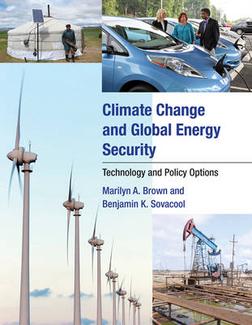
 Academics Marilyn Brown and Benjamin Sovacool, who have impressive credentials in the field of energy policy, are co-authors of the recently published Climate Change and Global Energy Security: Technology and Policy Options, a substantial and detailed study of a very wide range of technologies covering both the promise of those options and the obstacles to their effective employment.
I was deeply depressed by the time I got to page 64 of the book. That was where the tale of five challenges ended. The authors had enlarged the energy and climate change scope of the book somewhat to identify five challenges threatening the prosperity of future generations: electricity, transportation, forestry and agriculture, waste and water, climate change. They do it thoroughly, and it seemed well-nigh impossible that the growing population of the world could possibly cope with these problem areas. But the reader is counselled in the final paragraph of the chapter not to give up in despair, as the issues can be broken down into more manageable challenges to which technology and policy solutions are readily available. Continue reading “Climate Change and Global Energy Security”
 Tim Naish’s lecture, of which we
 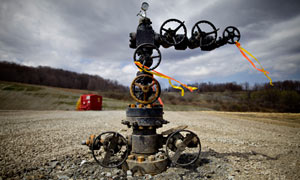 My heart sinks when I read enthusiastic acclamations of natural gas as a substitute for coal. It releases less CO2 on combustion, we’re told. It is a good bridge to the time when renewable energy is sufficiently developed to take over. And latterly, with the development of fracking, that’s going to be a very long bridge. There are claims that if we can extract all the shale natural gas there’s enough to