

NZ ETS to be watered down (again), but emissions news good

New Zealand’s new Minister for Climate Change Issues and chief climate negotiator, Tim Groser, yesterday announced the government’s intended changes to the Emissions Trading Scheme following last years ETS Review. There will be a limited period for consultation (to May 11) on the proposals before legislation is put before Parliament. The consultation document (PDF) and meeting dates are available here. Key points:

  • Agriculture’s entry to the ETS may be delayed beyond 2015.
  • There will be no increase to the $25/tonne unit price cap.
  • The “two for one” transitional provision for big emitters will be phased out more gradually.
  • The government will give itself powers to auction emissions units.
  • There will be a review of the allocation of carbon credits to pre-1990 forests to take into account the changes to the forestry regime agreed in Durban last year.

Groser also announced the release today of New Zealand’s net emissions position for the 2008-12 Kyoto reporting period, now expected to be a surplus (that is, under NZ’s target) of 23.1 million tonnes, up from 21.9 mt in 2011.

News that agriculture may continue to escape carbon constraints is hardly surprising, given the government’s reluctance to annoy its heartland farming and agribusiness supporters, but it appears willing to risk confrontation with Maori forestry interests on pre-1990 carbon credit allocations. My view is that this tinkering around the edges of the scheme is designed to put the ETS into a kind of domestic political holding pattern until the shape of future international arrangements begins to emerge. Groser doesn’t want to frighten the horses until he absolutely has to, as this quote from Brian Fallow’s piece in the NZ Herald today might be taken to indicate:

Preferences for changing areas of the policy would vary a lot depending on what assumptions were made about the future carbon price, Groser said.

“If you think it will remain at the current low levels, you will reach one set of conclusions. Take a different view of the trajectory of the carbon price – and above all, this is a long game we are playing – and you may reach quite different conclusions.”

Getting international action on emissions reductions is certainly turning out to be a long game. We can only hope that it doesn’t turn into the diplomatic equivalent of a timeless test, and that the climate system is kind enough to give us time to play it. I’d not want to bet on either proposition.
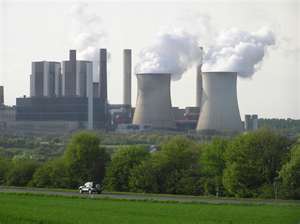
Hansen’s letter on lignite

At the suggestion of Slovenian colleagues, James Hansen has written to the President and members of the National Assembly of the Republic of Slovenia urging them to deny a state guarantee for a proposed European Investment Bank loan to fund a new lignite-fired power plant in their country.

He points out that they are considering a decision which will have significant effects, some irreversible, upon the world that today’s young people and future generations inherit. Such a strong statement, he says, however unlikely it may seem at first glance, is a clear conclusion of the most advanced climate science. That science he proceeds to summarise in his letter, and to describe in more detail in an attached paper The Case for Avoiding Dangerous Climate Change to Protect Young People and Nature.

Continue reading “Hansen’s letter on lignite”

Prat watch #6: My coup runneth over

Courtesy of the ever-helpful NZ Climate “Science” Coalition — you know, the guys who take money from American think tanks and found “charities” to sue scientists — I stumble on a remarkable exposition of the world view to which they subscribe. Apparently, “Climate criminals almost took control of the whole world by deception, a grand fraud. Money has changed hands on a vast scale due to a bunch of easily-dispelled untruths.” Really? Here’s another sample:
The supporters of the theory of manmade global warming are […] an intellectual upper class of wordsmiths, who regulate and pontificate rather than produce real stuff. There is little demand in the economy for their skills, so they would command only modest rewards for their labor in the marketplace. Arguably they are a class of parasites enriching themselves at the expense of producers, because they are rewarded out of proportion to the value they create—value as determined not by themselves, but by voluntary transactions in the marketplace.

Yes folks, those of us who would like some meaningful action on climate change are the “regulating class” according to a penetrating new analysis by Australian denialist Dr David Evans. And we’re bent on world domination…

Continue reading “Prat watch #6: My coup runneth over”

How to talk to a denier

[youtube]Qp-nJKBwQR4[/youtube]

This interesting new video by George Marshall from Talking Climate discusses how to talk to someone who doesn’t accept the reality of climate change or the need to act, and how best to start persuading them that they might be in error. From the Talking Climate blog post:

George emphasises that argument, conflict, and dis­respectful language will make it more difficult to achieve the goals you are aiming for – that is, to encourage some­body who is sceptical about climate change to engage with the problem and possible solutions to it. Finding ‘common ground’ and being able to under­stand why people are sceptical about cli­mate change in the first place is critical. It isn’t all that much to do with a lack of under­standing of ‘the science’, but has a lot to do with the ‘personal journey’ that people go through when forming their beliefs about cli­mate change and whether to engage in sustain­able behaviour.

George last featured at Hot Topic a year ago, when I discussed his talk on the ingenious ways we avoid believing in climate change. In some respects this new talk builds on that, taking into account the social psychology of belief in climate change. For a more detailed discussion of what’s going on, Marshall’s colleague at Talking Climate, Adam Corner, popped up at the Guardian last week to discuss an experiment on how attitudes condition belief:

What this experiment illustrates, though, is that “belief” in climate change is very much what matters. Without belief in climate change, scientific evidence simply bounces off. And it is social views and cultural beliefs that predict climate change denial, not people’s level of knowledge about climate science.

There’s lots of interesting stuff in Marshall’s video, in Corner’s article and at the Talking Climate web site. I would like to think that I follow Marshall’s suggested approach in one-on-one conversations — I usually find it pretty easy to find common ground with my more sceptical neighbours, for instance — but even the best of intentions can break down in the face of an intractable relative, whether Uncle Bob or the sister-in-law from over the sea…

See also: The Debunking Handbook, by John Cook and Stephan Lewandowsky.

[Nick Lowe]

Ignoring the future? Sea level rise and NZ’s planning guidelines

A question-time exchange in the New Zealand Parliament a few days ago seemed worth drawing to the attention of Hot Topic’s readers. Green MP Kennedy Graham (pictured) put this question to the Minister for Climate Change Issues:

Is he concerned by a recent report of an international team of scientists that, even with a two degree Celsius rise in average global temperature, future generations could face sea levels of up to 12 to 22 metres higher than at present?

Kate Wilkinson, the Minister of Conservation, replied on behalf of the Minister for Climate Change Issues:

Yes. The estimates of sea level rise in this report are in line with estimates from the science community over the past few years. But I note that the author himself puts these estimates in context by stating that such changes could take centuries or millennia and that “The current trajectory for the 21st century global rise of sea level is 2 to 3 feet …”.

Graham’s follow-up question pointed out that the current Government guidelines for councils for sea level rise for 2100 are lower than the level estimated by scientists and asked whether the need for correction would be admitted.

Continue reading “Ignoring the future? Sea level rise and NZ’s planning guidelines”