This op-ed by climate scientist Jim Salinger first appeared in print editions of the New Zealand Herald last Tuesday.
Global warming is not a phenomenon for future generations to deal with: it has arrived. And more frequent heat waves and climate extremes are part of this phenomenon. As I watch from my summer roost in northern New South Wales, the somewhat unprecedented heat is searing the Australian continent making it tinder dry with fires springing up everywhere. These raise some pertinent lessons on climate and risk management for New Zealand.
Firstly let’s look at some figures and ask the question of what are the climate mechanisms behind the heat waves.
Nate Silver is a math pundit who founded the fivethirtyeight blog now over at the NY Times. That blog was all about the presidential election and over there he used a series of polls to predict (very successfully) the results of both the 2008 and 2012 US elections. An integral part of Nate’s approach is to use Bayesian probability thinking to keep reviewing the data as it comes in regardless of whether that data is from baseball, a poker game, the US elections or climate change.
Silver’s book — The Signal and the Noise: The Art and Science of Prediction [Fishpond, Book Depository] should be required reading for anyone who needs to review increasingly large tranches of data. Chapter 12 of his book is devoted to the climate change numbers — called “A Climate of Healthy Skepticism”. Part of Silver’s thesis is that many of us can’t sort the noise from the signal.
In which I guest-post as myself and describe a carbon forest sink project I am involved in and our debate about whether we should provide carbon offsets to anyone as part of the project. I originally wrote this for the Greens Frogblog
Simon Johnson is a conservationist, tramper, accountant, former DOC worker and resource management consultant. Simon also blogs periodically at Hot-Topic.co.nz. In this guest post he writes about carbon offsetting from the point of view of a carbon forest.
I am one of the trustees of a small 47-hectare carbon forest sink and native re-vegetation project and mountain bike park; “Project Rameka” in the east Takaka hills in Golden Bay.
It’s really a response to climate change made by two of my old friends, Bronwen Wall and Jonathan Kennett, who bought the land in 2008. Bronwen and Jonathan decided to apply their experience organising native planting projects in Wellington to climate change after reading the 2007 fourth report of the International Panel on Climate Change (IPCC).
It’s been embraced enthusiastically by the Golden Bay community who do the planting, pest control and track work through Project Rameka Inc.
The land is owned by a trust and I am one of the trustees. I did the early accounting for the trust and prepared the application to get the land into the Permanent Forest Sinks Iniative (PFSI).
In return for a 50-year covenant restricting the land use to forest, we receive about 800 carbon credits (specifically assigned amount units) per year for Project Rameka. These units started life as part of New Zealand’s 1990 baseline amount of ‘Kyoto’ units under the Kyoto Protocol.
How many units we get is based on the amount of carbon withdrawn from the atmosphere by the trees. Thanks to the Golden Bay weather, plants grow really quickly. So we really are storing carbon. We have seen 3cm annual growth rings in the few pines we have removed.
A new open comment thread for the New Year, mainly because it’s too long since I posted the last one, but also because I’ve been declaring too many comments on recent posts to be off-topic. James Hansen‘s commentary on last year’s temperatures and the prospects for this year (pdf) is your starter for ten…
Meanwhile, I’m preparing a couple of talks for this weekend’s Coal Action Network Summer Festival near Gore. I’ll be briefing attendees on the state of the climate, and what we know about where we’re heading. There’s a session for the public on Sunday at the James Cumming Wing in Ardwick Street in Gore — I’ll be speaking at about 10-30 am. See you there? Failing that, I’ll probably post edited highlights of my thoughts next week.
Saturday’s New Zealand Herald carried an astonishing editorial on climate change — remarkable enough to prompt me to tweet that it was “crass, complacent and so very wrong“, despite it being ostensibly in support of action on climate change. The piece begins by riffing on the wildfires in Australia, before observing:
With Australia having its two hottest days on record this week, and New Zealand enjoying a hot summer, it feels like climate change has arrived. But most scientists are wary about attributing any particular weather to global warming. To cite this summer as evidence would enable sceptics to recall last January’s washout.
“Most scientists” are being anything but wary about discussing the link between the Aussie heatwave and climate change. Australia’s Climate Commission released a special report on the heatwave at the end of last week. Here are the first three “key points” from the report:
The length, extent and severity of the current Australian heatwave is unprecedented in the measurement record.
Although Australia has always had heatwaves, hot days and bushfires, climate change is increasing the risk of more frequent and longer heatwaves and more extreme hot days, as well as exacerbating bushfire conditions.
Climate change has contributed to making the current extreme heat conditions and bushfires worse.
Straightforward enough, you might think. Climate change is making the heat and fires worse. But if the Herald editorial writer might be forgiven for missing a major report from the Australian body tasked with informing that nation about the realities of climate change, he or she cannot be forgiven for the astonishing complacency evident in the next few paragraphs.

 This op-ed by climate scientist Jim Salinger first appeared in print editions of the New Zealand Herald last Tuesday.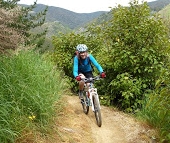
 A new open comment thread for the New Year, mainly because it’s too long since I posted the last one, but also because I’ve been declaring too many comments on recent posts to be off-topic.
  Saturday’s New Zealand Herald carried