[youtube]2BZdVAMi9hg[/youtube]
Not a good look for a tourism minister who happens to be Prime Minister. An even worse look for a country where tourism is 18% of export earnings.
[H/T – The Standard]
Global warming and the future of New Zealand

[youtube]2BZdVAMi9hg[/youtube]
Not a good look for a tourism minister who happens to be Prime Minister. An even worse look for a country where tourism is 18% of export earnings.
[H/T – The Standard]
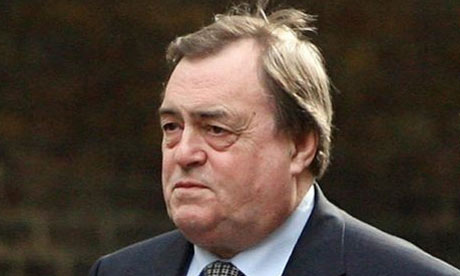 John Prescott, whose activities in the lead-up to Copenhagen I drew attention to in an earlier post, continues to make waves in Guardian reports. Is he fighting on two fronts?
Yesterday he reiterated his basic position when he launched the campaign New Earth Deal, on behalf of the Parliamentary Assembly of the Council of Europe.Â
 Signals are beginning to emerge (from the 5th Australia-New Zealand Climate Change & Business conference in Melbourne this week) that the “harmonisation” of New Zealand’s emission reduction policy framework may take longer than expected (or feared). Following a breakfast with his Australian counterpart Penny Wong, both ministers were reported to be playing up the difficulties of linking the two schemes. The Stuff report quotes Wong:
“The first step for both of our governments is to get our legislation in place, to get our trading schemes in place,” Ms Wong told reporters. “The second point is this — we are doing the work to explore options for harmonisation. There is obviously a lot more work that needs to be done.”
Smith was equally cautious:
“That is why the two governments are in a pretty common space in saying we are going to start these two schemes separately but in time it is our ambition to bring them closer together.”
Meanwhile, Reuters reports that businesses on both sides of the Tasman are urging their governments to get a move on.
“You don’t shift significant billions of dollars of investment on the basis of what’s likely to happen,” said Barry Harris, director of milk supply for Fonterra, the world’s biggest dairy exporter and a pillar of the New Zealand economy. “The financial consequences of reacting to the wrong signals are absolutely massive,” he told the conference.
In NZ, Labour’s climate spokesman Charles Chauvel today warned that softening up the current ETS arrangements to match Australian proposals could cost taxpayers up to $200m a year. But perhaps the most telling statement to emerge this week is this line form Nick Smith’s speech to the Melbourne conference:
It is just unrealistic to continue to pretend we are, or can be, world leaders in reducing emissions.
To some, that may be admirable pragmatism. To me, it demonstrates a catastrophic lack of vision and a failure to rise to a challenge. If Smith wants no part of leadership, he should resign his cabinet post immediately.
 A short item in today’s Herald reports the visit to New Zealand under Oxfam’s auspices of Pelenise Alofe Pilitati. I followed up with a call to Oxfam who provided helpful extra material about their visitor. As Chairperson of the Church Education Director’s Association in Kiribati she is acutely aware of the impact climate change is having on the future prospects and outlook of young people. “The future of Kiribati is in our hands – we work very hard each year to support and help students to be successful. We want our children to love their country and love to serve their people. But what is the future of our children when our country is being threatened by global warming?”
 Government ministers have deliberately played down the role of forestry in meeting emissions targets, documents released under the Official Information Act suggest. Diligent digging at No Right Turn has uncovered a Ministry of Agriculture & Forestry paper [PDF] titled New forest planting and harvesting intentions under high carbon prices, which makes clear that forest planting will increase significantly under a stable Emissions Trading Scheme, and that even a modest ($20/tonne) carbon price could trigger planting of up to 100,000 hectares a year — a rate not seen since the forestry boom of the 1990s, and enough to offset a huge chunk of NZ’s emissions to 2020 and beyond. Climate change minister Nick Smith did not mention these figures during the target consultation process, though it is clear he must have known about them. His failure to front with the facts on forestry amounts to a clear attempt to manipulate public perception of the difficulty of meeting steep targets, and raises serious questions about the agenda driving government policy.
Continue reading “Why did Nick Smith hide the facts on forestry?”
Bad Behavior has blocked 3170 access attempts in the last 7 days.