
Garth goes off the deep end

Another week, another load of tripe from Garth George in the Herald. He emerges from his sulphurous lair stirred by stories of volcanoes in Iceland to lend his weight to calls for the suspension of the Emissions Trading Scheme. He makes so many egregious errors that he not only makes himself look foolish, but also calls into question the editorial standards of the Herald. Opinion is opinion (and Garth is entitled to his) but facts are facts, and the nation’s leading newspaper should not allow him to simply invent his own.

Let’s take a closer look…


Here’s his opening error:

…more and more evidence is available that gases such as carbon dioxide and methane have absolutely no effect on global temperatures.

What evidence would that be, one wonders, because Garth provides no clue. I haven’t heard of any major revisions in basic physics that would allow greenhouse gases not to warm the planet. I suspect Garth is just making stuff up, interviewing his typewriter (which, for all I know, may be about to win a Nobel prize for rewriting quantum physics).

I suspect that the eruption of Mt Eyjafjallajokull in Iceland shot more gases into the atmosphere in five minutes than New Zealand would in five years.

No need for suspicion. The figures are available, and even Garth could have Googled an answer to his rhetorical question. Leo Hickman at the Guardian has done the digging: Eyjafjallajökull has been emitting somewhere in the range of 150-300,000 tonnes of CO2 per day. New Zealand, on the other hand, emitted 74.7 million tonnes of CO2e in 2008 according to the latest MfE report. Garth could have argued that Eyjafjallajökull’s peak daily emissions were about the same as New Zealand’s, but they were also being more than offset by the cancellation of so many long distance flights.

The increasing scepticism over global warming throughout the world is not surprising after the shocking sub-zero weather which created chaos all over Britain, throughout Europe and in the United States in the depth of their winter.

It was the fourth warmest winter since records began.

There is increasing scepticism here, too, after one of the coldest winters in decades, which started early and finished late, afflicted much of New Zealand.

Wrong. New Zealand’s winter started early, and was quite cold, but it also ended early and August was the warmest in the record.

But the deception continues among the global warming scaremongers.

The chutzpah is breathtaking. A Biblical phrase about logs and eyes springs to mind.

Climate has been in a constant state of flux since God created the heavens and the land and the sea and placed the sun and the moon in their orbits.

When was that, Garth?

And I am persuaded absolutely that it is the sun, not the harmless, essential trace gas carbon dioxide, that drives climate change. So our emissions trading scheme will not just be a colossal waste of time and effort but an unaffordable waste of money.

Garth’s absolute certainty is ridiculously unpersuasive, based as it is on shoddy research and made-up “facts”. The Herald, if it wishes to retain any vestige of credibility in its opinion section, should apologise for foisting such ignorant and ill-informed ramblings on its readers.
Copenhagen Accord puts world on pathway to 3ºC

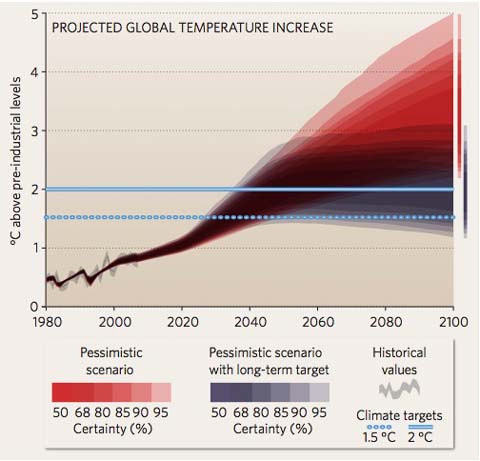
German scientists have added up the emissions reductions pledged in the Copenhagen Accord and calculate that they put the planet on a pathway that misses the Accord’s stated 2ºC target, and only delivers a 50/50 chance of coming in under 3ºC by the end of the century. In an opinion article in this week’s Nature, Copenhagen Accord pledges are paltry, Joeri Roelgj et al show how the current emissions commitments amount to little better than “business as usual”, and effectively mean that global emissions will have increased by 20% by 2020. The key points in the article are:

  • Nations will probably meet only the lower ends of their emissions pledges in the absence of a binding international agreement
  • Nations can bank an estimated 12 gigatonnes of CO2 equivalents surplus allowances for use after 2012
  • Land-use rules are likely to result in further allowance increases of 0.5 GtCO2-eq per year
  • Global emissions in 2020 could thus be up to 20% higher than today
  • Current pledges mean a greater than 50% chance that warming will exceed 3°C by 2100
  • If nations agree to halve emissions by 2050, there is still a 50% chance that warming will exceed 2°C and will almost certainly exceed 1.5°C

A lack of ambition now means that countries will face steep emissions cuts in future. Co-author Malte Meinshausen told the BBC:

In an ideal world, if you pull off every possible emission reduction from the year 2021 onwards, you can still get to get to 2C if you’re lucky. But it is like racing towards the cliff and hoping you stop just before it.

Commenting on the article, Andy Reisinger of VUW’s Climate Change Research Institute told the SMC:

“This analysis shows that it is imperative to substantially strengthen the emissions targets for 2020 as part of a strong international agreement if the world is to have a realistic chance of limiting warming to 2°C. We are no longer gambling the future of the planet — if we stick with current emissions targets we are folding our cards entirely and leaving it to our (and other people’s) kids to pay our accumulated debts.”

VUW’s Martin Manning points out that politicians need to be given the mandate to act decisively:

It is becoming increasingly obvious that dealing with climate change is something that needs to become driven by society more broadly. People need to consider how much of a problem we want to pass on to our grandchildren and tell politics and industry to act accordingly.

The BBC coverage is excellent, dramatically illustrating the lack of ambition in European targets. Reports also at the Herald & Stuff

Conference in Bolivia: who pays the price of change?

“We are very worried because we have no water. Half the people of this community have already left. Those who remain are struggling with the lack of water.”

 

Those are the words of a villager in a small Bolivian village called Khapi which is suffering from the effects of retreating glaciers in the Andes.  A BBC news report explains how it is for the villagers. Over the past 10 or 15 years, changing weather patterns have led to irregular water flows – the streams become torrents or dwindle to just trickles. “Our crops are dry now, our animals are dying; we want to cry.”

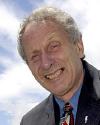
There are only 40 families in the village, but they’re ready to take their case to international forums. One of their leaders is Alivio Aruquipa (pictured):

“For the past two decades, we, the people from the Andean regions have been suffering because of the greenhouse emissions from the developed countries. If they don’t stop our glaciers will disappear soon. We want those countries to compensate us for all the damage they have done to nature…

“We don’t know how to calculate the compensation because we are not professionals, we are simply farmers. But we would like assistance, and then to receive some money and, with that money, to build dykes to store the water, improve the water canals.”

Hot Topic carried a post last November on the necessity of adaptation in Bolivia, following an Oxfam report.  The BBC news item is another example of the increasing body of evidence which bears out predictions of likely impacts of climate change. It will be discounted by some as anecdotal but there comes a point where the sheer volume of converging stories means they deserve credence.

The call for compensation is a just one, and rightly part of the price we should pay to assist poorer people already suffering the effects of human-caused climate change. In some respects it is in lieu of the price we ought to have put on carbon some years back. It’s a call which the Bolivian government is pushing. They would like to see an international environmental court where compensation claims can be made.

Bolivia is right now hosting its own international conference on climate change, the World People’s Conference on Climate Change and the Rights of Mother Earth. It’s attended by a mixture of NGOs and government representatives, and in some respects it’s an attempt to recover the ground Bolivia considered was lost at Copenhagen when the Accord was put together by a small group of larger countries. Pablo Solon, Bolivia’s UN ambassador, who has been prominent in the organising of the conference says:

“The only way to get climate negotiations back on track, not just for Bolivia or other countries, but for all of life, biodiversity, our Mother Earth, is to put civil society back into the process. The only thing that can save mankind from a [climate] tragedy is the exercise of global democracy.”

Robert Eshelman describes the conference in the Huffington Post:

“…participants [include] Bill McKibben, NASA scientist Jim Hansen, Martin Khor, G77 + China negotiator Lumumba Di Aping, and Vandana Shiva. Throughout the conference, seventeen working groups will convene to discuss issues ranging from deforestation and climate migrants to the rights of indigenous peoples and developing technologies for poor and low-lying nations to adapt to the impacts of climate change.”

He sees divergence from the kind of path the US is wanting to follow:

“While the U.S. will use the Major Economies Forum and the Energy and Climate Partnership of the Americas to spotlight how small group and bilateral discussions among leading economies, rather than the 192-nation U.N. process, is the best way forward on climate negotiations, participants at the Bolivian conference argue that the conversation about, and the process for, developing strategies to address climate change needs to be expanded, not narrowed, bringing more voices into the debate around climate change.”

Hopefully this needn’t indicate stalemate, but both paths can be pursued. If they’re not there is real danger of the poorest nations suffering the injustice of neglect.

10:10NZ campaign launches

New Zealand now has its very own Ten-Ten campaign, part of a global effort to promote personal commitments to emissions reductions. Based on the hugely successful 10:10 campaign launched in the UK last year by New Zealander Lizzie Gillett (producer of The Age Of Stupid), the NZ campaign aims to get as many people as possible to commit to making a 10% reduction in their carbon emissions over one year, starting this year. Here’s Gillett on the scheme’s impact in the UK (from the press release):

In the UK, the 10:10 campaign aims to cut carbon emissions by 10% during 2010. It has amassed huge cross-societal support including Adidas, Microsoft, Tottenham Hotspur Football club, 55,000 individuals, 1,500 schools, and a third of local councils (representing 25 million people), all the cabinet and the Prime Minister.

I suspect the chances of getting John Key to sign up are slim, but if enough people demonstrate a willingness to make cuts it should show our politicians that this is not an issue that can be ignored or where action can be delayed. Cutting your personal emissions by 10% in a year is an easily achievable target for most people, as 10:10NZ spokesman Rhys Taylor explains:

It’s an easy figure to handle – for example 10% represents one of 10 weekday commuter journeys, either to or from work, switched from driving a car to walking or cycling. Walk or cycle both there and back one day in five to knock an easy 20% off fuel demand for that week’s commuting. If a bus traveller or car-sharer, your journey still requires fuel consumption, but significantly less per person than driving alone. Car sharing or using a bus to go both in and back on one day in five would achieve the passenger’s 10% drop in commuting fuel. That’s not hard to do, is it?

There’s more information on how to make cuts at the 10:10NZ site, including links to the interesting Project Litefoot. The campaign is currently focused on personal and household commitments, but there is also plenty of scope for businesses to join. And there’s the obligatory Facebook page.

Hot Topic is happy to endorse and support 10:10NZ: more news as the campaign develops.

Beatin’ the heat

It was a happy experience to open the Waikato Times last week and see across from the editorial page the profile of scientist Jim Salinger under the headline Salinger doesn’t feel critics’ heat.  The articlewas based on an interview with Salinger, who was visiting Hamilton to speak to Forest and Bird’s AGM about research on climate change since the 2007 IPCC report.

It opened with the recognition that in recent months Salinger has had to stave off repeated criticism of his work by the likes of Rodney Hide and the Climate Science Coalition.  Even his decades-old PhD thesis has come under fire.

Salinger explains that when he did his thesis he simply wanted to work out what was happening with New Zealand climate.

“In those days we weren’t considering the greenhouse effect, and I thought ‘this is an interesting topic, see if New Zealand’s climate has changed’.”

He discovered the climate was warming slowly, and he’s confident that if Niwa rechecks his work using modern techniques they’ll come up with the same conclusions.

About the attacks, he chuckles slightly and says:

“Science is about facts, not beliefs. I like to look at the facts and see what they say – if people want to attack me as a person, that has nothing to do with my science. It doesn’t worry me.

“…This whole group are trying to accuse me, and my overseas scientific colleagues, of fraud.

“Well, there is going to have to be a hell of a lot of people involved in this “fraud’…They’re trying to say the International Panel on Climate Change is a fraudulent activity, and in fact it’s a very thorough process.”

The theft of the UEA emails he sees as a deliberate attempt to discredit the scientists and the science. After outlining the basics of the evidence of warming, and along the way defending the peer-review system, he summarises that his concern is whether the planet will be fit for survival by humans as a species.

I reflected when reading the article that it is sad that the mainstream science Salinger represents should have to be presented to Waikato Times readers as a response to the ignorant and despicable attacks mounted on New Zealand climate scientists by the ACT party and the Climate Science Coalition.  The interviewing journalist Jeff Neems did a good job of ensuring that the science showed through clearly, but as a society we are apparently not yet ready to regard it as news enough in itself that leading scientists are greatly alarmed at what they are discovering about the effect of greenhouse gases on the climate. Had the Times not recently reported the attacks of Hide and company I imagine it is likely that Salinger would have slipped in and out of Hamilton virtually unnoticed except by those attending the Forest and Bird AGM.

I don’t mean to attack the Waikato Times particularly.  It has a better record in these matters than many New Zealand papers. But the press as a whole should have been doing much more than it has in focusing public attention on the seriousness of the issue. The science Jim Salinger represents shouldn’t have to depend on the campaigning of Greenpeace to get media attention. He and others who work in the climate science field should be reported regularly and seriously. His wondering whether the planet will remain fit for human survival is not idle. It’s a serious science-based concern and the public should know that many leading scientists have such a level of concern. Hide and his companions strike at the foundations of intellectual regard on which the functioning of society depends. Our newspapers should be strengthening those foundations.