It’s an arresting title, The God Species: How the Planet Can Survive the Age of Humans. For author Mark Lynas the Holocene, the 10,000 year post-ice age era during which human civilisation evolved and flourished, has given way in industrial times to the Anthropocene, an age in which the human population has undergone extraordinary growth, and become totally dominant on the planet. In the process we have interfered in the planet’s great bio-geochemical processes to the extent that we are threatening to endanger the Earth system itself and our own survival. Things are badly askew and we must help Earth to regain stability. It cannot do so alone. “Nature no longer runs the Earth. We do. It is our choice what happens from here.”
Not that Lynas proposes to shoulder nature aside. Far from it. It’s a question of restoring nature’s balance and working within its limits. His book is about the planetary boundaries which must be respected if we are to avoid very serious environmental damage. He aims to communicate to a wide audience the findings of a group of 28 internationally renowned scientists who a couple of years ago identified nine such boundaries and wrote about them in a notable feature in Nature. Along the way he has his own suggestions for tackling the challenges involved and takes issue with other environmentalists over what he considers wrong-headed stances on many issues, including nuclear power and genetic engineering. This aspect of the book is often argumentative, but the central exposition of the planetary boundaries is straight science, set out with the lucidity apparent in his earlier book Six Degrees.
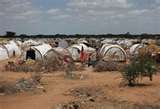 The horrifying pictures of famine in the Horn of Africa haunt us as human tragedy, and the more because they carry with them the question of whether this has something to do with climate change. Are we going to see more and more of this kind of suffering as climate change impacts begin to mount? That’s an easier question to muse than to answer with certitude, but it deserves our attention. There is every indication that poor people are going to suffer from the impacts of climate change sooner and more harshly than the rest of us. But is the Horn of Africa famine part of that?
  Simon Johnson continues his series of guest posts looking at the Australian and New Zealand carbon pricing schemes.
 A recent Forest and Bird Newsletter