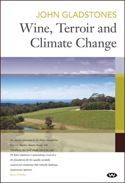
 Regular listeners to The Climate Show will know that I often witter on about what I’ve been up to in my little vineyard. At Limestone Hills we grow pinot noir and syrah grapes and make small quantities of wine. It’s more than drinkable. One day it may even be very good. If we get that far, it will be because our back paddock has an interesting terroir (and because we will have worked hard). It will therefore come as no surprise that I follow how the wine business approaches climate change with more than passing interest. A few days ago a local winemaker blogged about a new book. Wine, Terroir and Climate Change by Aussie scientist Dr John Gladstones, noting that Gladstones was “sceptical about the degree of climate change that will occur and thus the degree of effect on terroir“. Unsurprisingly, the usual suspects have rushed to welcome a new member to their ranks. I decided to do a little digging… Continue reading “The climate terroirist – Gladstones’ new bag”
Category: Climate business
To boldly go… to a low carbon future
 I liked the sub-heading to a Guardian article on Friday. “The theory that cutting carbon emissions costs us growth is bunk, in fact, it’s an economic opportunity.” The article itself is a little less exuberant in its expression, understandably given that one of its authors, Vinod Thomas (pictured), is director general for independent evaluation at the Asian Development Bank and the other, Manish Bapna, is interim president at the World Resources Institute, a well-established and respected global environmental think tank. Nevertheless its affirmation is clear:
“Not only can preparing for climate change offer opportunities for economic growth, it would be unwise to pursue one without the other.”
Doublethink: doubleplus ungood
 What do New Zealand government members really think about the chasm between their claims on the one hand to be addressing climate change and their insistence on the other that we must take every opportunity to expand our fossil fuel mining industry? I listened to a recent Radio New Zealand interview with Tim Groser, the Minister responsible for international climate change negotiations, in which he discussed the outcome of the Durban conference. He sounded committed to the reduction of greenhouse gas emissions. He was respectful of the science. He affirmed that the progress so far made was inadequate, but thought it possible that Durban might turn out to have been a critical turning point by getting all the big emitting countries on the mitigation bus. He sometimes sounded the “real world” theme, but not to the extent of suggesting that the whole process was doomed to failure. He was positive about renewable energy potential. One might disagree with some of his perspectives, but there was no suggestion that he was not serious about the need for the world to move to low-carbon economies.
Yet back in New Zealand Groser is a Minister in a government which is planning to increase the exploration and exploitation of fossil fuels, claiming that they offer immense financial benefits that we would be foolish to forego. These fuels will release greenhouse gases into the atmosphere either in the countries to which they are exported or here. When pressed on the issue the excuses offered include that emissions in other countries are the responsibility of the users of the fuels, not the suppliers, that within New Zealand our Emissions Trading Scheme will somehow result in the satisfactory offsetting of the harm done by the emissions, and that if we don’t mine fossil fuels others will and we will suffer an unfair economic disadvantage.
I find it impossible to mentally inhabit these two worlds simultaneously. A world in which we are working sincerely to a drastic reduction in greenhouse gas emissions, and a world in which we are vigorously pursuing the extraction of every last bit of fossil fuel we can locate. Am I lacking mental agility? Or is there doublethink going on in government?
The Climate Show #23: Durban and the return of the electric car
[youtube]tbmbC8dXOiU[/youtube]
Grab some holly, deck your halls, heat up some mince pies, and then settle down to the last Climate Show of 2011. We look at the outcome of the Durban conference, discuss heavy rain in New Zealand and record-breaking weather extremes in the USA, and ponder the implications of news of more methane erupting from the seabed off Siberia. Glenn interviews Chris Paine, director of EV documentary Revenge of the Electric Car, and we round off the show with some optimistic news on possible energy solutions.
Watch The Climate Show on our Youtube channel, subscribe to the podcast via iTunes, listen to us via Stitcher on your smartphone or listen direct/download from the link below the fold…
Follow The Climate Show at The Climate Show web site, and on Facebook and Twitter.
Continue reading “The Climate Show #23: Durban and the return of the electric car”
Hidden treasure is fools gold
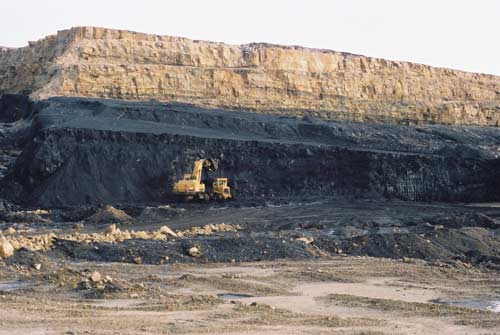 The Institute of Professional Engineers New Zealand (IPENZ) has launched a new document, Realising Our Hidden Treasure: Responsible Mineral and Petroleum Extraction. The title says it all, and it’s the same message as the government has been feeding us for the last three years.
First the treasure. The document sets it out in dollar terms. I’ll mention only the fossil fuels here. They estimate the potential value of the resources as $109 billion for coal, $248 billion for lignite, $187 billion for oil and $45 billion for natural gas.
Then the question of responsible extraction. The document is concerned with the environmental effects. There are plenty to be concerned about, but in this post I’ll focus on greenhouse gases, which the document addresses in a short section headed “Can We Manage Greenhouse Gas Emissions?”