 It’s been a bad week for the Heartland Institute — the US lobby group recently shown to have funded New Zealand climate denialists. Documents leaked this week expose Heartland’s fund-raising and climate strategies to the cold light of day, and a major new piece of research by John Mashey demonstrates that Heartland has been acting outside of the rules governing the tax-exempt status it claims for itself.
Documents relating to a Heartland board meeting held in January were sent to a number of bloggers earlier this week, and have been made available by DeSmogBlog. The papers give a very full account of Heartland’s budget and plans for 2012, right down to individual staff salaries, and provide details of funding streams from players big and small. The largest — described as the “anonymous donor” — provided Heartland with $8.6 million over 2007-11 for its climate campaigns (see pps 20 and 21 of this document).
Key points from the documents:
- Heartland plans to create a “Global Warming Curriculum for K-12 Schools” that “isn’t alarmist or overtly political”, and plans to pay Dr David Wojick $25,000 a quarter to develop the materials.
- Heartland is planning to fund Fred Singer’s Not the IPCC project to the tune of $1.5 million over 2010-13, and is budgeting monthly payments of $11,600 to Craig Idso, $5,000 to Singer and $1,667 to Bob Carter during 2012.
- Anthony Watts (of µWatts fame) is being funded to the tune of $88,000 to develop a web site featuring US temperature data.
- Current funders include tobacco companies, fossil fuel interests, and even Microsoft.
Heartland claims the documents were stolen, and that one — relating to their strategy on climate denial — was faked, even though the main points in that “confidential memo” are corroborated by the other documents. The Heartland response includes threats of legal action against web sites and media carrying stories based on the documents, and says:
…honest disagreement should never be used to justify the criminal acts and fraud that occurred in the past 24 hours. As a matter of common decency and journalistic ethics, we ask everyone in the climate change debate to sit back and think about what just happened.
Those persons who posted these documents and wrote about them before we had a chance to comment on their authenticity should be ashamed of their deeds, and their bad behavior should be taken into account when judging their credibility now and in the future.
Back in 2009, when the emails stolen from the Climatic Research Unit at the University of East Anglia first hit the web, Heartland president Joseph Bast wrote:
The release of these documents creates an opportunity for reporters, academics, politicians, and others who relied on the IPCC to form their opinions about global warming to stop and reconsider their position. The experts they trusted and quoted in the past have been caught red-handed plotting to conceal data, hide temperature trends that contradict their predictions, and keep critics from appearing in peer-reviewed journals. This is new and real evidence that they should examine and then comment on publicly.
The hypocrisy burns…
Meanwhile, the news that Bob Carter is retained by Heartland to undermine the work of mainstream science through the NIPCC is making waves in Australia (Graham Readfearn, SMH), but hasn’t yet been picked up in New Zealand. Carter’s role as a “science advisor” to the Heartland funded NZ Climate Science Coalition and its ICSC spin-off, as well as to Nigel Lawson’s secretive Global Warming Policy Foundation raises serious questions about just how lucrative denial can be, as well as illuminating the international web of climate denial.
Continue reading “The real Climategate: Heartland’s hypocrisy on display”

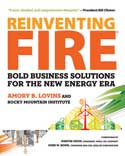 Is there movement already under way in the world of industry which will outstrip the painfully slow progress of the political world in facing up to the challenge of climate change?
 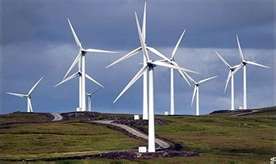 Some encouraging renewable energy news in a recent
  The Minister for Economic Development Steven Joyce had a curious