The Climate Show #27: Aussie hockeysticks, cherry pies and electric planes

[youtube]prR5zce-kdA[/youtube]

It’s a first! Glenn, Gareth and John manage to record a show that clocks in at under an hour — but it’s still packed with interesting stuff. We’ve got news about a new Australasian hockey stick — a paleoclimate reconstruction that demonstrates that the last three decades are the warmest in the last 1,000 years, a look under an Antarctic ice shelf, more methane research, and good news from Greenland. John Cook from Skeptical Science looks at the misuse of temperature records from the Sargasso Sea, and we look at electric planes and boats and the latest version of the solar “leaf”. And… Glenn announces his imminent move to the UK, but never fear, the show will go on — just as soon as he sets up his computer in London (which might be a couple of months).

Watch The Climate Show on our Youtube channel, subscribe to the podcast via iTunes, listen to us via Stitcher on your smartphone or listen direct/download from the link below the fold.

Follow The Climate Show at The Climate Show web site, and on Facebook and Twitter.

Continue reading “The Climate Show #27: Aussie hockeysticks, cherry pies and electric planes”

G8: self-deception on energy and climate

The section of the recent G8 Camp David declaration which deals with energy and climate change can only be described as depressing. No clarion call from these nations. Instead, a confused jumble starting with an “all of the above” statement:

… we recognise the importance of meeting our energy needs from a wide variety of sources ranging from traditional fuels to renewables to other clean technologies. As we each implement our own individual energy strategies, we embrace the pursuit of an appropriate mix from all of the above in an environmentally safe, sustainable, secure, and affordable manner.

How fossil fuels can be considered environmentally safe and sustainable elements in an energy mix is not explained. But apparently this mix is somehow compatible with a low carbon economy:

We also recognise the importance of pursuing and promoting sustainable energy and low carbon policies in order to tackle the global challenge of climate change.

Continue reading “G8: self-deception on energy and climate”

Uncertainty overdone

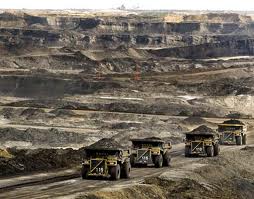
Earlier this month James Hansen wrote a trenchant op-ed in the New York Times.  He reiterated the warning that the exploitation of the Canadian tar sands will be game over for the climate, spelt out some of the long-term drought consequences for the US of continued warming and identified notable heat waves of the last decade as most likely due to human-caused climate change. He was clearly anxious to drive home the message that humanity is in serious danger if we carry on exploiting all the fossil fuels we can find. “If it sounds apocalyptic, it is.”
On cue, journalist Andrew Revkin in his Dot Earth blog on the New York Times a few days later reported a meteorologist, Martin Hoerling, who claimed that Hansen had exceeded his brief as a scientist and allowed his policy commitment to overrule scientific caution. Revkin then asked climatologist Kerry Emanuel for his reaction to both Hansen and Hoerling. He received the comment that Emanuel saw overstatements on all sides, and, unsurprisingly, aligned himself with Emanuel.

But there was more to come on Revkin’s blog. A few days later he posted a response to Hoerling by Dan Miller who had assisted Hansen in the preparation of his op-ed. Miller had also been in touch with Emanuel to find out what his concerns were. It turned out they were hardly substantial:

Continue reading “Uncertainty overdone”

A sunnier outlook from the ground up

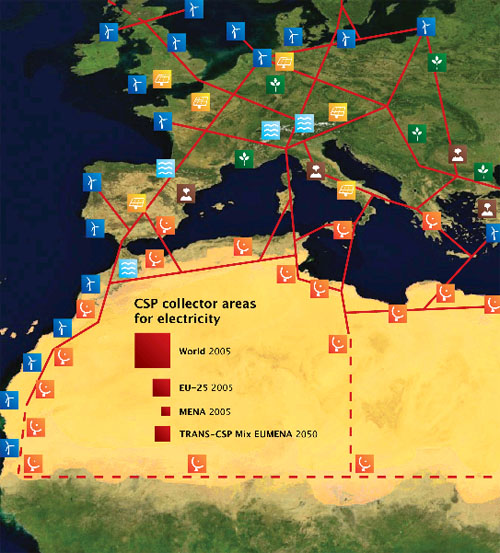
The NZ Herald business supplement recently carried a thoughtful feature by Peter Huck in which he described moves to combat climate change at lower levels than the floundering international negotiations. He begins with a report on Desertec Industrial Initiative, the German-led consortium which this year hopes to trial in Morocco a concentrated solar power plant as the harbinger of ambitious plans to provide very large quantities of solar and wind energy to North Africa and Europe.

Huck takes this as one of the many signals that the top-down approach to limiting carbon emissions through international deals is giving way to a ground-up attitude that stresses action.  Others include the EU’s introduction of a carbon tax on airlines that use its airports; Scotland’s investment in wave power; California’s embrace of renewable energy, clean fuels, a cap-and-trade programme to limit emissions, and other green policies; Ecuador’s efforts to preserve its forests by getting donors to pay it to keep oil in the ground; China’s approval last year of its 12th Five Year Plan, which aims to tackle energy consumption and CO2 emissions. Further down the chain Huck instances a growing urgency about reducing emissions which can mean corporate investment in renewable energy, municipal emphasis on public transport, or a family insulating their home.

Continue reading “A sunnier outlook from the ground up”

Alphabet soup in Bonn

Emma Renowden is attending the first few days of the UN climate change conference in Bonn. In this guest post she looks at how negotiations are progressing, what the major issues are likely to be, and what New Zealand’s up to.

After the near-failure of Durban in December last year, the current Bonn Climate Change Conference promises to be interesting. With the Kyoto Protocol commitment period ending this year, the development of a second commitment period is perhaps the most important objective that needs to be met. A number of states have already submitted their Quantified Emissions Limitation and Reduction Objectives (QELROs), signalling their continued commitment to the KP, but it has become clear that not all countries are so eager to sign themselves up again.

States were ‘invited’ to submit their QELRO figures, leaving it as a matter of choice. New Zealand, for instance, has yet to do so, and is “still considering whether to take its target under a second commitment period of the Kyoto Protocol or under the Convention.” When NZ’s submission does come, it is expected to demand a number of conditions, mainly around forestry rules (the LULUCF) and the carry-over of surplus emissions units. However, NZ faces a lot of criticism for its current stance. The Alliance Of Small Island States (AOSIS) called on it to submit its QELRO without such limitations, on the grounds that the KP is not the place for conditional commitments.

The Climate Action Network (CAN) also urged NZ and Australia, to fulfil their commitments and not to follow in Canada’s “dirty footprints” by pulling out of the treaty.

Continue reading “Alphabet soup in Bonn”