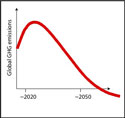
According to a UN Environment Programme report released yesterday, The Emissions Gap Report – Are the Copenhagen Accord Pledges Sufficient to Limit Global Warming to 2° C or 1.5° C? (summary PDF), if the planet is to have a reasonable (defined as 66%) chance of limiting warming to 2ºC, global emissions will have to peak before 2020, with emissions in 2020 of around 44 GtCO2e and reducing sharply thereafter. The report assesses the Copenhagen Accord pledges as likely to deliver best case 2020 emissions of about 49 GtCO2e. — leaving a “gap” of at least 5 GtCO2e between commitments and ambition. A “lenient” interpretation of the Accord could result in emissions little different to business as usual.
In order to close that gap, the report suggests that countries could adopt higher conditional targets, avoid the use of surplus emissions units (so-called “hot air”), and ensure strict rules for land use change and forestry carbon accounting. The good news is that the report suggests this might be possible. The bad news is that to have a reasonable chance of hitting a 1.5ºC target emissions will have to reduce by 4 – 5% per year after 2020, and move into negative (removing carbon from the atmosphere) territory after 2050. The report suggests this could be done by huge afforestation projects and using biomass energy generation with carbon capture and storage.
The UNEP report is part of the stage setting for the COP16 conference in Cancun beginning next week. More coverage at the BBC, Independent, and Guardian. Richard Black at the Beeb puts the worst case in the lead:
The promises countries have made to control carbon emissions will see temperatures rise by up to 4ºC during this century, a UN report concludes.
Ban Ki-moon was a bit more up-beat (that’s his job):
“I encourage all Parties to make good on their national mitigation pledges, and to further progress within the negotiations as well as through strengthened efforts on the ground to curb emissions. There is no time to waste. By closing the gap between the science and current ambition levels, we can seize the opportunity to usher in a new era of low-carbon prosperity and sustainable development for all.”
Sounds good. Sounds implausible. The gap between commitment and ambition is big and getting bigger by the day. Even a global recession could only trim last year’s emissions by 1.3% compared with the year before, as emissions growth in China and India more than made up for falls in the US, EU and Japan. The UNEP report suggests that there’s still a way to avoid the most damaging warming, but a look at ambitions for Cancun indicates the political will is lacking.
[Update: Barry Brook has a guest post from Tom Wigley looking at the likely climate system response to achieving zero emissions by 2050.]
[Dimmer]

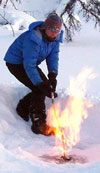 Atmospheric methane levels continued to increase in 2009, the World Meteorological Organisation’s annual Greenhouse Gas Bulletin (summary PDF) confirmed this week. Methane averaged 1803 ppb over the year, up 5 ppb on 2008, and now contributes 18.1% of the radiative forcing caused by current greenhouse gas levels. The Bulletin suggests that “likely causes were above average wetland methane emissions due to exceptionally warm temperatures at high northern latitudes in 2007 and heavy precipitation in tropical wetlands in 2007 and 2008. However, it cautions that the reasons for the recent increases are not yet fully understood.”
 One of Hot Topic’s favourite sceptics is NZ C”S”C member Roger Dewhurst, best known for turning up from time to time to unload links to the denier meme du jour (and for his carefully cultivated