A Pathway to Sustainable Energy

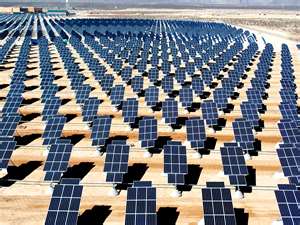
“Will we look into the eyes of our children and confess that we had the opportunity, but lacked the courage? That we had the technology, but lacked the vision?” These words preface the report Energy [R]evolution 2012: A Sustainable World Energy Outlook published this month by Greenpeace, the European Renewable Energy Council and the Global Wind Energy Council.  It’s the fourth edition in a series which began in 2007. The publication is book length and over its pages describes a renewable energy scenario which sees CO2 emissions fall 85% from 1990 levels by 2050. I thought it well worth drawing attention to.

The authors can hardly be accused of utopian dreams. The technology exists to access stores of renewable energy far larger than the world’s energy requirements. The publication describes in careful and comprehensive detail an achievable programme of transition which would leave no need for the world’s fossil fuel resources to be pursued to the point of exhaustion or anywhere near it.  Carbon capture and storage is not part of the scenario, for reasons of cost and uncertainty; nor is nuclear energy, which, for reasons of cost, safety and inability to reduce emissions by a large enough amount, is marked for phase-out.

The reduction of demand through energy efficiency, the “sleeping giant” which offers the most cost-effective way to reform the energy sector, is a vital element in the transition. Over and over again surveys and analyses are making this clear, and the report is very much in line with an increasingly common theme in the literature.  High levels of projected energy demand diminish dramatically when energy efficiency is given high priority. The document shows the effect of best practice in various sectors of the economy.
Continue reading “A Pathway to Sustainable Energy”

The incorrigible Easterbrook

There it was in my Google News feed — a headline saying Sorry Global Warming Alarmists, The Earth Is Cooling. As you might expect, it caught my attention, because the Earth is doing no such thing. Following the link led me to an an article at the Forbes magazine web site by a Heartland Institute person called Peter Ferrara. A few paragraphs into what is nothing more than an extended advertisement for Heartland’s recent climate sceptic networking event, Ferrara writes:

In 2000, the UN’s IPCC predicted that global temperatures would rise by 1 degree Celsius by 2010. Was that based on climate science, or political science to scare the public into accepting costly anti-industrial regulations and taxes?

Don Easterbrook, Professor Emeritus of Geology at Western Washington University, knew the answer. He publicly predicted in 2000 that global temperatures would decline by 2010. He made that prediction because he knew the PDO had turned cold in 1999, something the political scientists at the UN’s IPCC did not know or did not think significant.

Don Easterbrook? The retired geologist who steals other people’s work and alters it to suit his purposes? The one who uses Greenland ice core data but misunderstands and misrepresents it?
Yup, that Easterbrook.

Continue reading “The incorrigible Easterbrook”

High and dry

EOTasmanhigh

From NASA’s Earth Observatory: yesterday’s Image Of The Day (RSS feed) was this stunning picture of an intense high pressure system over the Great Australian Bight to the southwest of Tasmania, acquired by the MODIS sensor on the Aqua satellite on June 5th. In high pressure systems, dry descending air suppresses cloud formation, in this case punching an impressive “hole” through a layer of stratocumulus clouds. Central pressure at the time was 1040 hectoPascals. According to the NZ MetService 7 day forecast, over the next week the system will move east and set up camp to the southwest of the South Island.

Also from the Aqua satellite last week, a good picture of the midweek snowstorm that hit the South Island. Thursday morning chez nous was as pretty as several pictures.

Communicating science across cultural divides

A recent study in Nature Climate Change by Dan Kahan and others has attracted interest for its findings on public apathy over climate change.  It’s not incomprehension of the science that is the problem, the article finds, but the strong influence of the cultural environment and philosophical inclination of individuals, predisposing them to downplay the science even when they are well-equipped to understand it.  It’s not my purpose in this post to communicate the substance of the study – there’s a very good short piece in the Economist which will do that for you – but I want to offer some reflection on its conclusions.

The claim that there are severe limits to the effectiveness of relying on simple communication of the science is not a new one. Social scientists have been declaring for some time that cultural and economic perceptions are what prevent the climate message from making headway in significant sectors of the community. This paper is further confirmation.

I don’t think there is any message here for climate scientists. They do science. Their work is to understand what is happening to the biosphere as greenhouse gas emissions continue to mount and to try to work out what it portends for the future. If some of the public say they don’t believe it, or they don’t believe it’s as serious as the science suggests, then there’s little  more scientists can do than to reiterate that it’s real and it’s serious and to keep adducing the evidence  which  leads them  to that conclusion. The evidence is mounting. There is nothing in sight to suggest the science has got it wrong.

Continue reading “Communicating science across cultural divides”

The unseen transit

[youtube]QX6BbP1wAIs[/youtube]

It’s been snowing most of the day chez Hot Topic, so any chance I may have had of viewing the transit of Venus across the sun earlier today was lost in a haze of snowflakes and cloud. However, thanks to the fact that the sun provides the energy that drives the climate system, I can justify posting this wonderful NASA video, produced by NASA’s Solar Dynamics Observatory. More imagery here. Breathtaking, I hope you’ll agree.