It looks as though the Petermann Ice Tongue in northern Greenland is about to lose another major chunk of ice. This New Scientist video (accompanying text here) shows a team working on the tongue, documenting events as they happen. They expect a major break-up event within weeks:
When this happens, an island of ice the size of Manhattan, spanning 100 km2 holding 5 billion tonnes of ice, will break free and drift out to sea.
Researchers are concerned that the loss of this huge mass of ice might “uncork” the glacier, leading to a speed up and further ice loss.
Last year’s ice island started out at 25 km2, but has moved an amazing distance since it broke off in July 2008. By September it had moved south through Nares Strait (between Greenland and Ellesmere Island), and at that point the Canadian Ice Service installed a GPS tracking beacon. The ice island is now down to 21 km2 in area, drifting off the SE coast of Baffin Island. The massive berg has its own regularly updated page at the Canadian Ice Service (with satellite imagery), and you can follow its daily position here. I wonder how far a new Manhattan-sized island might get…
Meanwhile, the Telegraph reports that huge blobs of organic “goo” up to 15 miles long are appearing in the Chuckchi Sea and to the north of Alaska.
The US Coast Guard told the Anchorage Daily News that the strange find is not an oil product or a hazardous substance of any kind.
“It’s definitely, by the smell and make-up of it, some sort of naturally occurring organic or otherwise marine organism,” said Petty Officer 1st Class Terry Hasenauer. In recent history I don’t think we’ve seen anything like this,” he added.
Results of an analysis are expected next week
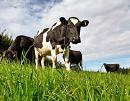 Could New Zealand agriculture be part of the solution to climate change? We know all too well that it is part of the problem – and that’s not an accusation, by the way, just a recognition. But problems are there to be tackled, and what is called carbon farming looks like one way in which agriculture can substantially contribute to climate change mitigation and at the same time improve the soils on which it depends.
 The Sunday Star Times recently carried an
 With the first week of 2020 target consultations out of the way, here are a few reflections on what I heard in Christchurch, what happened elsewhere, and what the world’s been up to. Perhaps most hearteningly, the G8 nations (USA, Russia, UK, France, Germany, Japan, Canada & Italy)