
Methane rise continues

More cautionary news on rising methane levels is reported in yesterday’s Independent. Two leading experts on CH4in the atmosphere, Euan Nisbet and Ed Dlugokencky, were due to reveal at a conference that, after a decade of near-zero growth, “globally averaged atmospheric methane increased by [approximately] 7ppb (parts per billion) per year during 2007 and 2008.” They consider it likely that 2009 will have shown the same rising trend, since the figures for the first half of the year showed a 7 ppb rise on the 2008 level.

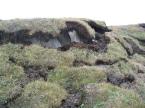
They are properly cautious about the rises and comment that they may just be a couple of years of high growth which may drop back to what it was.  But they stress the importance of understanding the causes of the rises, because of the potential for increased CH4 emissions from strong positive climate feedbacks in the Arctic where there are unstable stores of carbon in permafrost. Permafrost melt carries the potential for methane release.

If there is a feedback mechanism at work it’s bad news as the Independent makes clear in terms that its readers can understand:

“Many climate scientists think that frozen Arctic tundra… is a ticking time bomb in terms of global warming, because it holds vast amounts of methane, an immensely potent greenhouse gas. Over thousands of years the methane has accumulated under the ground at northern latitudes all around the world, and has effectively been taken out of circulation by the permafrost acting as an impermeable lid. But as the permafrost begins to melt in rising temperatures, the lid may open – with potentially catastrophic results”.

This is not alarmism on the part of the Independent. The scientists involved in reporting the rises are careful and restrained in their statements.  We may hope that the increases turn out not to be significant in terms of feedbacks under way.  But it is a sober reminder of how quickly things may change if natural feedbacks kick in and amplify the warming already caused by our human activity.  See Gareth’s earlier post on methane hydrates in the Arctic.

Incidentally, it was good to see a newspaper competently and thoroughly reporting climate change science news.  It can happen, and when it does it’s a different world from the ignorant and careless journalism that has been so apparent recently in relation to the UEA emails and the IPCC report.  Rationality and proportion marked an excellent piece of science reporting.
The Listener joins the attack

“…serious and growing questions over the standards and credibility of the international body whose job it is to determine the scientific truths about climate change.” 

The Listener is not going to be left out.  Ruth Laugesen writes in the current issue that “probes by a variety of international media have uncovered a smattering of poorly based and even shonky assertions” in the IPCC reports.  By the time she comes to list them later in her article they have become “potential inaccuracies”. The list is familiar enough.  First is the Himalayan glacier melt rate, which has been acknowledged by the IPCC as a regrettable error.  Of the other four, two track back to Jonathan Leake at the Sunday Times – dubbed Amazongate and Africagate – and both have been shown up as lacking any substance by Tim Lambert here and here. Another refers to the mistaken statement that 55% of the Netherlands is below sea level when the correct figure is 26%, yet Laugesen acknowledges that this relied on a figure supplied by the Netherlands Environmental Assessment Agency. The remaining item concerns the reliability of data from weather stations in East China used in a research paper by Phil Jones and others published in Nature in 1990. Jones has reasonably responded to the accusation of fraud here.


Against the massive and impressive IPCC reports these are all matters of negligible substance, as anyone who has cast an eye over the reports would immediately recognise.  Only one of them reveals a clear failure to observe the processes and standards expected of the IPCC authors.  It is absurd to suggest that they add up to serious and growing questions.  All they add up to is a demonstration of how savagely determined climate change deniers are to cast doubts on climate science by whatever means they can find.  Is it too much to ask that a staff writer for the Listener treat her “international media” with more caution?  Journalists around the world seem to be engaged in an operation where you simply pass on something you have read about climate science in another publication without feeling the need to check on its initial reliability.  The more this happpens the more the story becomes entrenched. And the longer the public is left thinking there may be some deep uncertainty about human-caused climate change. The abdication of intellectual responsibility is alarming.

And it’s not only journalists who are letting the public down. Depressingly, and I wish I could add surprisingly, Climate Change Minister Nick Smith when questioned by Laugesen has chosen not to deny the notion that the IPCC report is untrustworthy.  “It does raise questions – if those parts of the report have mistakes in them, what about the rest of the report?…The reality is that governments respond to the mood of the public. And the fact that there are errors in the IPCC report is of concern.”

He says that the errors will be one reason for the government being “a bit more cautious” on climate change policy.  How much more cautious can the government get without giving up on the issue altogether?  If Smith is taking his lead from the mood of the public he should not be occupying the post of Climate Change Minister.  He has access to expert scientific advice.  He should be telling the public how serious the situation is, not letting their mood be determined by superficial journalism.

He even has the nerve to advise the 16 NZ scientists involved in the IPCC process that “it is better to pursue quality than quantity.”

Thankfully Laugesen includes comments from NIWA’s chief climate scientist, David Wratt, NZ’s representative on the 31-member IPCC governing bureau.  He introduces a note of sanity into the article. One hopes the Listener readership is sophisticated enough to see with whom the truth lies, but journalists certainly aren’t making it easy.

Economist says climate science deserves praise

A forthright article from economist Jeffrey Sachs in today’s Guardian acknowledges that recent harsh attacks on the science of climate change have disconcerted the global public.

But the fact is that the critics, few in number but aggressive in their attacks, are deploying tactics that they have honed for more than 25 years. They greatly exaggerate scientific disagreements in order to stop action on climate change, with special interests like Exxon Mobil footing the bill.  The free-market idealogues of the Wall Street Journal’s editorial page provide a platform.

Continue reading “Economist says climate science deserves praise”

Time for a break…

Time to reconnect with New Zealand. I’m taking my summer break from blogging. Over the next few days, I’ll be on a boat (the one in the picture) tootling around the Abel Tasman, and therefore out of touch with the world. Bryan will be your host until I get back to my desk at the end of next week. Be gentle with him, please…

La-la Land again: Jim Hopkins gets it wrong

It must be sceptic idiot week at the Herald. Not content with allowing Garth George to make stuff up, today they unleash that mighty wit (or should that be twit?) Jim Hopkins, who has been reading the Daily Mail‘s daft coverage of a BBC interview with Phil Jones, the man at the centre of the beat-up over stolen emails:

Professor Jones discussed many things with the BBC, including the trouble he has “keeping track” of information, but the professorial concession the Daily Mail pounced upon – and our media ignored – was this: He said that for the past 15 years there has been “no statistically significant” warming. “No statistically significant warming”. None. It’s not happening. Since 1995, we ain’t got hotter. And that’s not the sceptics speaking. That’s from a man who garnered $22 million to prove we were getting warmer. Much warmer, worryingly warmer, “Lucy Lawless was right” warmer. But now he says we’re not. And haven’t been for 15 years.

I suppose we can’t expect a newspaper columnist and professional funny man to understand statistical concepts. Jones did not say that there had been no warming for 15 years. He said that the warming trend over the last 15 years just fails to meet one test for statistical significance. Here’s Jones in full:

Do you agree that from 1995 to the present there has been no statistically-significant global warming?

Yes, but only just. I also calculated the trend for the period 1995 to 2009. This trend (0.12C per decade) is positive, but not significant at the 95% significance level. The positive trend is quite close to the significance level. Achieving statistical significance in scientific terms is much more likely for longer periods, and much less likely for shorter periods. [My emphasis].

The Daily Mail misunderstood and/or misrepresented what Jones told the BBC — and that’s been extensively covered on the web. Hopkins is happy to repeat that misinformation without checking his facts. Perhaps he doesn’t understand how to use Google? More coverage of Mailgate at Deltoid, In It For The Gold, Real Climate, and for a full explanation of what statistical significance means in this context, Tamino has an excellent article here. Meanwhile, Jim should stick to his knitting instead of repeating tabloid lies from Britain.