Al Gore going strong

That travesty of a news outlet, Fox News, carried an article last Thursday (in its science and technology section, believe it or not) which opened as follows:

“Al Gore won a Nobel Prize and an Oscar for his film, An Inconvenient Truth. But in the last three months, as global warming has gone from a scientific near-certitude to the subject of satire, Gore – the public face of global warming – has been mum on the topic.”

The writer elaborates in the rest of the article, with such choice pickings as this quote from the Investors’ Business Daily:

“The godfather of climate hysteria is in hiding as another of his wild claims unravels – this one about global warming causing seas to swallow us up. We’ve not seen or heard much of the former vice president, Oscar winner and Nobel Prize recipient recently as the case for disastrous man-made climate change collapses.”

No doubt this kind of taunting is rife in the fevered madness of some of the right-wing media in America. It’s not a world I willingly dip into.

But they’re as wrong about Gore’s reticence as they are about the science he communicates.  He contributed a lengthy opinion piece to last weekend’s New York Times.  In it he recognises the recent attacks on the science of global warming, even says it would be an enormous relief they were true. But they’re not.

Continue reading “Al Gore going strong”

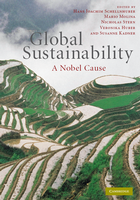
Global Sustainability – A Nobel Cause

Global Sustainability

In late 2007 I kidded myself that I was present at a gathering of Nobel Laureates as I spent some hours watching a website video record of their proceedings. They had assembled with a variety of other distinguished experts for a three-day symposium on global sustainability. I can remember being very impressed, particularly by some of the developments in energy technology which were reported to the gathering, but also more generally by the wide intellectual compass demonstrated by the participants. Climate change and energy generation figured strongly in the symposium. It concluded with a strongly expressed Memorandum which I assumed would by now have been consigned to the archive of such declarations, only to be seen by those with an interest in fossicking through the unheeded warnings of the past. Not yet. The Potsdam Institute, organiser of the symposium, has in the intervening time been gathering essays from the contributors and has now published them in a substantial book Global Sustainability – A Nobel Cause.

It isn’t possible to report on all 33 essays, but I’ll mention a few. Murray Gell-Mann, the discoverer of the building blocks he called quarks, was awarded the Nobel prize for physics in 1969. Now 80 years old he’s still working at the Santa Fe Institute he helped to found. He describes it as a place where it is the rule rather than the exception to have transdisciplinary problems studied by self-organized teams of people originally trained in many different specialties. In the opening essay to this volume he writes of the importance of what he calls a “crude look at the whole”, and of supplementing specialized studies of policy problems with serious attempts to unite them, albeit with an inevitable degree of simplification. He wants to use the term sustainable in an inclusive way, not restricted to environmental, demographic and economic matters, but referring also to political, military, diplomatic, social and institutional or governance issues. He indicates a wide range of interlinked transitions which will be required if the world is to switch to greater sustainability: demographic, to a stable human population; technological, to supply human needs with lower environmental impact; economic, to quality taking the place of quantity (other than for the alleviation of poverty); social, to a society with less inequality; institutional, to better cope with conflict and the management of the biosphere;  informational, to the readier acquisition and dissemination of knowledge and understanding; ideological, to a combination of localised loyalties with a ‘planetary consciousness’.

The section of the volume which carries essays on technological innovation and energy security includes two from Nobel laureates.  Walter Kohn won the 1998 prize for chemistry. He straightforwardly outlines the necessity and practicality of solar and wind energy which he sees overtaking oil and natural gas by 2021.  Alan Heeger who won the 2000 prize for chemistry describes the exciting work on low-cost plastic solar cells in large quantities using ‘photovoltaic inks’ and printing technology to produce flexible plastic sheets of the cells.  The section includes illuminating essays on how new super grids and smart grids can work to enhance the feasibility of renewable energy generation on a large scale. Another essay of interest looks at possible paths to carbon-negative energy systems, focusing on the hydro-thermal carbonisation of biomass which could be done in small dispersed operations on much less than industrial scale.

Throughout the book there is frequent acknowledgement of the necessity of tackling poverty eradication at the same time as climate change. Nitin Desai of India puts it clearly: “The two challenges are now so connected that coping with one requires that we cope also with the other. That is what sustainable development is all about – how poverty eradication and environmental protection can be mutually supportive.”

In a section on a global contract between science and society John Sulston, joint winner of the 2002 Nobel prize for physiology/medicine, argues that the hyper-competitive stance that has been the norm in international relations will be disastrous for the problems now facing us. By sharing and acting upon our knowledge we have the opportunity to mitigate climate change. The great danger is that each of us tends to betray the group by striving for advantages over others, and if we persist on this course we and our planet will suffer dire consequences.

The Memorandum adopted by the symposium gathers up the themes explored by the many contributors. “We are standing at a moment in history when a Great Transformation is needed to respond to the immense threat to our planet. This transformation must begin immediately and is strongly supported by all present at the Potsdam Nobel Laureate Symposium.”  Climate protection ambitions appear to be on a collision course with the predominant growth paradigm that disconnects human welfare from the capacity of the planet to sustain growth. Yet the development needs of the poorer countries must be met. The great transformation is a thorough re-invention of our industrial metabolism. An awesome challenge, the memorandum  acknowledges, but to meet it we now have an incredibly advanced system of knowledge production that can be harnessed, in principle, to co-generate that transformation.

After listing key elements for climate stabilisation and energy security, the memorandum concludes with a plea for a new global contract between science and society, highlighting the need for a multi-national innovation programme that surpasses the national crash programmes of the past such as the Manhattan or Apollo projects. It calls for better global communication about natural or social sustainability crises and for a global initiative on the advancement of sustainability science, education and training. “The best young minds, especially those of women, need to be motivated to engage in interdisciplinary problem-solving, based on ever enhanced disciplinary excellence.”

The trenchant final chapter of the book written by Klaus Töpfer, a former Federal Minister of the Environment under Chancellor Helmut Kohl, places the memorandum in the context of the dramatic economic crisis that began shortly after the symposium.

“More than ever before, the relationship between economic development and stability, and the integrity of the ecosystems in our world are becoming evident. This global economic crisis is a declaration of bankruptcy of the ‘short-term world’…It is also a declaration of bankruptcy by a society that subsidizes its ‘wealth’ by externalizing the main part of the costs linked to production and consumption, imposing them on coming generations, on human beings living far away, and on nature’s capital.”

Against this background he hails the Potsdam Memorandum as an historical document of continuing significance, focused on the dramatically destabilized economic and ecological world of today. “It not only describes the problems and formulates the challenges; this memorandum also suggests the solutions. The utmost must be done to apply these recommendations to day-to-day decisions in this crisis-stricken world.”

Note: The book is available for free download.

Weekend reading: dealing with noise

There’s no doubt that in the last few months the PR war against action on climate change has been fierce — and effective. Three articles I’ve read in the last couple of days throw some light on what’s been going on, and are well worth a few moments of anyone’s time. The first, and by far the most eloquent, is Bill McKibben’s The attack on climate science is the O.J. moment of the 21st century. McKibben likens the tactics of OJ Simpson’s lawyers, confronted with a huge pile of evidence that their client was guilty to the campaign against climate science:


If anything, [OJ’s lawyers] were actually helped by the mountain of evidence. If a haystack gets big enough, the odds only increase that there will be a few needles hidden inside. Whatever they managed to find, they made the most of: In closing arguments, for instance, Cochran compared [LA detective Mark] Fuhrman to Adolf Hitler and called him “a genocidal racist, a perjurer, America’s worst nightmare, and the personification of evil.” His only real audience was the jury, many of whom had good reason to dislike the Los Angeles Police Department, but the team managed to instil considerable doubt in lots of Americans tuning in on TV as well. That’s what happens when you spend week after week dwelling on the cracks in a case, no matter how small they may be.

McKibben suggests that CRU head Phil Jones has been cast in the Fuhrman role, taking the full force of the attack. This personalisation of the process is exemplified by the McCarthy-like tactics of US senator James Inhofe, who has just released a report calling for investigations and prosecutions of leading climate scientists. Because they can’t change the evidence, however hard they try, they are reduced to shooting the messenger…

The robustness of the case for action is underlined in the new statement on climate science from NZ PM John Key’s science adviser Sir Peter Gluckman, Climate change and the scientific process, but Gluckman is also realistic about the difficulty of making policy in this area.

Although the risk to our future of not acting now is real, the scientific community has had and is having difficulty communicating both its uncertainty and the absolute need for action simultaneously. […] The ensuing political and economic debate on how best to respond to climate change should not be used as an excuse to gamble the planet’s future against the overwhelming evidence that humans are contributing to the world warming at an unsafe rate. The basic principle is no different to risk management in any other sphere of life.

The “debate”, such as it is, is not about the science. McKibben again:

…it’s a mistake to concentrate solely on the science for another reason. Science may be what we know about the world, but politics is how we feel about the world. And feelings count at least as much as knowledge. Especially when those feelings are valid. People are getting ripped off. They are powerless against large forces that are, at the moment, beyond their control. Anger is justified.

Feelings can do more: they condition the way the think about things. This recent National Public Radio story, headlined Belief in climate change hinges on worldview explains the work of The Cultural Cognition Project:

To social scientist and lawyer Don Braman, it’s not surprising that two people can disagree so strongly over science. Braman is on the faculty at George Washington University and part of The Cultural Cognition Project, a group of scholars who study how cultural values shape public perceptions and policy beliefs. “People tend to conform their factual beliefs to ones that are consistent with their cultural outlook, their world view,” Braman says.

“Basically the reason that people react in a close-minded way to information is that the implications of it threaten their values,” says Dan Kahan, a law professor at Yale University and a member of The Cultural Cognition Project.

Kahan says people test new information against their preexisting view of how the world should work.

“If the implication, the outcome, can affirm your values, you think about it in a much more open-minded way,” he says.

And if the information doesn’t, you tend to reject it.

This is what is happening with climate change. The polarisation is all too obvious in the blogosphere and the wider media. The CCP has also identified what it calls the “messenger effect” — where people tend to believe information if it comes from people like themselves. In the climate “debate” this becomes a vicious, inward-looking circle, with sceptic and crank arguments endlessly recirculating around blogs, boards and mailing lists.

All of these articles illuminate one central truth: all the noise about emails, IPCC “errors” and crooked scientists has absolutely nothing to do with the underlying science. Those who want to delay action on climate change have no hope of dismantling what McKibben calls the haystack of evidence, they can only pretend that finding a needle means the thing is not made of hay. But they can change the politics — the willingness of politicians the world over to take firm action now.

The answer, if it can be found, will not come from climate scientists. They need to do what they do best — study the planet in all its complexity, define and delineate the implications of what we’re doing to it. But we should not expect them to win hearts and minds, to build a global public consensus on the need for urgent action. That’s a matter for politics, not science. The lead has to come from elsewhere. My own suspicion is that nothing much will get done until the damage from change becomes too great to ignore — and I found an eery echo of that fear in my morning paper, in a story lifted from the Times about a new British report on likely land use changes in the UK over the coming century. One scenario considered is described thus:

Mass migration northwards to new towns in Scotland, Wales and northeast England may be needed to cope with climate change and water shortages in the South East, according to an apocalyptic vision set out by the Government Office for Science. […] In the most extreme scenario, world leaders hold an emergency summit in 2014 when it becomes clear that the impacts of climate change are going to be far worse and happen much sooner than previously envisaged.

The sad fact is that if we wait until the damage is too obvious to ignore, it will be too late to stop much worse impacts in future decades. McKibben says we need courage and hope. But we also need leaders who are prepared to take the evidence and act on it — and who will not be swayed by the denialist noise campaign. They need to recognise empty vessels when they see them.

Back at the ranch

Petrel(small).jpg

Back at my desk, after four days on a boat in the Abel Tasman/Golden Bay area. I’m tempted to post a selection of my photographs, but I’ll settle for this one (for fellow Sciblogger Chthoniid) of a petrel, taken in Golden Bay a few kilometres off Farewell Spit on Monday morning. Oily seas, hot, lots of birds and kingfish. Click on the picture for a bigger version. Anyone know the exact species? I’d say it was a black petrel, but I’m no ornithologist. I’ll be back on the climate beat over the next few days, but meanwhile my thanks to Bryan for a series of very good posts over the last week.

Denialism’s allies: nasty work in Australia

 Climate change denialism has plugged into some very sick strains in society according to  the behaviour described by Clive Hamilton in the first of a series of articles in the debate forum on the ABC website.  He describes how Australia’s most distinguished climate scientists have been subjected to a torrent of  aggressive, abusive and at times threatening emails each time they enter the public debate through a newspaper article or radio interview.  “Apart from the volume and viciousness of the emails, the campaign has two features – it is mostly anonymous and it appears to be orchestrated.”  I recommend reading his article to get a full picture of the attacks, though prepare yourself to be shocked by the blind hatred and anger expressed in the crudest of language. It’s cyber-bullying of a very nasty kind, apparently intended to intimidate  the targets, who also include some journalists, and to make them reluctant to participate further in the climate change debate. Last month I reported James Hansen writing in a recent essayof vicious personal messages being sent to principal scientists almost daily – he didn’t elaborate, but it’s apparently not a peculiarly Australian phenomenon.


In a second article Hamilton looks at who is doing the orchestrating.  “Without access to ISP logs, it is difficult to trace the emails to a source. However, it is clear that hard-line denialists congregate electronically at a number of internet nodes where they engage in mutual reinforcement of their opinions and stoke the rage that lies behind them.”  On such websites a frenzy of outlandish conspiracy theories and vilification of individuals often follows posts which make highly personal attacks on individuals who speak in favour of mainstream science and measures to combat global warming.  Hamilton doesn’t suggest that the sites he goes on to mention are responsible for organising the cyber-bullying attacks on scientists and others, but they provide the material which is tailor-made for the kind of psyche which is all too ready to pour out hatred and anger. He posits: “Climate denialism has been absorbed by an older and wider political movement, sometimes called right-wing populism.” The movement is driven by feelings of angry grievance. “Those who identify with it see themselves as anti-liberal, anti-elitist and anti-intellectual.” He considers that the energy of this wider populist movement has fed into climate change denialism, because it recognises familiar enemies in mainstream scientists and in people socially concerned by the prospect of global warming.

In his third article in the series, published today, Hamilton discusses the role of think tanks funded by oil money in the effort to discredit climate science and stop action on climate change. He refers to the carefully planned strategy developed in the mid-1990s,  commissioning “independent” experts to “make the lack of scientific certainty a primary issue in the debate”, citing Jim Hoggan’s  book Climate Cover-Up (reviewed here on Hot Topic). Various Australian think tanks are surveyed which have served as “conduits for the stream of anti-science pouring out of their kindred organisations in the United States. They have also been instrumental in publicising and promoting the work of Australian sceptics such as Ian Plimer and Bob Carter.”  They need funding, but in the end their motives are political rather than commercial.

A hatred of environmentalism is what Hamilton sees as uniting the various arms of the denialist war on climate science. “Environmentalism is variously seen to be the enemy of individual freedom, an ideology of smug elites, an attack on capitalism and consumerism, and the vanguard of world government.”

In conclusion he appeals to conservative leaders who accept the science to speak out loudly and clearly about the need to take action. It is in their hands to break down the belief that global warming is somehow a left-wing cause.

There are two more articles to come from Hamilton in what will be a five-part series, but I’ll leave it to readers to follow him further if they wish.  The burden of his concern is pretty clear from what he has already written and I thought it worth communicating now.  Incidentally Hamilton’s latest book Requiem for a Species is due for publication in a couple of months and I expect to review it here.