A visitor from La-la Land: Garth George gets it wrong (again)

I suppose it was inevitable that the feeding frenzy about various “gates” in the British press would attract the attention of the wise old man of Rotorua, Garth George. In today’s Herald he emerges from his sulphurous lair to add his muted sqeak to the hubbub. It’s not much different to his last few columns on the subject, though the borrowing of material is perhaps a little less obvious. He cites his source (a horrendously bad piece by Jonathan Leake in the Sunday Times) and does a proper re-write rather than just quote the whole thing verbatim. But he adds some flourishes of his own:

Their concern – as it is with the data provided by our own National Institute of Water and Atmospheric Research (Niwa) – is about the thousands of weather stations around the world which have been used to collect temperature data over the past 150 years.

These stations, they believe, have been seriously compromised by factors such as urbanisation, changes in land use and, in many cases, being moved from site to site. This, of course, is the charge that has long been levelled at Niwa by a significant section of New Zealand’s scientific community.

Rubbish, Garth. What “significant section” would that be? The NZ CSC and Richard Treadgold’s anonymous team of “scientists”? Perhaps you counted that noted environmental scientist Rodney Hide. De Freitas and De Lange? Fringe figures of no great academic standing. You just made it up, didn’t you? Interviewed your typewriter and polled your patio pot plants, to lend false weight to a ridiculous smear campaign.

The rest of Garth’s piece repeats the main points of Leake’s article (handily debunked at Deltoid: keep an eye out for Tim’s Leakegate posts), but as he opened with some failed predictions from 1957, he closes with a prediction of his own:

So, just as Dr Kaplan’s predictions came to nought, so I believe will the scaremongering global warming predictions of today’s climate doomsayers. Perhaps 53 years from now someone will find an ancient copy of the Herald and laugh at the climate change paranoia which afflicted the world in 2010.

Of two things we can be sure: he will not be around to hear the laughter, and it will be Garth George they will be laughing at — if they’re not shedding tears of rage.

Pearced to the heart: Fred gets it wrong

I have been a reader of the Guardian newspaper for 55 years and was more than a little astonished when they ran a series of articles by prominent environmental journalist Fred Pearce on the stolen University of East Anglia emails. For that matter I was surprised that Fred Pearce wrote them. He is no climate change denialist, and makes it perfectly clear that the emails in no way alter the case that humans are warming the planet. But he seems to have taken them at the face value the hackers presumably hoped for, and drawn some unjustified and unfair conclusions. The Guardianobviously thought he was on to something significant. A “major investigation” they proclaimed, getting at the “real story”. Revelations and exposures abound.


Let’s take a closer look at one of the revelations. It’s an article claiming that the emails reveal “strenuous efforts by the mainstream climate scientists to do what outside observers would regard as censoring their critics”.  It was the one chosen for inclusion in the latest Guardian Weekly. As a reader of that paper I’d been quietly hoping we’d be spared the sight of any of the articles, but there it was, on the science page, with the lurid headline “Research red in tooth and claw.”

Pearce claims that there have been obvious cracks in the peer-review system for years, mentioning an open letter from 14 stem cell researchers to journal editors to highlight their dissatisfaction with the process, alleging a small scientific clique is using peer review to block papers from other researchers.

From there he jumps to the emails, where he claims “many will see a similar pattern.”  Phil Jones, as a top expert in his field, was regularly asked to review papers “and he sometimes wrote critical reviews that may have had the effect of blackballing papers criticising his work.”

Pearce quotes from a 2004 email in which Jones mentions that he had recently rejected two papers from people saying CRU (his climate research unit) has it wrong over Siberia.  “If either appears I will be very surprised.”   Pearce acknowledges that Jones doesn’t say why he rejected the papers (might it have been that they were poor science?).  Pearce also doesn’t know what the papers were, but announces that the Guardian has established that one of them was probably from Lars Kamel, a Swedish astrophysicist who analysed temperature records from parts of southern Siberia and claimed to find much less warming than Jones.

Pearce admits that Kamel’s paper could be criticised as being slight and lacking in detail about its methods of analysis.  However, he surmises, Jones would have known that Kamel called mainstream climate research “pseudo-science” and that publication of the article in a serious journal would have attracted the attention of professional climate sceptics. (Presumably suggesting that this would prejudice Jones in his estimation of the paper?) In spite of the paper’s inadequacy Pearce says that because it was a rare example of someone trying to replicate Jones’ analysis “some would have recommended its publication.”

So is Pearce suggesting that if a scientist of Jones’ stature considers papers to be lacking scientific rigour he shouldn’t say so, lest he might be instrumental in persuading an editor not to publish them?  Or is he suggesting that Jones deliberately sets out to prevent publication of anything which questions his own position?  He hardly makes himself clear, but succeeds, on the basis of much conjecture, in casting a slur on Jones’ integrity.

He later makes a good deal of Jones’ “harsh criticism” of the journal Climate Research for publishing papers he “disagreed with”.  It seems to me that Jones and others had every reason for their criticism. Chris de Freitas, the editor responsible for publishing the Soon and Baliunas paper, is our well known crusading climate change denier. He constantly seeks and gains publicity for standard denialist claims (one might not unreasonably say lies) that increases in carbon dioxide don’t dangerously change the climate, that there is no acceleration in sea level rise, that climate scientists exaggerate for the sake of money, and so on. If he accepted the paper against the advice of four reviewers there is every reason to suspect the quality of the journal’s editorship.  But no, Pearce manages to imply that Jones and Mann did something improper and damaging to the publication of scientific papers.

It’s one thing for Pearce to discuss the general question of the mechanics of peer review, but quite another to use Jones as an example of the abuse of the system. That’s a rush to judgment which I find hard to believe the Guardian allowed.

I was pleased to discover that the Guardian at least invited climate scientist Gavin Schmidt of NASA to comment on Pearce’s article.  If you click on the highlighted yellow sections of the article (linked to above) you can see his annotations.  He roundly rejects much of what Pearce has to say. I’m no scientist, but it seemed apparent to me as a general reader that Pearce was pushing the email material way beyond anything it justified.  It was good to have that view confirmed by a working scientist.

I’m left wondering why this sort of “investigation” was ever supported by the Guardian.  It pre-empts the independent review the University has arranged.  It treats stolen and possibly selected emails as evidence, though to do so it has to make all sorts of assumptions about what the authors might have meant. It is manifestly unjust to the scientists concerned and trivialises their work.

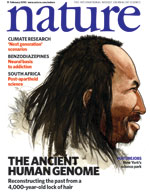
Note:  Jones has recently been interviewed by Nature and although there are aspects of the Climategate allegations that he is not able to comment on he defends himself against some of the accusations made against his work.

Tipping and other points

During the Copenhagen kerfuffle a lot of interesting stuff hit the web: here’s something that deserves a bit more air – a Proceedings of the National Academy of Science (PNAS) special issue on tipping elements in the earth system, edited by John Schellnhuber, the director of the Potsdam Institute for Climate Impact Research in Germany.

Tipping elements (or points, as Malcolm Gladwell would have them) are changes that once started take on a life of their own, and can’t easily be returned to their original state. In the climate system that might be the rapid loss of an ice sheet in a few decades or hundreds of years, while regrowing it might take many thousands. The PNAS special issue deals with nine: dust production in the Bodélé Depression in Chad, ENSO, Arctic sea ice and ice sheets, the Atlantic Meridional Overturning Circulation, deep ocean hydrates (not shallow sea bed, Siberian methane) — David Archer dubs them a “slow tipping point”, the Amazon rainforest (no “Amazongate” here, just a confirmation that concern is justified), monsoons, oceans, and policy responses to the climate challenge. And the best thing is that all the articles are available online, free (click on the link above). Schellnhuber contributes an introduction, and the Potsdam press release also provides a good overview. For some introductory thoughts, check out Tim Lenton’s discussion here.

Another recent example of a real tipping point is the Pine Island Glacier in West Antarctica. Recent modelling suggests that the glacier’s grounding line retreated beyond a ridge in 1996, and is now free to retreat by several hundred kilometres inland. This could happen in a hundred years and result in the loss of half of the ice in the glacier — enough to raise sea level by 24cm. New Scientist reports:

Observations already show that the model severely underestimates the rate at which PIG’s grounding line is retreating, says Katz. “Ours is a simple model of an ice sheet that neglects some important physics,” says Katz. “The take-home message is that we should be concerned about tipping points in West Antarctica and we should do a lot more work to investigate,” he says.

Amen to that.

Greed to Green

greed to green

We can’t successfully tackle climate change without changes to the corporate regime which has been in place in America since the Reagan presidency. That’s the underlying message of  Charles Derber in his latest book Greed to Green: Solving Global Warming and Remaking the Economy. It’s a message he delivers with directness in a book much more readable than I expected from an academic sociologist.

He accepts the position of scientists like Hansen and others who point to the ominous dangers of tipping points in climate and conclude that we are already above a safe level of atmospheric carbon dioxide, which they consider no more than 350 parts per million.  It’s not a happy acceptance. “No sane person would wish it to be the scientific truth.” He recounts the terrible difficulty he had, after realising with despair the seriousness of climate change, in dealing emotionally with the prospect of mass, collective death – “more difficult than dealing with my own personal death”.

The only good news he discerns is that the scientific truth may be spreading and leading to a tipping point in the world’s social and political awareness. But any realisation of the scientific truth by a majority of the community has not passed beyond cognition to what he calls gut acceptance. He acknowledges the difficulties of such acceptance, drawing on his own experience. The reality is so serious it intensifies the psychological pressure to deny.

Nevertheless he identifies some factors that make gut acceptance of climate change tolerable: we have the power to stop or mitigate it, tackling it can also contribute to solving more immediate social problems, and there are benefits in the green lifestyle. Meanwhile the denial industry has been powerfully influential, though he notes that it is now moving from Stage 1 denial, that global warming is a hoax,  to Stage 2, that human-caused global warming exists but must be solved gradually with a slow phasing out of fossil fuels. “If the new denial succeeds, civilisation will be destroyed in the name of green incremental reform.”

In sectors of America greening is partly under way thanks to the actions of long-term thinkers. However the frontal long-term attack is insufficient to gather wide enough public support. It needs to be accompanied by a second path – what he calls a “time-tricking” strategy that seeks to solve the long-term crisis by hitching a ride on the back of short term issues worrying the majority of Americans. He sees this as a key strategy for the Obama administration – and one which Obama himself understands and is already employing.

But there has to be a systemic shift in power. A change from the current corporate regime, in place since the Reagan presidency, is essential if climate change is to be tackled. Unrestrained capitalism creates climate change. It externalises environmental and social costs. It is destructive of the commons. Derber urges a new green regime, which he describes as the best blend of different economic models with surviving corporations restructured and subject to greater public accountability.

Socialism by stealth I can hear the denialists proclaiming. Certainly Derber associates himself with the welfare of working people and sees the necessity for organised labour to play a significant part in a green regime. He laments the way American jobs have been degraded under the corporate regime, many outsourced and others casualised. One of the important  attractions of a green regime is that it will be rich in secure jobs, many of them associated with renewable energy. He also proposes pragmatic temporary nationalisation of some banks and of giant dysfunctional oil and coal companies.  But not  on the basis of any socialist ideology. The banks have already required enormous injections of public money to keep them afloat. The fossil fuel energy giants such as Exxon are already effectively on the public dole.

Essentially Derber is urging a transformation of America away from an increasingly unstable economy based on ever-growing consumption of unnecessary goods and ever-expanding suburban housing. Coerced consumerism he calls it, which has locked Americans into a pattern of insecurity and overwork. In its place he urges an economy solidly based on the production of green energy and its efficient use. Those jobs stay local and secure. And there’s plenty of room for market-inspired innovation within such an economy. The transformation is necessary to fight climate change, and at the same time it works to alleviate America’s current social justice crises.

Derber’s book is focused on the US “because a green revolution here will be a shot heard around the world.”  In discussing the ways in which the green revolution becomes global he points to “a new posthegemonic order of green security and globalisation”.  He’s firm on the need for the West to take responsibility for the poverty and environmental degradation it has foisted on the rest of the world. The West must finance massive aid and technology transfers that allow the remaining nations to develop a green strategy without giving up their rights to achieve a decent standard of life.  He offers several suggestions for finding the money for this purpose: cut the bloated American military budget; implement a green Tobin tax on currency movements; cancel dirty debt in exchange for green development; create a new “commons” of clean energy technology.  The importance of a global carbon tax is explained.  An interesting take on going local, not to abolish globalisation but to reduce its space, sees Derber use the term glocalism, favouring local economies wherever possible and reserving global production only for those areas where local production cannot work.

Derber is impressed by much that Obama has said about climate change and much that he has set in place. He particularly welcomes the respect he has accorded to science and scientists who understand the reality of global warming.  But it would be a mistake to think he won’t need a big push from social movements.  Derber himself is a lifelong social activist. He considers that today’s social and environmental movements are the best last hope for solving global warming on the urgent time scale required. It has always been social movements  which have awakened America to urgent systemic crises such as slavery, women’s disenfranchisement, or the capitalist exploitation of workers.  Derber discusses the ways in which movements can face up to the existential truth of the emergency of climate change and take swift radical action to mobilize the largest number of people including the president.

Derber is a lively writer. He has a go at a short Greek drama in the course of his book, with the Oracle reminding foolish people that time is running out.  He also provides the text of several fireside chats for Obama to have with the American people, in the fashion of Franklin Roosevelt. In an engaging short personal account he answers any who wonder whether he walks his talk – a mixed case, he reports, not a couch potato but not a hero-activist either.  His talk made good sense to me, whether he walks it assiduously or not.

IPCC’s future: babies, bathwater, or a new bath?

An opinion piece in this week’s Nature features the views of five diverse climate scientists on how the IPCC might be reformed or restructured in the light of the recent fuss about “errors” in AR4. The headine asks if we should “cherish it, tweak it or scrap it?” It makes interesting reading (it’s behind a paywall, unfortunately), but here’s a summary.

Continue reading “IPCC’s future: babies, bathwater, or a new bath?”