
The gullible leading the credulous (with a sting in the tale)

One for the “It would be big news if it were true” file — according to John O’Sullivan (see So Many Lies — And The Liar Who Tells Them) a Japanese satellite has discovered that CO2 emissions from the world’s least developed countries are greater than from industrial nations. Here’s how he describes the discovery in an article titled New Satellite Data Contradicts Carbon Dioxide Climate Theory:

Bizarrely, the [satellite] maps prove exactly the opposite of all conventional expectations revealing that the least industrialized regions are the biggest emitters of greenhouse gases on the planet.

Yes, you read that correctly: the U.S. and western European nations are areas where CO2 levels are lowest.

Big news, yes? But — and very much par for the course — it turns out that O’Sullivan has made another of his trademark public mistakes. And of course, the credulous wing of the campaign for climate inaction are more than happy to take O’Sullivan’s nonsense at face value. There’s a fine example over at NZ’s own “Climate Conversation Group”, where Richard Treadgold waxes philosophic:

Of a certainty, the Earth does not need saving.

Consider the thousand-year atmospheric lifetime of carbon dioxide. Consider that the bloody poor people did this to us. Consider their crimes.

Analyse that.

So what’s the real story?

Continue reading “The gullible leading the credulous (with a sting in the tale)”
Nick Smith fails the smelter spin test

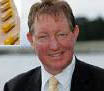
What does The Hon Dr Nick Smith, Minister for Climate Change Issues, say when the Greens accuse him of subsidising greenhouse gas polluters. Well it seems he denies it and he produces instructive soundbites of spin. I am informed that at Wellington’s Oxfam election and climate change debate he said that the NZ Aluminium Smelter Ltd’s operation at Tiwai Point is the only aluminium smelter in the world exposed to a carbon price.

He has used this soundbite a few times. For example, in Parliament on 29 September 2011:

“..the aluminium smelter in Bluff is the only aluminium smelter in the world to face any price at all for its greenhouse gas emissions”.

TV One’s ‘Q and A’ programme:

“the New Zealand Aluminium Smelter in Bluff, it is the only one in the world that pays any face at all for carbon pricing” ((NB By ‘pay any face’ I think he means ‘face any price’))

Parliament on September 2009:

“…the Bluff smelter, on 1 July next year, will be the very first to face a carbon price for its pollution. The European scheme excludes aluminium smelters until 2013…”

Does Nick’s soundbite stand up to scrutiny? Not very well…

Continue reading “Nick Smith fails the smelter spin test”

Fools Rule: Inside the Failed Politics of Climate Change

Fools Rule: Inside the Failed Politics of Climate ChangeCanadian investigative journalist William Marsden doesn’t hide his anguish or his anger as he reports the maddening incapacity of political leaders and negotiators to come to terms with climate change. Nor should he. It’s a sorry story he has to tell in his new book Fools Rule: Inside the Failed Politics of Climate Change. Marsden’s book treats three sobering realities. One is the science. He writes of the utter desperation of scientists “as they pile proof upon proof only to see it disappear into the smoke of denial or crash against the excuse of political and economic expediency”.  He fully grasps the scientific picture and the mounting threats it points to. Regarding the work of glaciologists as fundamental to understanding climate change, he has buttressed his acquaintance with the science by spending time with working scientists in the Canadian Arctic. Last year glaciologist Martin Sharp agreed to Marsden tagging along with his team working on the Devon Island ice cap. Consequently the book includes a lively narrative of the conditions under which those scientists work when on the ice. He leaves the reader in no doubt that the science is “overwhelming and frightening”.

Continue reading “Fools Rule: Inside the Failed Politics of Climate Change”

Wrapped up in books: Don Easterbrook drags Elsevier through the mud

Don Easterbrook, the retired geology professor with an unhealthy obsession about Greenland ice cores, is back. His latest book, the punchily titled Evidence-Based Climate Science – Data opposing CO2 emissions as the primary source of global warming, was published last month by Elsevier, “the world’s leading provider of science and health information” (they publish The Lancet, Grey’s Anatomy, and are part of the same group as the publishers of New Scientist). Don has penned an introduction, the opening chapter, and contributed to a couple of others, but he leaves the rest of the book to a hand-picked team of “leading climate scientists”. Here’s how the Elsevier blurb describes the book’s “key features”:

  • An unbiased, evidence-based analysis of the scientific data concerning climate change and global warming
  • Authored by 8 of the world’s leading climate scientists, each with more than 25 years of experience in the field
  • Extensive analysis of the physics of CO2 as a greenhouse gas and its role in global warming
  • Comprehensive citations, references, and bibliography
  • Adaptation strategies are presented as alternative reactions to greenhouse gas emission reductions

Regular readers will know that I have been following Don’s career as a climate expert with some interest, having caught him out stealing and altering other people’s work, misrepresenting the Greenland ice core evidence, and generally behaving in a manner unbecoming of a would-be distinguished academic. Imagine my surprise therefore when a little digging into the contents of Evidence-Based Climate Science (EBCS) showed that every one of the key features being trumpeted by Elsevier appears to be a gross misrepresentation of the content of the book. Let’s dig a little deeper…

Continue reading “Wrapped up in books: Don Easterbrook drags Elsevier through the mud”

We can’t rule out catastrophic climate change

A couple of weeks ago I plugged an upcoming talk by Pieter Tans of NOAA’s Earth Systems Research Lab in Boulder — a carbon cycle specialist and winner of the Roger Revelle Medal. The talk has now been and gone (on Wednesday in Wellington), and the Science Media Centre has made an audio recording available. It’s embedded below the fold, and very well worth a listen. After an excellent introduction to climate basics (basic physics and chemistry mean that the climate’s changing), Tans traverses our addiction to fossil fuels, and how we might fix the problem.

Continue reading “We can’t rule out catastrophic climate change”