Brittany speaks truth to power

[youtube]hpxsvZ4eqZk[/youtube]

Wellington schoolgirl Brittany Trilford won TckTckTck’s Date with History competition with this powerful message. She has earned a trip to the Rio+20 Conference in a month’s time, and — with luck — will get the chance to express her feelings to the assembled world leaders. Speak truth to power, Brittany. Speak it loudly. Our leaders, such as they are, need all the truth they can get, and urgently.

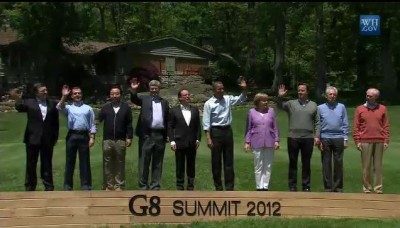
G8: self-deception on energy and climate

The section of the recent G8 Camp David declaration which deals with energy and climate change can only be described as depressing. No clarion call from these nations. Instead, a confused jumble starting with an “all of the above” statement:

… we recognise the importance of meeting our energy needs from a wide variety of sources ranging from traditional fuels to renewables to other clean technologies. As we each implement our own individual energy strategies, we embrace the pursuit of an appropriate mix from all of the above in an environmentally safe, sustainable, secure, and affordable manner.

How fossil fuels can be considered environmentally safe and sustainable elements in an energy mix is not explained. But apparently this mix is somehow compatible with a low carbon economy:

We also recognise the importance of pursuing and promoting sustainable energy and low carbon policies in order to tackle the global challenge of climate change.

Continue reading “G8: self-deception on energy and climate”

Monckton and the mob

Scrotum stood looking down King Street towards St James’s Square. The spring wind was chill, and the young leaves on the trees in the square were struggling to look green. The old fashioned street lights gleamed on the rain-swept road and glistening pavements. He pulled his collar up around his neck, tugged at his trilby and shivered. This was no night for an assignation, this was a night to pour the Laird a stiff snifter of Glenfarclas in his suite at Pratt’s and to then retire to the kitchen for a drink with the Georges. A fresh blast of rain blew down over Christies and bounced off the front of the Golden Lion. He retreated to the shelter of a doorway and sighed. His breath swept out of his nostrils and hung in a brief mist before being beaten to the ground by the ice-sharpened rain. The things he did for the cause…

Monckton, meanwhile, was relaxing in front of the fire in his rooms at the club, sketching out some notes for the keynote he expected to deliver in Chicago in a few days. It would be a triumphant return, he was sure, though he thought he had detected some reluctance from his American comrades in arms in the great climate fight to pick up the tab for his first class airfare and extra baggage allowance. Perhaps Scrotum could travel in a trunk in the hold? He would phone British Airways in the morning.

Scrotum looked at his watch. A quarter past eleven. He snorted. Five more minutes, and he would be off. A soft whistle began to echo down the deserted street. The Third Man theme. Scrotum smiled and stepped out onto the pavement, but a hand reached out and grabbed his coat, pulling him back into the doorway. A voice hissed into his ear.

Continue reading “Monckton and the mob”

Uncertainty overdone

Earlier this month James Hansen wrote a trenchant op-ed in the New York Times.  He reiterated the warning that the exploitation of the Canadian tar sands will be game over for the climate, spelt out some of the long-term drought consequences for the US of continued warming and identified notable heat waves of the last decade as most likely due to human-caused climate change. He was clearly anxious to drive home the message that humanity is in serious danger if we carry on exploiting all the fossil fuels we can find. “If it sounds apocalyptic, it is.”
On cue, journalist Andrew Revkin in his Dot Earth blog on the New York Times a few days later reported a meteorologist, Martin Hoerling, who claimed that Hansen had exceeded his brief as a scientist and allowed his policy commitment to overrule scientific caution. Revkin then asked climatologist Kerry Emanuel for his reaction to both Hansen and Hoerling. He received the comment that Emanuel saw overstatements on all sides, and, unsurprisingly, aligned himself with Emanuel.

But there was more to come on Revkin’s blog. A few days later he posted a response to Hoerling by Dan Miller who had assisted Hansen in the preparation of his op-ed. Miller had also been in touch with Emanuel to find out what his concerns were. It turned out they were hardly substantial:

Continue reading “Uncertainty overdone”

A sunnier outlook from the ground up

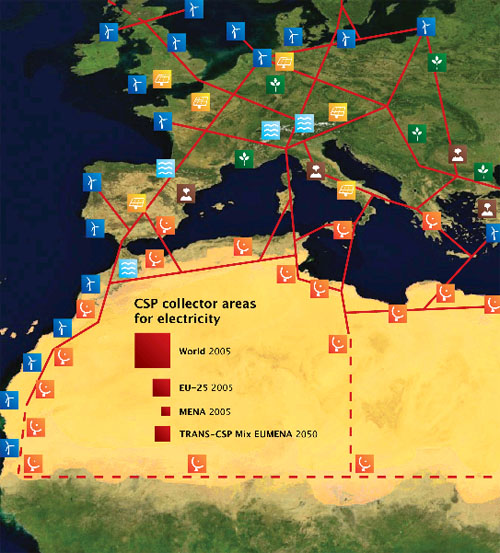
The NZ Herald business supplement recently carried a thoughtful feature by Peter Huck in which he described moves to combat climate change at lower levels than the floundering international negotiations. He begins with a report on Desertec Industrial Initiative, the German-led consortium which this year hopes to trial in Morocco a concentrated solar power plant as the harbinger of ambitious plans to provide very large quantities of solar and wind energy to North Africa and Europe.

Huck takes this as one of the many signals that the top-down approach to limiting carbon emissions through international deals is giving way to a ground-up attitude that stresses action.  Others include the EU’s introduction of a carbon tax on airlines that use its airports; Scotland’s investment in wave power; California’s embrace of renewable energy, clean fuels, a cap-and-trade programme to limit emissions, and other green policies; Ecuador’s efforts to preserve its forests by getting donors to pay it to keep oil in the ground; China’s approval last year of its 12th Five Year Plan, which aims to tackle energy consumption and CO2 emissions. Further down the chain Huck instances a growing urgency about reducing emissions which can mean corporate investment in renewable energy, municipal emphasis on public transport, or a family insulating their home.

Continue reading “A sunnier outlook from the ground up”