
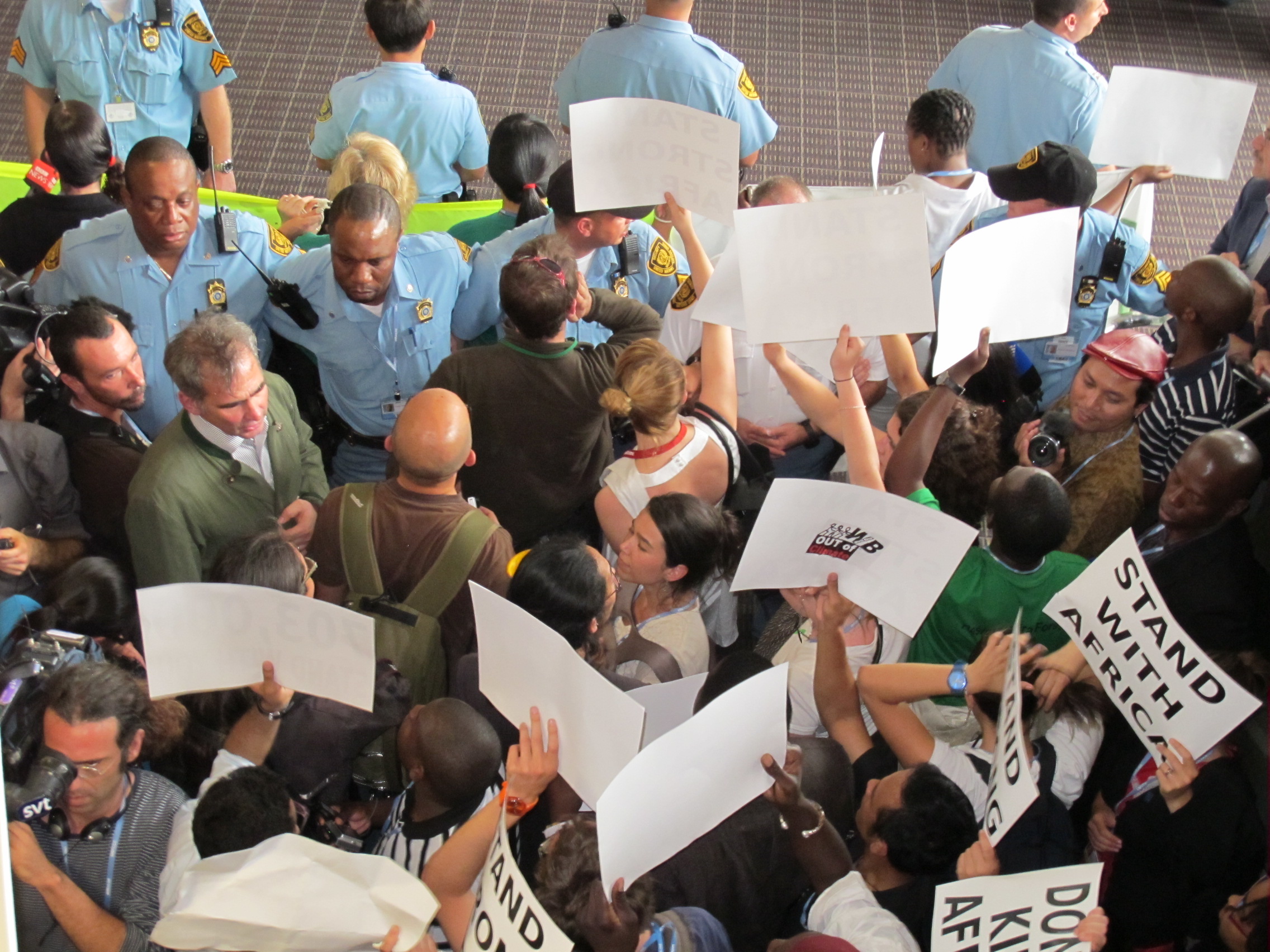
 3.20 am Sunday morning
The South African Minister took key people into a “huddle” for 10 mins.
“Can the world be saved in a tea break?” tweeted @FionaHarvey from The Guardian.
Tea Break over… so. They have agreed “to launch a process to develop a protocol, another legal instrument or an agreed outcome with legal force applicable to all parties….” to be negotiated through to 2015 and be implemented from 2020.
Meanwhile, over in the Kyoto Protocol, the EU slipped back and agreed an eight-year commitment period, which would also take that through to 2020. It’s up to governments to decide whether they want to submit pledges under that process by May next year.
So with the atmosphere in mind, and the steady march to 3.5ºC of warming, there’s nothing much here, yet, to slow that march. The definition of the “legal” bit of this decision could mean anything – and I can see lawyers around me in plenary already working that out. Will it be enough to bring the big emitters on board?
Will that be enough for New Zealand to make its pledge unconditional and continue with Kyoto? Or will our government continue to point fingers at the big guys? Given the work that Tim Groser did in watering down the text overnight, I doubt it.
But right now, I’m too tired to puzzle it all out. It’s certainly nothing like the strong climate action we need.

 My reading this morning didn’t incline me to optimism. I don’t actually need reminding, but in case I did two items underlined that we remain very much on course for a 3 to 4 degree global temperature rise by the end of the century. A
 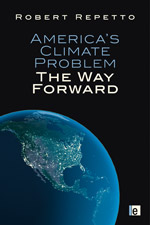 America is much better in technology than governance. That’s the sentence that leapt out at me and remained prominent throughout my reading of economist Robert Repetto’s book America’s Climate Problem: The Way Forward. I sought the book for review because, although its focus is on the US, what happens there will crucially affect the rest of us, in terms of both the level of greenhouse gas concentrations in the atmosphere and the likelihood of international agreement to limit them. The book doesn’t exactly inspire hope on either count, but it is constructive in the path it suggests for the US to follow and puts the ball squarely in the court of the policy makers.