New developments for two companies.

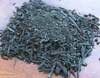
We’ve frequently reported on the progress of NZ company Carbonscape (follow the Carbonscape tag) which makes charcoal using a microwave process. They’ve just announced what they describe as a world first in the production of the highly porous charcoal known as Activated Carbon (AC).

“Using its patented continuous-flow microwave technology, Carbonscape™ has produced high-grade and highly-valuable AC in a single processing step using waste pine sawdust.”

What makes it special is the fact that the normal method of production involves many stages of processing and uses relatively exotic materials to open up the tiny pores between carbon atoms. Director and CEO Tim Langley says:

“We have replaced a slow and complex process using exotic materials with a fast, single process using pine sawdust and created a 60% improvement in quality. We have applied for patents. The potential world market for this technology is vast. Each year demand is rising by about 5%. It’s a whole new world.”

Activated Carbon has many uses, but of particular interest in relation to climate change is its potential to massively reduce the emissions from large, single sources of carbon dioxide, such as power stations. AC placed in flue gases can absorb carbon dioxide before it is released into the atmosphere.

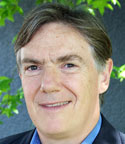
Professor Chris Turney is a director of Carbonscape. He says of the announcement:

“This is just the start. We’re now exploring the potential of other waste types for producing Activated Carbon to identify whether they are best for absorbing carbon dioxide or for other applications. It’s an incredibly exciting time.”

Incidentally, Chris Turney, author of Ice, Mud and Blood (reviewed here), and co-author of a recent paper on temperatures and sea level in the last inter-glacial reported here on Hot Topic, is going to be working with fellow scientist Dr Chris Fogwill on the Atlantic-facing part of West Antarctic Ice Sheet during January 2011 investigating how West Antarctica has responded to temperature changes in the recent geological past. He has an interesting account on his blog. We’ll try to keep in touch with any findings.

On the same day as the Carbonscape news another New Zealand company Aquaflow, whose development we have also frequently reported on Hot Topic (follow the Aquaflow tag), made an announcement of a significant advance in their algal technology. They have developed twenty high value chemicals from wild algae. Director Nick Gerritson says the breakthrough shows once again the equivalence of Aquaflow green crude to fossil crude and its diversity of products. He says their technology can now be demonstrated to not only create clean, renewable fuels and to remediate wastewater but also produce high value chemicals.

Both algal and charcoal technologies are the subject of considerable debate and their future is not clear. But it is obviously important that any technologies which could assist the transition away from fossil fuels are thoroughly explored. We may take pleasure in the thought that these two small New Zealand companies are ploughing on with their ventures and wish them well in their respective breakthroughs.

Coates in Cancún: agreement a good outcome

This is Barry Coates of Oxfam NZ’s sixth report from COP16 in Cancún: a deal is reached…

It’s midnight on Friday – so close to a done deal. I am sitting in a conference room with hundreds of people watching the end game. The contrast to the last hours of Copenhagen could not be more stark.

Although it’s not everything we need, the agreement on the table puts the UN negotiations back on track after the shambles of Copenhagen last year. Expectations were lowered in the run-up to Cancun and completing the final agreement was never a possibility. And for much of the conference, there was a distinct possibility that the process may fall apart, particularly when Japan announced that they could not sign up to a 2nd commitment period of the Kyoto Protocol. But, unlike Copenhagen, the dynamics were positive, the process was transparent and negotiations were skilfully steered by the Patricia Espinosa, the Mexico Minister for the Environment, as chair.

So tonight, when it became obvious that a deal had been crafted, there was such a palpable feeling of relief amongst the delegates and observers that the chair got two standing ovations, the first for three minutes. The speeches were mostly upbeat, although the Bolivian Climate Change Ambassador complained that governments had not gone far enough in agreeing emissions cuts. He is right, but for almost all the governments, the deal on the table is a good step forward, and all that could be achieved.

It has been difficult to call. The emissions reduction pledges in the Copenhagen Accord were merely noted in this Cancun agreement. They fall woefully short of the level of ambition required to avoid dangerous climate change. The pledges add up to 12-18 per cent below 1990 levels to be achieved by 2020. This is way short of the required level of 40 per cent.

However, the good news is that, for the first time in the agreement, there is recognition of the inadequacy of the pledges, and there is a process to raise the level of ambition. The agreement specifies a target range of 25-40 per cent emissions cuts for the wealthy countries (drawn from the 4th Assessment Report of the IPCC), and a process for clarification, analysis and comparison. This is a potential way to raise the level of ambition, but there will need to be a serious increase in political will amongst the rich nations for this to happen.

Amongst the highlights from the conference are the establishment of a Green Climate Fund (couldn’t they have come up with a snappier title?!), an Adaptation Committee to provide learning and guidance on adapting to changing climates, a framework for supporting clean technology, an agreement to reduce deforestation, and a process for reviewing the global goal of maintaining global temperature rise below 2°C, specifically to look at a pathway to keeping temperature rise below 1.5°C. This is crucial for the survival of low lying communities and islands, including our Pacific neighbours.

The structure, governance and design of the Green Climate Fund includes ensuring that a significant share of the money for adaptation will be channelled through the Fund, and calls for a balance of mitigation and adaptation (to redress the Adaptation Gap – the past situation where only 10 per cent of climate funding has been devoted to adaptation). It was disappointing that discussions on filling the Fund have not gone far. There was no agreement on the proposal for the most promising source of funding – levies on shipping and aviation fuels.

Considering the expectations for Cancun, this is a good outcome. It restores confidence in the multilateral system, and the UN system in particular, which is much needed. This is a global problem and it needs a global agreement.

But 24 hours ago, we had real doubts that they would be able to put such a complex deal together. We were preparing ourselves for a collapse or a bad deal. But the deal was done through skilful chairing, not only by the Mexican chair, but also by the government Ministers acting as facilitators, including the New Zealand Minister, Tim Groser. It also drew on a far more constructive and flexible negotiating approach from most countries, with the exception of a few including the US, Japan, Canada and Saudi Arabia.

The US in particular, blocked agreement to other elements of the agenda until they were able to get the key element they needed for domestic political purposes – a system of monitoring, reporting and verification (MRV) for the emissions reductions in developing countries. The target was China, but fortunately the Cancun conference was spared the sharp disagreements between the US and China that had been evident in Tianjin two months earlier. The irony is that China has entered its pledges in 5 year development plans and has a very good record of implementing what it commits to do – in fact, their record of compliance is far better than legislation in many countries.

On the final evening, it became apparent that a deal was possible and the mood of the delegates lifted. Applause and even cheering broke out. Now the hard work starts. Overcoming the really difficult issue of comparability between the countries that have signed the Kyoto Protocol and the US (which hasn’t) will return as a challenge. So will the insistence that larger developing countries take on the same obligations as the US, even though the mandate for the negotiations clearly identifies a difference based on per capita emissions and historical responsibility for the accumulation of greenhouse gases in the atmosphere.

Despite their initial reluctance to agree to a 2nd commitment period for the Kyoto Protocol, Japan agreed to go along with the deal on the table. But this is not the end of the process. The compromise required all the developed and developing countries to accept an agreement where the US is treated leniently on the issue of compliance for their emissions reductions. This leniency must not be allowed to undermine the integrity of emissions targets.

Some of the most difficult challenges lie ahead. We need to collectively build the political will for countries to accept far deeper emissions cuts and accelerate the pace of negotiations to secure a fair, ambitious and binding global deal.

The warning signs are there. While in Cancun, NASA confirmed that 2010 has been the hottest year on record, and the past ten years the hottest decade. Last week’s massive floods in Colombia and neighbouring countries are the kinds of impacts predicted by climate models.

Further delays will risk worsening natural disasters – droughts, heat waves and intense cyclones – as well as melting glaciers, further sea level rises and the rapid acidification of our oceans. The impacts are falling most heavily on those least able to cope – women, men and children living in vulnerable communities in the developing world. Cancun may have put the climate talks back on track, but now we need them to be concluded quickly and followed up by urgent action.

It is now 2.10am. The delegates are tired and so are we, the passionate NGOs from around the world, the social movements, women’s organisations, trade unions, academics, faith groups, the dedicated few amongst the media who stayed up, and the concerned citizens who have been pushing for a good deal in Cancun. The final plenary is about to start. Bolivia is still raising concerns about the process and the lack of ambition, but in the end they joined the consensus.

At 3.32am the Cancun deal was agreed.
Bloomin’ marvellous

ChathamIslandbloom.jpg

A stunning image of a massive bloom of phytoplankton off the Chatham Islands (to the east of NZ — that’s Wellington and the Wairarapa in the top left corner), snapped by NASA’s Aqua satellite on December 5th and featured this week at NASA’s excellent Earth Observatory. Click on the image to see the full (4MB) image with lots more detail. NASA describes the region as a carbon sink, because the mixing of cold but nutrient rich deep water from Antarctica, with warm nutrient-poor (but iron-rich) sub tropical water provides the perfect recipe for large phytoplankton blooms — especially in spring and autumn. A major constituent of these blooms is usually huge numbers of coccolithophores, an important component in the oceanic carbon cycle, as I pointed out the last time the Chathams featured on the Earth Observatory.

Coates in Cancún: Down to the wire

This is Barry Coates of Oxfam NZ’s fifth report from COP16 in Cancún: deadline time…

Last night was very tense here at the climate change talks in Cancun. There is a certain rhythm when the deadline approaches. Some countries refuse to negotiate until they get their own way, playing Russian roulette and pushing the talks to the brink of collapse. This is particularly the case with the US at this summit. Their obstructionist behaviour is getting in the way of progress and putting people’s lives at risk.

I am writing this during heated parallel meetings, one chaired by NZ Climate Change Negotiations Minister, Tim Groser. The prospects of real progress in Cancun are on the edge. Here is the state of play:

The positive and constructive spirit that was evident last week is being put to the test. The real negotiations have finally begun, and parties are working late into the night. So far there has been too much posturing and not enough searching for solutions.

As expected, the issues of mitigation (reducing climate change pollution) and the future of the second commitment period of the Kyoto Protocol are crucial. There is a proposal from the facilitators – UK, Brazil, Indonesia and NZ – which would see the Copenhagen Accord pledges listed in “Information documents” and taken note of in the decision text. This is not a strong enough solution for many developing countries and NGOs. Venezuela and others suggested this would signify a rolling back even from the commitments made under the Copenhagen Accord. Merely “taking note” of the numbers is very weak, and does not entail any legal obligations whatsoever on parties with regard to the pledges. That’s a lowest common denominator approach, and parties must do better. We need progress towards an agreement, not just a noting of what was agreed in the last hours of Copenhagen.

On a range of other issues, the US continues to block progress. They are unconstructively insisting that the issue of concern to them (MRV, or Measurement, Reporting and Verification) is resolved to their satisfaction before they allow anything else to move. They are refusing to agree issues such as the establishment of an adaptation committee, agreement to the proposed technology transfer mechanism and, crucially, the establishment of a global Climate Fund.

Last night in the finance negotiations, developing countries pushed for agreement on a decision that would establish a new Climate Fund, refusing to discuss the modalities of such a fund until this was clear. The US was unprepared to do that without further progress on the issue of MRV.

These blocking tactics in all night negotiating sessions are particularly hard to bear for the smaller delegations of many developing countries – those who have most at stake in a successful deal in Cancun. Their few delegates are expected to work into the morning hours, a workload that is more manageable for the larger delegations from the industrialised countries.

The Climate Fund is essential as an agreement from Cancun. This is a key to unlocking the potential for developing countries to strengthen their action on climate change, as well as to provide funding for countries and communities around the world suffering the harshest impacts. The US must not be allowed to hold the lives of poor and vulnerable people hostage to their political needs.

With one day left to strike a deal which delivers for poor countries already facing worsening droughts, stronger storms and eroding shorelines, it is time for Ministers to lead in our common interests, not to pursue their own political agendas.

NZYD in Cancun: hope remains

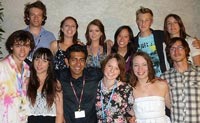
This is a guest post from Cancun by Paul Young (bottom right in the pic – click to put names to faces) of the New Zealand Youth Delegation.

It tells you a lot about the nature of the COP16 climate conference in Cancun that I’m only writing this now. Gareth approached us – the New Zealand Youth Delegation – back near the beginning of the conference, offering a guest blog spot. “Fantastico!” we said. I set to work planning what I’d say, jotting down a few notes to finish over the next day or so.

That didn’t quite end up happening… I was unprepared for the full on assault on the brain, senses, heart, and email inbox that this has been. I wasn’t even an “insider” during the first week (to limit numbers, the UNFCCC Secretariat only gave us eight spots per week to share amongst twelve people), but that didn’t make much difference. For a start, there’s a fair bit going on outside with alternative events such as Klimaforum, and demonstrations like the La Via Campesina one on Tuesday. There’s a huge constituency of youth NGOs (under the banner YOUNGO) we’ve been (net)working with on policy, media campaigns, and actions. There’s plenty of work to be done trying to figure out what the hell is actually happening in the negotiations, and really getting to grips with the policy issues. Then there’s the battle of trying to garner any mainstream media interest in what’s going on over here.


You end up being in “go” mode around the clock, with little time to stop and think. You end up having to squeeze intense group meetings in late at night or in the early hours of the morning. You end up spending hours sitting on busses between the two main conference venues. You end up wasting hours in a bureaucratic ordeal trying to get approval for a very tame action inside the conference centre, only to have it shot down at the final hurdle. You end up losing your laptop power cable because you were in such a hurry packing up to get to the next event, and having to start your half-written blog all over again…

And then when you finally do get a chance to sit down and do some writing, your brain is often too tired and overloaded with information you are struggling to make sense of that the words just won’t come.

Anyway, I don’t mean for this whole blog to be a “dog ate my homework” exercise. I’m trying to express how the twelve of us in NZYD are feeling as these talks reach the hectic final stages before coming to a close, with it looking like the outcomes may not even succeed in meeting the depressingly low expectations.

For me personally, the last fortnight is a blur. It’s going to take a heck of a lot of reflection to process all that has happened and all that I’ve learned. I came here with one question in the forefront of my mind: does this UNFCCC process have a chance of delivering us the deal that we so desperately need? Right now, I’m not sure if I’ve come any closer to an answer. Will a consensus be reached on all the fine details, such as forestry rules, before it really is too late? Are the insufficient pledges on the table worth the effort in the first place? How much should we hold out for something stronger? Is it more important to get something in place, no matter how weak? If the talks were to collapse, would an alternative path emerge?

Hope remains, though. I have recognised the genuine desire in the politicians and negotiators to deliver a deal. The wise words of Bill McKibben, in his speech at the three-day Conference of the Youth that preceded the COP, have stuck with me. Paraphrasing from my sporadic notes, it went something like this:

In some sense, what goes on here inside the COP16 is the side-show. We are the centre. What happens inside is only a reflection of the work we are all doing back home in building the movement for action.

The battle against climate change is different from most other problems the world has faced; there is no guarantee we’re ultimately going to win. But there’s one thing you can guarantee: there are people like you all around the world who will keep fighting until the very end.

We’ve met many amazing people over the last fortnight, and what Bill says is true.