 It’s getting embarrassing here in Durban. I’ve had a veritable flood of people come up to me in recent days saying things like “what the hell is your government doing?”
The NZ Government has been pretty bad in these negotiations over the last few years, but things appear to have taken a turn for the worse, in multiple directions. I’m wondering what’s going on.
Let’s take the “easy” one first. Kyoto.
With Canada, Japan and Russia on their way out of the Kyoto Protocol, there are a lot of discussions on how one could carry it forward without them.
One possible solution is the idea of “provisionally” implementing a new commitment period, from 2013-2017. This would mean that it wouldn’t legally “come into force” but parties to the Protocol could agree the new rules, and implement it anyway, if they all agreed to do so.
This can happen under the “Vienna Convention on the Law of Treaties” (1969), that NZ has signed up to. Not so, says the NZ delegation. This would be a breach of the constitution.
But a quick look on the MFAT website makes me think they are being a bit daft. Maybe they were too busy to read the MFAT document: “International Treaty Making: Guidance for government agencies on practice and procedures for concluding international treaties and arrangements” written in August 2011. That’s – erm – about four months ago.
This guidance, presumably for delegations like this one in Durban, spells out the rules of the Vienna Convention, ie, that: “Provisional entry into force of a treaty may also occur when a number of parties to a treaty that has not yet entered into force decide to apply the treaty as if it had entered into force.”
This is precisely what is being proposed. Indeed, we have done this with a number of international treaties already. But is NZ just looking for excuses to get out of Kyoto? Meanwhile I’m off to the printer to get the delegation a few copies. Continue reading “NZ in Durban: delegation gone mad? Or just business as usual?”
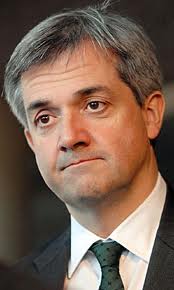 I felt a twinge of envy watching a recent BBC Hardtalk interview with Chris Huhne, Britain’s Secretary of State for Energy and Climate Change. The tone of his statements was much more forthright than anything we’re likely to hear from New Zealand government ministers. It was no more than we have a right to expect from our politicians, but so rarely do we hear leading figures from major parties speaking with directness and conviction that I was grateful for the interview and thought parts of it worth reporting. (It doesn’t seem to be available on line to non-UK viewers, though there’s a snippet
  “There is a danger that, in trying to encourage major emitters to sign up to a new agreement or to bridge the Kyoto legal gap, New Zealand might commit itself to something short of a global deal that binds us to making economic sacrifices which are not reflective of fair burden sharing.” So wrote David Venables, executive director of the Greenhouse Policy Coalition, in the
  Simon Johnson discusses the Durban UNFCCC international climate negotiations through the historic lens of the Second World War and the Rio 1992 Earth Summit.
 The release of