

The unfettered rage of dismal denial

I knew that climate scientists were on the receiving end of some nasty emails, but it was still a shock to read James Hansen’s recent communication, in the course of which he gives a sample of the emails that he’d had in just the one week. They’re a dismal example of the unfettered rage which marks at least some sectors of the denialist world. Imagine receiving this sort of thing in your mail not just on the odd occasion but regularly:

  • You rework your temperature data sets every time Mother nature proves you wrong, in an effort to force Her to agree with your ill conceived ideas about energy and nature. You, in fact, are the one committing crimes against humanity by lying, conniving, and concealing the truth about climate change on our world.
  • What a pile of nonsense, Hansen. You take money and junkets hand over fist from people who pay you to mouth off trash like that. You aren’t exactly “forthcoming” about the “sources and amounts” of your graft – I mean, “gifts.” You ought to be ashamed of yourself,
  • You sir are a walking crime against humanity and you know exactly why. You lie constantly about man-made global warming.
  • You are not a scientist by any stretch of the imagination. You are a global warming shill and a con-artist.
  •  Are you some kind of lunatic??

And those are just my extracts from his selection from a week’s haul.

Continue reading “The unfettered rage of dismal denial”

Uncomfortable parallels

I’ve often been struck by what I see as parallels between the defence of slavery in earlier times and today’s persistence with fossil fuel-based economies. I explored this in a post some time ago but an article in yesterday’s Guardian encourages me to return to the theme. Jean-François Mouhot, a visiting researcher at Georgetown University, writes about similarities between slavery and our current dependence on fossil-fuel-powered machines:
Both perform roughly the same functions in society (doing the hard and dirty work that no one wants to do), both were considered for a long time to be acceptable by the majority and both came to be increasingly challenged as the harm they caused became more visible.

Our revulsion from the institution of slavery today leads us to forget too easily the ordinariness of slave ownership in the past:

To many, slavery seemed normal and indispensable. In the US, George Washington and Thomas Jefferson owned slaves. Lifestyles and healthy incomes were predicated upon it, just as we today depend on oil. Similarly, many slave-owners lived with the impression that they were decent people. Continue reading “Uncomfortable parallels”

We’ll surpass government forecast says wind energy association

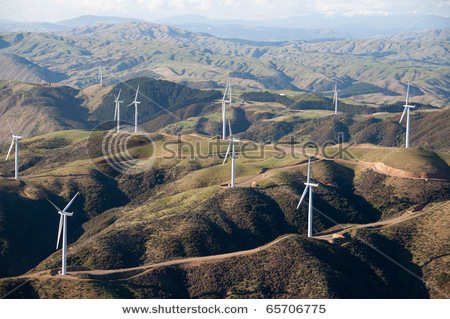
A mild protest from the NZ Wind Energy Association arrived in my inbox recently. It was in response to the Ministry of Economic Development’s latest Energy Outlook forecast, published last week. The Energy Outlook estimates that wind farm capacity will increase from the current 622MW, to around 1,410MW and produce close to 10% of the country’s electricity by 2030. An understatement, says Eric Pyle, CEO of the Wind Energy Association, by a large margin. “…our analysis suggests that wind will be even more important than that, producing 20% of our electricity by then.”

The Energy Outlook forecast has not taken into account the lowering costs of wind power, says Pyle:

“Investigation of wind farms in New Zealand shows that recent installations are already among the lowest cost form of new generation, and international studies reveal that the cost of wind is continuing to fall.”

Nor has it allowed for learning by doing:

“We are also a relatively young industry and increasing our understanding of how to make the most of our abundant wind resource. We are developing better wind farms that can generate even cheaper renewable electricity.”

Politely he suggests that facing backwards is not the best way of looking forward: Continue reading “We’ll surpass government forecast says wind energy association”

Water is rising

[youtube]8O91psfnNMU[/youtube]

A friend from Los Angeles mentioned when visiting us a few days ago that he had recently seen a striking performance at UCLA by dancers from the Pacific islands of Tuvalu, Tokelau and Kiribati. Climate change figured strongly in the concert, which was part of a project called Water is Rising. Intrigued, I tracked down the project website and to my delight discovered a video of the live performance at UCLA (presented above). I say delight advisedly because I was unable to tear myself away from the 90-minute performance once I’d begun to watch it, captivated by its dance and song and moved by the simple human appeal that accompanied it. The performers were bringing their unique cultural art to American audiences, but they were also haunted by the deep threat to their cultures of the rising sea levels and they had a clear message to go with their performance.

It’s a message which I think we in the developed world need to hear over and over again. I’ve therefore transcribed some of the introductory words of the leaders of the three groups. They were not carefully crafted, the speakers felt for their words, and the English syntax was not always perfect, but the plea was all the more telling for that. The Tuvalu leader, gesturing towards the performers:

These are the human face of climate change. We are the most vulnerable people to climate change and we are here with a simple message to you all – for you to give us a hand, for your minds to feel with us, your hearts to be with us. We are here to represent our countries…we [Tuvalu] are small, we are only 24 square kilometres land mass.  No mountains for us to hide ourselves when it comes to sea level rise…we are only three to four metres high. Please think of us, and enjoy yourselves.

Continue reading “Water is rising”

Stuck in the muddle with Obama

I look back with some embarrassment on my enthusiastic posts when Barack Obama was in the early days of his presidency.  I thought he was offering strong political leadership in addressing climate change.  His words seemed unequivocal. Here he is speaking at the UN in September 2009:

That so many of us are here today is a recognition that the threat from climate change is serious, it is urgent, and it is growing.  Our generation’s response to this challenge will be judged by history, for if we fail to meet it – boldly, swiftly, and together – we risk consigning future generations to an irreversible catastrophe.

And he was positive about facing that challenge:

As we meet here today, the good news is that after too many years of inaction and denial, there is finally widespread recognition of the urgency of the challenge before us.  We know what needs to be done.  We know that our planet’s future depends on a global commitment to permanently reduce greenhouse gas pollution.  We know that if we put the right rules and incentives in place, we will unleash the creative power of our best scientists, engineers, and entrepreneurs to build a better world. And so many nations have already taken the first steps on the journey towards that goal.

The rhetoric has changed substantially since then. In this week’s state of the union address there was certainly no clarion call to confront climate change. The term was used, and the science acknowledged, but  only in passing in the context of his promotion of clean energy:

Continue reading “Stuck in the muddle with Obama”