
 Having successfully defended the High Court challenge to its New Zealand temperature reconstructions brought by NZ’s climate cranks and being awarded costs by the judge, the National Institute of Water and Atmospheric research (NIWA) is said to be seeking costs of $118,000 from the plaintiffs. Richard Treadgold, the instigator of the whole sorry affair, has posted the figure being sought at his blog and added this interesting snippet to a lengthy (and extremely tedious and tendentious) post on the subject:
It [NIWA] actually names two individuals who, it claims, should personally pay the $118,000 – and they weren’t even parties to the court case. Terry Dunleavy is the honorary secretary of the NZ Climate Science Coalition and Barry Brill is the chairman of the Coalition, and a lawyer, who helped bring the court case.
It’s a scandal, because the parties, of course, were the NZCSET and NIWA. No individuals were involved on either side.
Treadgold conveniently ignores the obvious “scandal”: that Dunleavy formed the NZ CSET specifically to bring the case ((Details here: Dunleavy was the founder of the the Trust (with Bryan Leyland and Doug Edmeades) and trust deed was not filed until several weeks after the court documents, and not granted until six weeks after the case began.)). Until the case came to court and a Queens Counsel was retained to argue on their behalf, the legal case was being run by Barry Brill ((The trust’s legal case was so ineptly run that the judge awarded costs on a higher scale than usual — because it had changed arguments at the last minute.)). Dunleavy queered his pitch even further by presenting himself to the court as an “expert witness” giving impartial evidence, despite being the founder of the trust bringing the case. In his judgement, Justice Venning was scathing about Dunleavy’s soi-disant expertise:
Section 25 could only apply if Mr Dunleavy was an expert in the particular area of the science of meteorology and/or climate. He is not. He has no applicable qualifications. His interest in the area does not sufficiently qualify him as an expert. […] substantial passages of Mr Dunleavy’s evidence are inadmissible.
NIWA’s decision to pursue Dunleavy and Brill suggests that they and their advisers have little confidence in the NZ CSET’s ability or willingness to meet the costs awarded. As I have noted more than once, if a trust can be formed solely to avoid personal liability in a failed High Court case, then there is a big risk of abuse of process by plaintiffs who pursue cases they have no hope of winning, purely to make political points.
Treadgold attempts to run a “public interest” defence in his blog post, claiming that if the CSET had won, the taxpayer would have been saved billions of dollars by the removal of the need for action on climate change. As examples of self-delusion go, that takes more than a mere biscuit, it purloins an entire warehouse full of chocolate hobnobs ((Rik Mayall takes the Treadgold role, obviously.)).
The New Zealand temperature record, whatever it may say about how warm or cold NZ has been in the past, has never underpinned NZ government decision making on climate matters. Nor would a decision in favour of the CSET have changed the laws of physics.
Treadgold — and by extension all of the cranks involved in bringing this futile legal action — are so disconnected from physical and political reality that they are obviously finding it hard to cope when cold facts intrude on their little epistemic bubble. I do hope they have pockets deep enough to face up to facts, and to live with the folly of their actions. The New Zealand taxpayer deserves nothing less.
 Welcome to the first post in the Sustainable Energy without the Hot Air – A New Zealand Perspective series. Today we’ll be going through the figures of our current energy use. This helps us get a baseline of consumption to aim towards, and lets us explore the difficulties in calculating per capita energy use. For the background to the work, please visit yesterday’s post
 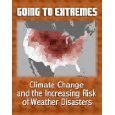 Amidst the scarcely believable frenzy of climate change denial which has taken hold in sectors of American politics, to say nothing of the equally scarcely believable silence from the White House, we need to be reminded that there are sane and steady political voices in that country, however difficult it is for them currently to gain a hearing. Representatives Edward Markey and Henry Waxman recently had the minority staffs of the Committee on Natural Resources and the Committee on Energy and Commerce prepare a report for them Going to Extremes: Climate Change and the Increasing Risk of Weather Disasters (pdf