Eco-pragmatists need stiffer spines

Forty years ago Denis Hayes was US national coordinator for the first Earth Day.  This year he is international chair for the 22 April event. He has a notable record as an environmental activist and early proponent of solar power. But he’s chafing under the blandness that he detects threatening environmental movements in the US. In an articlerecently published in Yale Environment 360 he both supports Earth Day and warns of its limitations. In particular he’s concerned that American environmentalist groups are being inveigled into political compromises on climate change which impair any prospect of adequate legislation in the US.

He recalls the origins of Earth Day:

“Earth Day 1970, for which I served as national coordinator, was huge. Twenty million Americans took part. Millions of Americans who didn’t know what “the environment” was in 1969 discovered in 1970 that they were environmentalists.

“Moreover, Earth Day was bipartisan.”


For a time results followed:

“Over the next three years, Congress passed the most far-reaching cluster of legislation since the New Deal — the Clean Air Act, the Clean Water Act, the Endangered Species Act, and myriad other laws that have fundamentally changed the nation. Trillions of dollars have been spent differently than they would have but for this new regulatory framework.”

Understandably, he says, the environmental movement drew the lesson that it should try to grow as large as possible and be bipartisan.  But times have changed. Reagan assembled the most anti-environment cabinet in history. Bipartisanship isn’t working in today’s scene.

“…the Republican leadership is now so robustly anti-environmental that the League of Conservation Voters uses affirmative action in evaluating its scorecards. A Democrat with a 60 percent voting record is seen as awful, while a Republican with 60 percent is seen as exceptional.”

Striving for bipartisan support in such a context produces legislation that is at best inadequate and at worst designed to fail. Earth Day itself, which is a mainstream phenomenon,  must continue to be as embracing as possible, with a broad common denominator. But the environmental movement mustn’t rely on this approach to effectively address climate change.

“… to succeed against the wealthy, powerful forces arrayed against it on issues like climate disruption, ocean acidification, and a global epidemic of extinction, the environmental movement also needs a large block of people who will fight for a sustainable future valiantly and without compromise.”

It’s no good relying on Congress to do the right thing.

“Although Congress has some brilliant, courageous individual members, as an institution it is dumb and cowardly. The only way that Congress will act intelligently and boldly on this issue is if we give it no choice.”

The current Kerry-Lieberman-Graham bill now making the rounds in the Senate gets weaker at every draft.

“Every draft does a poorer job of putting a reasonable price on carbon. Every draft is larded with more taxpayers dollars for socialized, centralized nuclear power and for ‘clean coal.’ Every draft carries more sweeteners for the utility industry, the automobile industry, the coal and oil industries, and the industrial farmers and foresters”

The eco-pragmatist view is that this is the price that must be paid to get any climate bill at all. Hayes laments that this pragmatic view has been broadly, if reluctantly, embraced by most of the large, mainstream national environmental groups working on climate as well as by the Obama Administration.

It’s time for sterner stuff. Instead of weakening the bill, we need to change the politics.

“Politicians who try to ignore climate disruption — and that’s a whole lot of them — need to start losing their jobs next November.”

There was a sharp edge to the first Earth Day in the US. Hayes notes that the organizers jumped into the subsequent Congressional elections, seeking to defeat a “Dirty Dozen” of incumbent Congressmen. The targets were selected because they had abysmal environmental records, but also because they were in tight races and were from districts with a major environmental issue that voters cared about. Seven Congressmen were taken out that election.  Hayes considers that was a useful shock for legislators and helped the 1970 Clean Air Act pass the Senate unanimously.

He wants to see environmental groups put aside support for further compromise and concentrate instead on creating an intense environmental voting bloc that will subordinate all other issues to climate. That block needs to construct a successful campaign to return some Congressional villains to private life—perhaps even a couple of dozen.

“We must make it crystal clear to politicians everywhere that we are serious. This issue to too vital and too urgent to do any less.”

Hayes claims, incidentally, that the Cantwell-Collins bill in the senate is acknowledged by most experts as the best climate legislation that has yet been proposed. It’s the only option under consideration that would make a significant dent in emissions in the near term. It has a cap but no trade. Carbon permits are auctioned and the proceeds returned to the public on a pro rata basis. It sounds like what James Hansen is so strongly advocating.

I admit to having difficulty following the labyrinthine processes of American politics, but Hayes seems to be grappling with an underlying issue which is not confined to the US. Is something better than nothing in legislation to tackle climate change?  Do we settle for less and hope it might grow into more with time?  Or do we say we haven’t got that time, that nothing less than adequate, and soon, will do?

CRU cleared of scientific malpractice – so much for “climategate”

Phil Jones and the Climatic Research Unit at the University of East Anglia have been cleared of any scientific malpractice by the investigation chaired by Lord Ron Oxburgh, a former chairman of Shell. From the Guardian news report:

At a press conference earlier today Lord Oxburgh said, “Whatever was said in the emails, the basic science seems to have been done fairly and properly,” although his panel did criticise the scientists for not using the best statistical techniques at times.

The report concluded: “We saw no evidence of any deliberate scientific malpractice in any of the work of the Climatic Research Unit and had it been there we believe that it is likely that we would have detected it. Rather we found a small group of dedicated if slightly disorganised researchers who were ill-prepared for being the focus of public attention. As with many small research groups their internal procedures were rather informal.”

See also: BBC, UEA official response. I look forward to the fulsome apologies for unfounded allegations of fraud from the usual suspects — especially Christopher, Viscount Monckton, who dubbed Jones et al as criminals, fraudsters and profiteers. I won’t be holding my breath, but I will checking my understanding of the laws of libel as they apply in Britain.

Krugman on climate economics: uncertainty makes the case for action stronger

Lucidity in an economist is to be prized, and Nobel winner Paul Krugman writes with great clarity in a lengthy article this weekend in the New York Times Magazine headed Building a Green Economy. Is it possible, he asks, to make drastic cuts in greenhouse gases without destroying our economy? I’ll offer a summary of his reasoning here, but strongly recommend reading the whole article if you have the time. He clearly understands the import of climate science, and rightly lets that have full influence in his policy preferences. Economists who haven’t taken on board the seriousness of the prospect the science points to are hardly reliable guides.

“Negative externalities”, says Krugman, are the costs that economic activities impose on others without paying a price for their actions. The market economy does many things well, but left to its own devices it won’t face up to those externalities. The emission of greenhouse gases is a classic negative externality – the “biggest market failure the world has ever seen,” in the words of Nicholas Stern.

What should we do about it?

“Textbook economics and real-world experience tell us that we should have policies to discourage activities that generate negative externalities and that it is generally best to rely on a market-based approach.”

The three approaches Krugman discusses are regulation, pollution taxes and market based emission controls (cap and trade). Each has benefits. Krugman allows that there are times when regulation is a sensible path, but it does not leave the scope for flexibility and creativity provided by the other two. The very scale and complexity of the situation requires a market-based solution, whether cap and trade or an emissions tax.

“After all, greenhouse gases are a direct or indirect byproduct of almost everything produced in a modern economy, from the houses we live in to the cars we drive. Reducing emissions of those gases will require getting people to change their behavior in many different ways, some of them impossible to identify until we have a much better grasp of green technology. So can we really make meaningful progress by telling people specifically what will or will not be permitted? Econ 101 tells us — probably correctly — that the only way to get people to change their behavior appropriately is to put a price on emissions so this cost in turn gets incorporated into everything else in a way that reflects ultimate environmental impacts.

“…A market-based system would create decentralized incentives to do the right thing, and that’s the only way it can be done.”

However he is impressed enough by James Hansen’s arguments that we must stop burning coal to advocate supplementing market-based disincentives with direct controls on coal burning.

He favours cap and trade over emission taxes, pointing out how well the former worked to achieve a significant mitigation of acid rain in the US and at a much lower cost than even the optimists expected. He also considers it politically more feasible because in doling out licensing to industry it offers a way to partly compensate some of the groups whose interests will suffer if a serious climate-change policy is adopted. A tax, on the other hand, imposes costs on the private sector while generating revenue for the government. Which is not to say that there can’t be hybrid solutions.

Part way through his discussions Krugman pauses to make it clear that the science of climate change is for real. He makes three points. First, the planet is warming. Second, climate models predicted this well in advance. Third, models indicate that if we continue adding greenhouse gases to the atmosphere as we have we will eventually face drastic changes in the climate and massively disruptive events.  There is still tremendous uncertainty in long-term forecasts, but that makes the case for action stronger, not weaker.

Can we afford what needs to be done?

Economic modelers have reached a rough consensus that restricting emissions would slow economic growth – but not by much. The Congressional Budget Office, relying on a survey of models, concludes that strong climate-change policy would leave the American economy between 1.1 percent and 3.4 percent smaller in 2050 than it would be otherwise. On a global level the estimates are somewhat lower because of the efficiency gains in energy use possible to emerging economies – between 1 percent and 3 percent.

Krugman acknowledges that there are a number of ways in which the modeling could be wrong. Nobody really knows, for instance, what solar power will cost once it finally becomes a large-scale proposition. But while it’s unlikely that the models get everything right, it’s a good bet that they overstate rather than understate the economic costs of climate-change action. That was the experience with the acid rain scheme. He particularly notes that models do not and cannot take into account creativity.  Surely the private sector will come up with ways to limit emissions that are not yet in any model.

Yet conservative opponents of climate-change policy claim that any attempt to limit emissions would be economically devastating. What has happened to their belief in the dynamism of capitalism?  He thinks they are reacting against the idea of government intervention and indulging in political ploys rather than reasoned economic judgment. Hence their strong tendency to argue in bad faith, willfully misreading the figures.

“The truth is that there is no credible research suggesting that taking strong action on climate change is beyond the economy’s capacity.”

To the objection that the emerging economies won’t participate and therefore there’s no point in limiting emissions in the US, he argues for positive inducements and, if they fail, for carbon tariffs. He certainly doesn’t see the problem as intractable. If the US and Europe decide to move they almost certainly would be able to cajole and chivvy the rest of the world into joining the effort.

The costs of inaction are difficult to estimate. Krugman has a lively sense of the drastic changes which could accompany higher temperatures. We’re reaching levels of carbon dioxide in the atmosphere not seen in millions of years. Nobody really knows how much damage would result from the level of temperatures now considered likely. This uncertainty strengthens the case for action. He agrees with Martin Weitzman that if there is a chance of utter catastrophe, that chance should dominate cost-benefit calculations. Utter catastrophe does look like a realistic possibility. It would be irresponsible not to turn back from what may be the edge of a cliff.

There has been debate as to whether we act with some decisiveness now or build gradually over the century, the big bang or the ramp. Krugman leans toward the big-bang view, represented most notably by Nicholas Stern. Again, it’s the nonnegligible probability of utter disaster that argues for aggressive moves to curb emissions, soon.

On the US political front he’s not sanguine, but thinks there’s some chance that political support for action on climate change will revive.  If it does the economic analysis will be ready.

“We know how to limit greenhouse-gas emissions. We have a good sense of the costs – and they’re manageable. All we need now is the political will.”

Putting the F back in ACT

It’s hardly news that New Zealand’s parliamentary climate deniers — the ACT party — have difficulty understanding climate science, but an astonishing leaflet from the party being stuffed into letterboxes around the country demonstrates that they are now losing touch with reality. The leaflet calls for opponents of the Emissions Trading Scheme to “rise up” and attend a series of public meetings. It gives an alarmist account of the costs of the scheme, and then offers this amazing justification:

ACT-ETScrop.gif

That’s right: “scandal after scandal” at the IPCC “has unearthed evidence of a global fraud to create mass hysteria and transfer trillions of dollars from countries like New Zealand to largely corrupt dictatorships.” I wonder why this amazing revelation isn’t making front page news all round the world. Could it be that it’s a figment of the fertile imagination of John Boscawen, whose portrait adorns the leaflet? Let’s see your evidence John. I’m sure you must have plenty, because you wouldn’t publish and distribute something that was untruthful, would you? Just to help you out a little, here’s the truth about those IPCC “scandals”.

[Hat tip to HT reader Le Chat Noir, who received the leaflet this morning and forwarded it to me.]

A walk on the supply side

 “…we tend to assume that the public are confused because they have a deficit of scientific knowledge, education and cognitive skills. That is to say that they’re scientifically illiterate.”

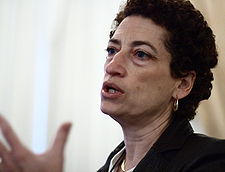
In these words science historian Naomi Oreskes, speaking with others at a symposium at the recent American Association for the Advancement of Science (AAAS) meeting, depicts the reaction of most scientists to the puzzling gap between scientific knowledge and public perception of climate change. I might add that although I’m no scientist I share the assumption she describes, since it was reading climate science (at the lay level) which made me aware of  the reality of the crisis.


She goes on to critique the response of the scientific community:

“So if the problem is a deficit, then the remedy for it is a surfeit. So it seems to me that the scientific community has succumbed to or fallen into or pursued what I would call a supply side response… we try to supply good information with public outreach efforts…And there are many examples of this, but since we’re here at AAAS, one of my favourites is our AAAS Press Room… If you actually read this web page you find it’s filled with fantastic information, but how many people are going to take the time, how many people in the public even know that we have a AAAS Press Room?”

The supply side model has failed.

“…our message has not gotten through to the American people. In fact a completely different message has gotten through which is that scientists are arguing, that there is still a lot of scientific uncertainty, that more research is needed, and that a lot of what we’re seeing can be explained by natural variability.”

She has tried to understand how this message of uncertainty and doubt is the one that has got through to the public and has found that for the past 30 years the American people have been subject to a very organised and systematic campaign to spread that alternative message.  Her forthcoming book, co-authored with Erik Conway, will document the campaign. (The book will be reviewed on Hot Topic.) But in the meantime she offered the symposium an example which the book doesn’t cover.

After the first President Bush signed the UN Framework Convention on Climate Change, Western Fuels, a consortium of coal producers, launched one of many campaigns to challenge the scientific evidence. They did this by hiring a PR firm, a group known as Bracy Williams & Co, and a set of market researchers, Cambridge Reports, to specifically plan a strategy, to test that strategy, and if it were successful, to implement it. The main point of this strategy was to reposition global warming as theory, not fact.

They began with a series of print ads. Oreskes sums up the message of those ads as follows:

“’Who told you the Earth was warming?’ Chicken Little, so there’s your alarmism argument. ‘Some say the Earth is warming, some also said the Earth was flat.’ So scientists are now cast as the opposite, as the anti-science. And ‘How much are you willing to pay for a problem that may not exist?’ That’s an argument that we’ve seen repeatedly over the last 20 years.”

Then they organised public relations tours in combination with this ad campaign

“and a big part of this public relations tour was to get scientists who could appear on TV, so arrange television appearances by sceptical scientists, usually not climate scientists, but people who had what appeared to be relevant credentials.”

Next step was to analyse the results through focus groups, which showed that yes, you could market attitude change. But it worked best if the evidence was presented as facts by technical spokespeople, that is to say people who were scientists or who appeared to be scientists. Therefore that it was essential to recruit scientists to deliver the message.

The scientists were duly found and incorporated into step two of the campaign, the production of a video called The Greening of Planet Earth.  Most of them weren’t climate scientists, but mostly actually agronomists from the US Department of Agriculture making the claim that we know for a fact that carbon dioxide increases agricultural productivity, and in fact not just agricultural productivity but productivity of all plants.

“So it’s a very, very positive message, it’s all good, the scientists are all very kindly-looking, they’re very nice, they’re very calm, and they just tell this good news message over and over again.”

In a weird way, Oreskes comments, the opponents of scientific information have been more scientific than the science community. They studied and tested and built on the evidence they gathered from the testing. More scientific, more organised, more aggressive  The scientific community meanwhile has relied on peer reviewed journals and websites which are too technical for the general public.

People are not confused, she argues, because they are ignorant of the science. They are confused because people have tried to confuse them. Successfully. The misinformation campaigns get reported in the mass media.  The scientists’ responses are made in peer reviewed journals.

What’s to be done? Oreskes raises PR possibilities, but recognises they may not enhance scientific credibility. But at least, she says, since what the scientific community has been doing in the past has clearly not been effective, it might be worth considering some alternatives. Yes indeed, but what?

Oreskes is doing an excellent job of revealing the enormity of what the science has been up against over the past two decades. It certainly isn’t scientific scepticism. But I don’t see any possibility of science matching the kind of organised campaigns that Western Fuels mounted and others have continued. They are highly unethical.  They are cynical and manipulative.  They have no scientific basis.  Those and many other considerations make it impossible for the scientific community to even think of doing battle on that ground.  Science is the only weapon the scientists have.  Not that they have to confine themselves to peer reviewed papers.  These are critical times and it would be good to see more of them entering into the public arena, seeking out journalists, expressing their fears, writing op-eds, badgering editors, publishing books.  But when all is said and done it is only the dawning realisation of the seriousness of the science that will tell against the false assurances of the deniers. It seems to me we’re stuck with that.