
 Unsurprising but nevertheless dismaying news on Radio NZ this morning that the NZ draft energy strategy has been scarcely altered since submissions were called for and will soon be presented to Cabinet for adoption. Both Gareth and I posted on the draft strategy back in July, but it’s worth saying again that this energy strategy statement is highly irresponsible in its primary focus on fossil fuel development for New Zealand’s prosperity. It is bewildering that a government which says it is committed to fighting climate change should be preparing to stake much of the country’s economic development on the exploitation of natural resources which will contribute to climate change. Continue reading “Energy at all costs”
Category: Climate politics
The Climate Show #10: David Suzuki survives tech meltdown
[youtube]vgF8FaVRR5Q[/youtube]
Meltdown in the treacle factory (Glenn’s PC) means that episode 10 of everybody’s favourite Climate Show is only available in full by podcast. We’ve resurrected the video of our interview with David Suzuki, the great Canadian environmentalist and campaigner (above), but for the full goodness — a great climate change graphic, Russian heatwave analysis, thoughts on climate communication, John “Skeptical Science” Cook introducing the new politicians’ myths section on SkS and explaining the #1 skeptic delusion (no, it isn’t the sun wot dun it), plus a whole stack of solutions — tidal power, electric motorbikes, biochar for pasture and artificial photosynthesis — you’ll have to listen to the audio version (link below). That means you’ll have to do without the graphics we so lovingly describe, but… they’re all in the show notes below the fold… (Back, with luck with pictures, in two weeks).
Watch The Climate Show on our Youtube channel, subscribe to the podcast via iTunes, or listen direct/download here:
Follow The Climate Show at The Climate Show web site, on Facebook and Twitter.
Continue reading “The Climate Show #10: David Suzuki survives tech meltdown”
Loud and clear
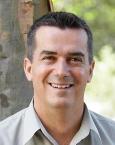 There is a strange difficulty in talking publicly about the enormity of the danger which human-caused climate change threatens for human civilisation. Jorgen Randers and Paul Gilding discuss it in the introduction to their paper One Degree War Plan, referred to by Gilding (pictured) in his book The Great Disruption (reviewed here).
They speak appropriately of the sense of the surreal. Vast issues such as self-reinforcing runaway loops in climate change, geopolitical breakdown, mass starvation, figure in the thinking and the private conversations of those who appreciate the full seriousness of climate change as it will unfold if we allow it. The prospect is fearful. But it seems too fearful for daily intercourse. “It’s a very strange thing to calmly pontificate the realistic risk of the collapse of civilisation and then go back to work!†Continue reading “Loud and clear”
The Great Disruption
Australian Paul Gilding straddles the NGO and corporate worlds. A former international head of Greenpeace, he subsequently moved into consultancy with global corporations and others on the transition to sustainability. Transition can sound a comfortingly gradual process, but that’s far from the case with the transition foreseen in his striking new book The Great Disruption: How the Climate Crisis Will Transform the Global Economy.
Gilding stands firmly with those who have been warning for half a century that our economies are pressing environmental limits to breaking point. Their warnings have now become realities. We have passed the limits of the planet’s capacity to support our economy. Ecosystem change and breakdown is now under way globally. Gilding takes his stand on the science, whether of climate change or the many other areas where sustainability is crumbling.
Umm, a Gummer and carbon nonsense
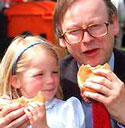 Twenty years ago I’d have crossed the street to avoid meeting John Selwyn Gummer, then agriculture minister in Margaret Thatcher’s government, chiefly famous for having attempted to feed his young daughter a beefburger at the 1990 Ipswich Boat Show to demonstrate his understanding of the risks of contracting bovine spongiform encephalopathy (aka mad cow disease) from contaminated meat. It has since killed 166 people in Britain, Cordelia Gummer not among them. I now find myself in the strange position of agreeing rather wholeheartedly with Baron Deben, as he is currently styled, in an article headlined Climate change doubters are endangering our common future published in The Australian (!) last week. And his musings on the politics of climate action provide a useful counterpoint to the astonishing submission on the NZ government’s intention to gazette a “50 by 50” target for carbon emissions made earlier this month by an Australian organisation calling itself The Carbon Sense Coalition.