

Rio Tinto Alcan NZ plays godfather: nice aluminium smelter you got, be a shame if something happened to it…

The Godfather Simon Johnson argues that Rio Tinto Alcan NZ (NZ Aluminium Smelters Ltd), the owner of the Tiwai Point aluminium smelter is “Godfathering” the smelter, its workforce, the Southland economy, the NZ electricity market, Meridan Energy and the poor critically endangered slow-breeding kakapo, as well as “Godfathering” the NZ emissions trading scheme to get excessive free allocations of emissions units.

Let me introduce a new term to climate change blogging. Godfathering. It’s a bit like Grandfathering, which is a recognised jargon term from emissions trading. But different. Grandfathering in an emissions trading scheme (an ETS), is giving the emission units for free to the existing emitters in the ETS on a historic pro-rata calculation. The number of units given represents the desired cap on emissions ((Alternatively the units could be sold by auction to emitters which is logical if we treat the units as shares in a public commons owned by the Government on behalf of citizens.)).

Of course, our ETS is not so simple. If our ETS just applied simple “grandfathering” as outlined, then it would have a real cap, it would not allow importing of unlimited international units, and it would be impossible for any emitter to receive more units than their emissions.

That’s not the case under the NZETS, at least for some emitters. In 2010, NZ Aluminium Smelters Ltd, which is roughly New Zealand’s third largest point source of greenhouse gas emissions, was a net seller of units, not a net payer. Their free allocation of units was 135% more than the units they needed to surrender for their emissions.
Continue reading “Rio Tinto Alcan NZ plays godfather: nice aluminium smelter you got, be a shame if something happened to it…”

In defence of banning the bulb

I see Canterbury University economist Eric Crampton politely disagrees with my post on the failure to ban incandescent light bulbs. I’d like to comment on a couple of the points he raises. The first concerns the non-priced carbon embodied in the production and distribution of fluorescent and LED bulbs, and the possibility that it may be so large as to negate the advantages of lower carbon emissions during the lifetime of the bulbs.
Crampton admitted he had no clue, but assumed that the more complex efficient bulbs would have a higher carbon footprint in their manufacture than the incandescents. However, he allowed that the longer life of the efficient bulbs probably gave them the overall advantage. I had no clue either, though I’m familiar with the need to take embedded carbon into account when making comparisons and guess I assumed that was not something that had been overlooked in the advocacy of CFLs and LEDs. However I had a look to see what I could find, and came across this assessment of CFLs from a writer initially inclined to be sceptical about them, and this report on LEDs. It doesn’t look to be an issue.

Continue reading “In defence of banning the bulb”

Low hanging fruit and lost opportunity

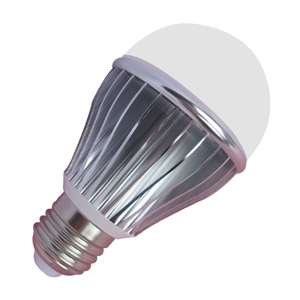
I hope the New Zealand Government feels shamed by the news that incandescent light bulbs can no longer be sold in Europe. It could have been so here but following the 2008 election, proclaiming the sanctity of consumer choice, one of the early actions of the then Minister of Energy Gerry Brownlee was to reverse the Labour Government’s decision to phase out incandescent light bulbs. Almost equally dismaying was the statement by the Leader of the Opposition Phil Goff in 2009 that the Labour Government decision was a mistake in the first place. “We’d stopped listening to what people’s priorities were,” he said.
It’s hard to make any sense of the reversal of former Government policy on incandescents other than in the most cynical of political terms. It is in direct contradiction to any concern they express to tackle climate change. Lighting has been estimated to use nearly 20% of the world’s electricity and six years ago the International Energy Agency produced a report which concluded that a global switch to efficient lighting systems would trim the world’s electricity bill by nearly one-tenth. It is a low-hanging fruit in the reduction of carbon emissions. Even the US is to phase out incandescents.

Continue reading “Low hanging fruit and lost opportunity”

Offshore wind: a huge resource

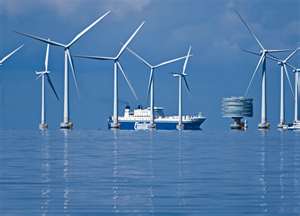
Two wind energy items arrived in my inbox in close proximity recently. One was from the NZ Wind Energy Association (NZWEA) congratulating Meridian Energy on turning the first sod at Mill Creek wind farm in the Ohariu Valley north-west of Wellington. It’s a 60 megawatt farm of 26 turbines. The project will cost $169 million and is expected to be commissioned by mid-2014. It will increase NZ’s installed wind capacity from 623 megawatts to 683 megawatts.

NZWEA’s chief executive made appropriate remarks to accompany the announcement, reiterating the expectation that at least 20% of NZ’s electricity will be generated from wind by 2030 and noting the technology advances in harnessing wind which is now one of the lowest cost options for new generation in New Zealand.

It’s good to see the steady progress in the development of wind energy in NZ, although it seems to arouse little excitement in Government circles who reserve most of their interest for further  fossil fuel development. And a report in Saturday’s NZ Herald was a sobering reminder that the $7 billion invested in the oil and gas sector over the past five years puts it far ahead of any other local sector when it comes to investment in new productive capacity. NZ is hardly on the brink of transition from fossil fuels, hardly, it seems, even interested in the possibility while there’s money to be made from exploiting them.

Continue reading “Offshore wind: a huge resource”

Why Arctic sea ice shouldn’t leave anyone cold

In this guest post Neven Acropolis, the man behind the excellent Arctic Sea Ice blog, looks at the reasons why we need to pay attention to the rapid loss of sea ice in the Arctic Ocean.

Arctic sea ice became a recurrent feature on planet Earth around 47 million years ago. Since the start of the current ice age, about 2.5 million years ago, the Arctic Ocean has been completely covered with sea ice. Only during interglacials, like the one we are in now, does some of the sea ice melt during summer, when the top of the planet is oriented a bit more towards the Sun and receives large amounts of sunlight for several summer months. Even then, when winter starts, the ice-free portion of the Arctic Ocean freezes over again with a new layer of sea ice.

Since the dawn of human civilisation, 5000 to 8000 years ago, this annual ebb and flow of melting and freezing Arctic sea ice has been more or less consistent. There were periods when more ice melted during summer, and periods when less melted. However, a radical shift has occurred in recent times.

1 kinnard2011

Ever since satellites allowed a detailed view of the Arctic and its ice, a pronounced decrease in summer sea ice cover has been observed (with this year setting a new record low). When the IPCC released its Fourth Assessment Report in 2007, it was generally thought that the Arctic could become ice-free somewhere near the end of this century. But changes in the Arctic have progressed at such speed that most experts now think 2030 might see an ice-free Arctic for the first time. Some say it could even happen this decade.

2 albedofeedbackWhat makes this event significant, is the role Arctic sea ice plays as a reflector of solar energy. Ice is white and therefore reflects a large part of incoming sunlight back out to space. But where there is no ice, dark ocean water absorbs most of the sunlight and thus heats up. The less ice there is, the more the water heats up, melting more ice. This feedback has all kinds of consequences for the Arctic region.

Continue reading “Why Arctic sea ice shouldn’t leave anyone cold”