
Blog bits #438(b)

Observant readers might have noticed a few changes at Hot Topic over the weekend. Two new navigation options have popped up over the header: Book Reviews and Debate Map. The first one’s fairly straightforward, it’s a link to the book reviews category — a short cut to all the book reviews we’ve published at Hot Topic since Bryan started diligently working his way through new and notable climate-related books. Thanks to his efforts we now host the most comprehensive review coverage of climate books on the web (that’s my claim, and I’m sticking to it).

The Debate Map link goes to a new page created to provide a permanent home for the Debategraph interactive map of the climate debate I first posted about back in March. It’s a wiki-style site given a nice graphical structure. I find the whole thing fascinating, so I urge all Hot Topic‘s readers (even sceptics) to go and have a play and don’t be afraid to contribute items and arguments. Debategraph head honcho David Price provides the accompanying text, and is very happy to discuss any aspects of the map with interested readers.

One other tweak regular readers may like: I’ve updated the site’s theme to allow for “threaded comments”. This means you can now reply to individual comments by clicking on the “reply” link at the bottom of each comment. Your response will then appear immediately underneath, slightly indented. You should be able to reply to replies up to five indents deep, but I haven’t tested that…

Heaven is a place on earth

Heaven and Earth: Global Warming, the Missing Science

The Australian twin to Wishart’s Air Con is Professor Ian Plimer’s Heaven and Earth: Global Warming, the Missing Science, published last month. According to Bob Carter (in all his oleaginous glory here) on Leighton Smith’s Newstalk ZB programme recently it’s “an excellent book”. Carter assures Smith that “the authoritative science is in Ian Plimer’s book”. Fortunately, to save Hot Topic the chore of wading through Plimer’s prose, The Australian (noted for a tendency to push crank arguments) has published a most interesting review of Plimer’s opus by Michael Ashley, a professor of astrophysics at the University of New South Wales. What does he make of Plimer’s “authoritative science”?

Perhaps we will find a stitch-by-stitch demolition of climate science in his book, as promised? No such luck. The arguments that Plimer advances in the 503 pages and 2311 footnotes in Heaven and Earth are nonsense. The book is largely a collection of contrarian ideas and conspiracy theories that are rife in the blogosphere. The writing is rambling and repetitive; the arguments flawed and illogical.

Just like Wishart then.

Plimer has done an enormous disservice to science, and the dedicated scientists who are trying to understand climate and the influence of humans, by publishing this book. It is not “merely” atmospheric scientists that would have to be wrong for Plimer to be right. It would require a rewriting of biology, geology, physics, oceanography, astronomy and statistics. Plimer’s book deserves to languish on the shelves along with similar pseudo-science such as the writings of Immanuel Velikovsky and Erich von Daniken.

[Hat tip: Deltoid]
See also; Prof Barry Brooke’s review of Plimer’s book.
[Belinda Carlisle]

Blackleg miner

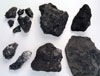
NZcoal.jpgSolid Energy, NZ’s state-owned coal mining company, is promoting an alternative to an economy wide emissions trading scheme. According to Carbon News, the approach is being “heavily peddled to policy makers and others in Wellington”, and it is seen to have “great simplistic appeal”. Carbon News has made the document, A Durable Climate Change Strategy for New Zealand, available here.

The essence of the scheme, once you plough through Solid Energy’s reasons for disliking the ETS as currently proposed, is that the government should plant lots of trees, funded by a $1/tonne carbon levy applied across the economy. Lots and lots of trees — a million hectares of new exotic and native forest planted over the next 20-30 years. Solid Energy claims that “Kiwiforest” would provide enough cheap carbon sequestration to allow the economy to grow without the need to impose steep carbon prices. An ETS would only be introduced when there was a truly global interlinked network of carbon markets.

Sounds attractive, on the face of it. Who could object to planting lots of trees? Certainly not me. Unfortunately, as a national emissions strategy it looks too simplistic to be realistic, and on Solid Energy’s numbers delivers emissions reductions that aren’t credible.

Continue reading “Blackleg miner”

A very public own goal…

Airconcover.jpgIt didn’t take long for my last post to draw a reply from Ian Wishart, and — no surprises — it’s another lengthy diatribe. Unfortunately for Ian, it is also a very public own goal –demonstrating very nicely one of my central contentions: he doesn’t understand the stuff he’s writing about. Here’s the relevant passage (sorry about the lengthy quote, but it takes him a while to get his shot lined up):

…Gareth helpfully directs to a NASA feature on ocean cooling. There’s nothing in it that contradicts my usage of Willis in the book, but what it does say backs up one of my other assertions that Gareth had a problem with in our “anonymous” discussion thread on Tumeke previously about the impact of undersea volcanoes on ocean heat and GHG emissions.

When I pointed out scientists have recently discovered a massive volcanic field under the Arctic that began erupting in a catastrophic, albeit submarine, sense in 1999, Gareth, posting as “Response to Ian”, stated:

“If you are implying that they are influencing Arctic sea ice you are absolutely out in la-la land. The amount of heat released is miniscule compared to the heat capacity of the cold Arctic ocean.”

So if a large volcanic field under a relatively small area of ocean has no impact on warming the water, why does the NASA study on ocean cooling Gareth pointed us to say this:

“They are also exploring how volcanic eruptions influence ocean heating, and whether a better understanding of how volcanoes influence the energy balance of the ocean will help explain short term variability in ocean warming and cooling”

The NASA feature then quoted the CSIRO research team directly:

“One thing we found was that climate models that do not include volcanic forcing tend to overestimate the long term change, and their simulated decadal variability is not in agreement with the observations…this kind of result tells us volcanic forcing is important, but that we don’t totally understand it yet”.

Another example, then, of Trufflehunter shooting from the lip because he isn’t across the latest scientific research. 95% of the world’s active volcanic vents are underwater. I quoted other scientists in the book who thought volcanic and tectonic activity might well be significant in regard to sea levels and thermal expansion, but Gareth’s response was:

“One possibility that Wishart fails to consider is that tectonics and volcanoes weren’t ignored and their effects are trivial.”

Well, Gareth, go back and read the report you referred us to. Apparently other scientists don’t think they’re trivial at all.

And the ball’s in the back of his own net! It’s a mistake that only someone who had no real grasp of the subject could make, and Wishart makes it in a typically aggressive manner. The CSIRO team are (of course) talking about the cooling effects of large, Pinatubo-style volcanic eruptions (you know, the ones that occur above the surface of the sea) as a brief check of their paper would have told him…

Church et al. (2005) show that large volcanic eruptions cool [my emphasis] the global ocean and produce a drop in global sea levels. While this volcanic signal is clear in appropriately forced models and the global tide-gauge record, it is not as clear in the global thermosteric sea level record (the component of sea level change due to the thermal expansion of the ocean and closely related to ocean heat content), and there are several instances where global sea level is rising but steric sea level is falling…

Looks a lot like Ian’s indulging in “half-baked schoolboy science” to me. I believe the internet jargon for this situation is p*wned.

[Update 7/5: Wishart concedes and admits to “winging it”, but then proceeds to enlarge the deep hole he’s already dug for himself. Any readers care to explain for his benefit precisely why undersea volcanism has a trivial impact on oceanic heat budgets? The rest of his post is just wibble.]

Quirk, strangeness, not much charm

Airconcover.jpgAnother day, another angry diatribe from Air Con author Ian Wishart — longer and more intemperate that his last, but I’m getting used to the style. It seems he believes that attack is the best form of defence, which is great if you’ve got the ammunition (like the Crusaders backs of recent seasons, if not this one 🙁 ), but rather unwise if you lack basic understanding of the issue in contention. I’ll deal with the points he raises, but can’t resist first giving you a flavour of his writing:

I could go on, and on, but I don’t see why I should bear the burden of disproving your half-baked schoolboy science masquerading as genuine informed comment on climate change. I’ve illustrated here that Gareth Renowden’s credibility on climate change, based on his Air Con review, is non existent. Go for it Truffle, crawl back to your den and think carefully before launching ad-hom attacks on me again.

“Half-baked schoolboy science”? Oh the irony, the chutzpah…

Continue reading “Quirk, strangeness, not much charm”