The Climate Show #29: if the sun don’t come, you get a tan from standing in the English rain

[youtube]X8sOigquX7Q[/youtube]

This week The Climate Show brings you an all news special. We have wet summers for Europe, permafrost warming delivering a methane kick, La Niña driving floods that make sea level fall, a glacier calving in Antarctica, mammoths and sabre tooth tigers — all delivered with Glenn and Gareth’s inimitable panache (!).

Watch The Climate Show on our Youtube channel, subscribe to the podcast via iTunes, listen to us via Stitcher on your smartphone or listen direct/download from the link below the fold.

Follow The Climate Show at The Climate Show web site, and on Facebook and Twitter.

Continue reading “The Climate Show #29: if the sun don’t come, you get a tan from standing in the English rain”

Prat watch #7.5: No, you’re not entitled to your opinion

This morning my breakfast reading included a marvellous short article at The Conversation from philosopher Patrick Stokes of Deakin University in Melbourne. Stokes riffs on that familiar justification for holding a view, “I’m entitled to my opinion”, and makes some interesting observations about how it distorts public debate:

The problem with “I’m entitled to my opinion” is that, all too often, it’s used to shelter beliefs that should have been abandoned. It becomes shorthand for “I can say or think whatever I like” – and by extension, continuing to argue is somehow disrespectful. And this attitude feeds, I suggest, into the false equivalence between experts and non-experts that is an increasingly pernicious feature of our public discourse.

You can see where this is going, can’t you? Given my look at the strange inexpertise of Richard Treadgold at his Climate Conversation Group last week, Stokes’ analysis seems strangely apposite. So I did a little more digging…

Continue reading “Prat watch #7.5: No, you’re not entitled to your opinion”

Wind gets cheaper

Writing in the latest newsletter from the NZ Wind Energy Association CEO Eric Pyle rebuts the idea expressed by some market analysts that because there is significant excess of electricity generation capacity in NZ and demand is flat there is no need to build new generation. He tackles them on economic ground and it’s interesting that he claims new wind generation is justified in purely market terms, without invoking its environmental benefits.

Markets should encourage innovation and drive least-cost solutions. In the electricity sector this means lower cost generation is used instead of higher cost generation. This happens on an hourly basis in New Zealand’s electricity market. This does mean there will be excess capacity as more expensive generation is replaced over time by lower cost generation.

Continue reading “Wind gets cheaper”

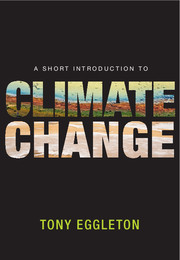
A Short Introduction to Climate Change

Tony Eggleton’s A Short Introduction to Climate Change is an excellent account of climate science for the general reader. The author is a retired geology professor from the Australian National University. Two widely read climate change deniers, Ian Plimer and Bob Carter, are also retired Australian geology professors, but Eggleton is not of their ilk. He comes at the subject from a concern about climate change and a wish to explain to readers who are uncertain about the topic why there is reason for concern.

The book is grounded in the careful science which has contributed to our understanding of the danger in which we now stand. Eggleton has not worked in the field of climate, but recognises the authenticity of the findings of climatologists. His opening chapter, The Spirit of Enquiry, offers a clear account of the process by which science across all its fields advances. He highlights the fact that most climate science is done by groups, all of whom need to be confident of the reliability of their colleagues. He explains the rigorous process of peer reviewed papers and the comprehensive scrutiny from fellow scientists which follows their publication. He ponders the fact that some hypotheses are of the type that involves a choice between only two possibilities. If one is not true the other must be so. How will the theory of climate change caused by the burning of fossil fuels be viewed in 100 years from now? “Interpretations evolve, change and sometimes settle into accepted fact: the Sun is at the centre of the solar system, the continents have drifted and smoking does damage the lungs.”

Continue reading “A Short Introduction to Climate Change”
Prat watch #7: the unbearable rightness of being wrong

The carefully cultivated cocoon of ignorance over at New Zealand’s own tiny corner of the climate crank echo chamber has been glinting in the harsh light of reality in recent weeks, as a number of climate realists (that is, people who have a realistic appreciation of what climate science is all about, not cranks attempting to purloin that term) have taken to bringing uncomfortable facts to the commentary under Richard Treadgold‘s strange little posts. It’s been a most amusing sight, watching the blizzard of misdirection and misunderstanding attempting to counter persistent reality. But Treadgold, bless his possum-merino socks, is undaunted and recently addressed this year’s dramatic Arctic sea ice melt with the determined insouciance of one terminally disconnected from reality.

Why does everyone feel guilty about the disappearance of the Arctic ice? All it proves is a bit of warming; it most certainly does not prove a human cause for that warming.

As seasoned Treadgold watchers might expect, it gets worse…

Continue reading “Prat watch #7: the unbearable rightness of being wrong”