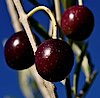
 An Italian olive grove and vineyard is on its way to becoming the world’s first carbon neutral farm (they claim). According to the BBC, the Castello Monte Vibiano Vecchio estate in Umbria is converting to electric vehicles (and biofuelled mini-tractors) and has installed a “solar filling station” designed by Austrian company Cellstrom, based on an array of solar panels feeding a “flow battery” – a new battery technology that allows greatly increased energy storage.
Depending on the amount of usage, the battery centre can store solar-sourced electricity for up to three days. They are working to extend that to 10 days and more, enabling the farm to continue operating through foggy days when the sun does not shine. It means that golf carts and electric bikes will become the key means of transport for farm workers and that they can all charge up at the battery centre.
Cellstrom estimates the farm can save 4,500 litres of petrol every year and reduce CO2 emissions by 10 tons.
According to Lorenzo Fasola Bologna, Monte Vibiano’s chief executive, it will take about five years to recoup the initial investment.
Flow batteries store negative and positive electrolyte solutions (based on vanadium salts) in tanks, and pump them through a reaction cell to charge and discharge. Energy storage is therefore linked to storage tank size, not the number of cells in the system. This makes them ideal as backup storage for wind and solar energy generation, making the energy available even when the sun’s not shining or the wind’s not blowing. New Scientist has a good backgrounder here (behind a paywall, sadly), and there’s also information on the Cellstrom site. Another company in the field is VRB Power Systems of Canada, who have been working with Australian-developed technology.
Back in Umbria, the Italians are covering all their carbon-neutral bases by planting 10,000 trees to mop up any excess emissions.
By the end of next year they hope to be the first farm, anywhere, to reduce their inherent net carbon footprint to zero – ie without using off-site offsetting projects. “It will be great,” says Lorenzo, “to pass on this great, green enterprise to my children and their children.”
Chez Hot Topic we have a vineyard and an olive grove, and I’m already planting trees to offset at least some of our emissions. I wonder if there’s a flow battery in an off-grid future down on our farm?
[Title reference]

 Forty leading Australian scientists have issued
  A few months ago, Rodney Hide decided that he and his party had little to lose and votes to gain by declaring themselves to be climate sceptics. I’ve roundly criticised this stance in