
Rod Oram’s column in yesterday’s Sunday Star Times so perfectly captures my own feelings on the government’s proposed watering down of the emissions trading scheme that I asked Rod if he would allow me to post it here as a guest blog. I’m glad to say he agreed…
To understand how the government is destroying the Emissions Trading Scheme, it’s important to remind ourselves why we need an ETS in the first place.
Governments representing a majority of people on the planet believe climate change is happening. So they’re taking steps to reduce their nation’s emissions of greenhouse gases. Some have entered into international commitments to do so. Many more will do so in coming years.
In 1997, New Zealand committed to cut its emissions during 2008-12 to its 1990 levels. However, they are currently 24% above. So the National-led government has upped the ante with two new targets: a 10-20% reduction below 1990 levels by 2020 and a 50% reduction by 2050.
To achieve them, we need to invest heavily in new energy and carbon efficient technology for electricity generation and transport and processes in industry and agriculture. And we need to maximise the potential for our forests to act as profitable carbon sinks.
To do that we need to:
Continue reading “National’s nine ways to stuff up: Oram on climate policy in NZ”
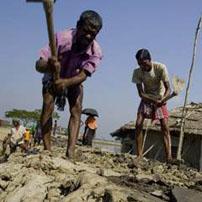 Climate change is already having disproportionate effects on the populations of many poor developing countries, a situation which will only get worse as the global temperature rises. Such countries do not have the resources to develop the adaptation measures they are going to need. Nicholas Stern devoted considerable attention to this question in
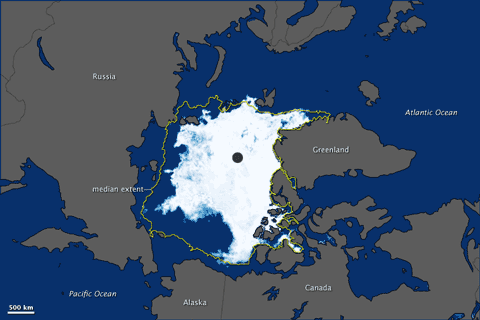
  The National Snow and Ice Data Centre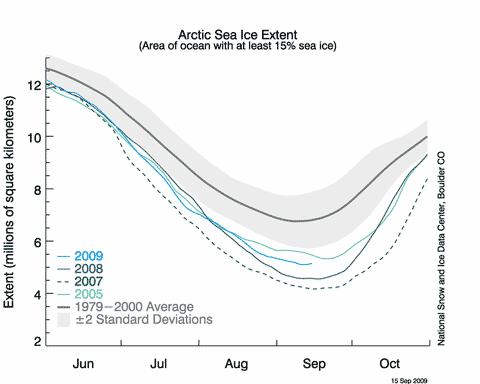
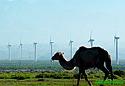 At least some Americans and Chinese are getting together to work on climate change. A team of researchers from Harvard University and Beijing’s Tsinghua University have been conducting a serious investigation into China’s wind power potential. Their work was the cover story for the Sep 11 issue of Science (sub required) and is reported in  the