
 The report released today by the Sustainability Council on the Bill to amend the Emissions Trading Scheme hits hard, and rightly so. It’s straightforward reading over 20 pages if you have the time, but I’ll pull out some of its main points here:
Originally the design of the ETS was to face polluters with the full cost of the nation’s Kyoto Protocol obligations. As legislated in 2008 it was watered down to go half way, but the proposed changes all but abandon the concept. The changes rank as one of the biggest economic reforms since GST was introduced 20 years ago. They promise in excess of $60 billion in new subsidy payments and a major reallocation of responsibility in terms of who pays the Kyoto liability. There has not been authoritative analysis of the costs to the nation in the public domain, yet Parliament has completed hearing submissions and there is less than a month before the government plans to pass the Bill.
The official accounts are giving a misleading impression of New Zealand’s emissions so far, by treating the 85 megatonnes (Mt) of credits generated by temporarily sinking carbon in new forests as if they carry no future liabilities when the forests are chopped down. That is how a 22% excess over 1990 emission levels has been turned into a 4% credit. This far understates the urgent need to reduce emissions. However, the Treasury recently advised that it will be necessary to recognise a “contingent liability” on the Government’s books to account for the forestry credits. This would show the cost to a future generation of not making today’s emitters pay today’s emissions bill. The Kyoto accounts need to be updated urgently to include this correction and inform consideration of the Bill before Parliament.
The emission reductions expected from the 2008 ETS legislation during the commitment period from 2008 to 2012 (CP1) were a mere 1.5% down from projected gross emissions under business as usual. The amended legislation reduces this to about 0.7% of gross emissions. We haven’t entered into any commitment for the period after 2012 but the report comments that any target in line with the commitments proposed by other developed nations will open up a huge gap to be filled with emission reductions and/or purchases of carbon credits.
Who pays? Here’s what the report says:
90% of the costs resulting from the ETS during CP1 are paid by those responsible for only 30% of total emissions. The costs, including higher charges for renewable electricity, dominantly fall on the small guys – households and small-medium businesses. This general picture changes only slowly after 2012 due to the very long phase out period for subsidies.
Households (including private road users) would bear half the total costs resulting from the proposed 2009 ETS (52%), while accounting for just a fifth of all emissions (19%).
Small-medium industry, commerce and services, and transport operators, account for 11% of emissions and face 38% of the costs under the 2009 ETS.
Combined, these sectors account for 30% of emissions but would carry 90% of the total costs.
On the other side of the divide:
Large industrials that account for 15% of emissions would pay just 1% of costs under the 2009 ETS.
Agriculture, with 49% of emissions would pay only 3% of the 2009 ETS costs.
The subsidies are large. If the nation as a whole must meet the charges for the 76 megatonne Kyoto liability, at the current price for credits of $30/t this would be a cost of about $2.3 billion. On this basis pastoral farmers would gain a $1.1 billion subsidy. Large Industrial Producers would gain a $488 million subsidy, much of it delivered as “compensation for higher electricity prices”, a form of corporate welfare the report notes is not available to other electricity users.
After accounting for all subsidies and compensation liabilities, the amended ETS could not reduce the Kyoto liability of 76 Mt by more than 16% (12/76 Mt) during the Kyoto period. 84% or more of the Kyoto liability would be transferred to future taxpayers unless current taxes are raised to fund this. On current plans, those in the 2020s will pay – making it a massive intergenerational wealth transfer.
The report asks when the Kyoto accounts will be changed to reflect the reality that in the long term the forestry sector is essentially a zero sum game. As recently as June Treasury estimated NZ being 9.6 Mt ahead of its Kyoto target and valued this “position” as a credit to the nation worth $207 million (based on a carbon price of NZ$21.61/t). The next update will need to change to reflect the real position. By July Treasury was offering new analysis to ministers, quoted in the report:
Treasury considers that it will be necessary to recognise a contingent liability on the Government’s books, associated with the forestry credits that will be used to meet the countries [sic] international commitments between 2008-2020. … At a price of $100/unit, this contingent liability could be as much as $18 billion for the period 2008-2020.
An appendix to the report carries an extended discussion on forestry and regrets the uncertainty and potential retrospective taxation facing the forestry sector which holds the real key to balancing the country’s future carbon budgets.
The report concludes with a consideration of the full eighty-year transition period from 2010 to 2089, and concludes that the proposed changes would deliver subsidies to agriculture and large industries with a nominal value of about $100 billion at $50/t, and $200 billion at $100/t. Two thirds of this would be paid to pastoral farmers and one third to major industries. If the subsidies are later wound back, it is likely these groups will attempt to secure compensation, unless the law clearly precludes this. In support of this possibility the report notes that:
some major emitters and Federated Farmers have already signalled that they view carbon charges as an attack on their claimed property rights – as though they had ownership to, or rights to perpetual use of, the atmosphere’s limited ability to absorb pollutants (by virtue of past use). They further claim that measures infringing their claimed rights are “takings” and require compensation.
It’s at the end of the appendix on forestry that the report delivers its overall verdict:
The ETS has not been designed to promote economically-efficient abatement. It has been designed to protect and promote the position of vested interests that are unwilling to shoulder the asset write-downs required to recognise a price on carbon, and to transfer the costs of this to future generations.
 The 10:10 emissions reduction campaign
 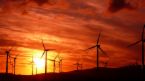 Good and not-so-good news on wind energy. First, a report that Spanish windfarms set a new record for wind-generated electricity over the weekend when for a few hours they provided 53% of the country’s total electricity needs. The winds were high and in previous years turbines would have been turned off because they were providing more electricity to the grid than needed. But now the spare electricity is exported or used by hydroelectric plants to pump water back into their dams — effectively storing the electricity for future use. The head of the Spanish Wind Energy Association recalled that just five years ago critics had claimed the grid could never cope with more than 14% of its supply from wind. He predicted more than doubling wind power in Spain over the next decade.Â
Good and not-so-good news on wind energy. First, a report that Spanish windfarms set a new record for wind-generated electricity over the weekend when for a few hours they provided 53% of the country’s total electricity needs. The winds were high and in previous years turbines would have been turned off because they were providing more electricity to the grid than needed. But now the spare electricity is exported or used by hydroelectric plants to pump water back into their dams — effectively storing the electricity for future use. The head of the Spanish Wind Energy Association recalled that just five years ago critics had claimed the grid could never cope with more than 14% of its supply from wind. He predicted more than doubling wind power in Spain over the next decade.  Oxfam’s messages on the battering effects of climate change on poorer countries continue with the publication this week of their report