Climate action: the moral dimension

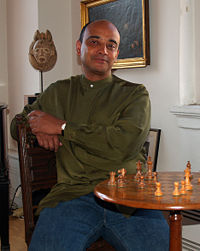
Joseph Romm sounded the theme of moral obligation in a post on Climate Progress this morning as he directed readers’ attention to an opinion piece in the Washington Post by Kwame Anthony Appiah, a philosophy professor at Princeton University. Appiah was reflecting on what future generations might condemn us for. He instances practices in the past which are now regarded with abhorrence. Men dutifully beating their wives and children, the execution of homosexuals, the practice of slavery, denying women the vote, lynch mobs, are among his examples. We look back and ask: What were people thinking?

What in our own time are our descendants likely to look back on and ask what we were thinking? Appiah identifies four contenders, some which go beyond the scope of Hot Topic’s focus, but before he does so he suggests three signs that a particular present practice may be destined for future condemnation. What especially attracted my attention was his use of the institution of slavery to illustrate the signs.

“First, people have already heard the arguments against the practice. The case against slavery didn’t emerge in a blinding moment of moral clarity, for instance; it had been around for centuries.

“Second, defenders of the custom tend not to offer moral counterarguments but instead invoke tradition, human nature or necessity. (As in, “We’ve always had slaves, and how could we grow cotton without them?”)

“And third, supporters engage in what one might call strategic ignorance, avoiding truths that might force them to face the evils in which they’re complicit. Those who ate the sugar or wore the cotton that the slaves grew simply didn’t think about what made those goods possible. That’s why abolitionists sought to direct attention toward the conditions of the Middle Passage, through detailed illustrations of slave ships and horrifying stories of the suffering below decks.”

I have often detected parallels between the struggle to get action on climate change and the past struggle to have slavery abolished, but have tended to draw back from pointing to them because the content of the struggles is different and the comparison may seem rather harsh on the opponents of climate change action. However the three signs Appiah nominates seem to me apposite to climate change inaction, and I hope I can point this out in sufficiently general terms to avoid appearing to accuse anyone of gross inhumanity.

First, we have been aware of the dangers of increasing greenhouse gas emissions, not for centuries admittedly, but for long enough for governments to be apprised of the information.  The UN Framework Convention on Climate Change has been in force since 1994 and enjoys near universal membership.

Second, many of the arguments against effective action invoke economic necessity ahead of environmental responsibility.  In the case of the slave trade and slavery the argument was strongly urged that economic ruin and decay would result. Somehow that trumped any humanitarian issues. In the case of climate change the issues are not presented so starkly. We are assured that the environmental questions are not overlooked, just pushed down the list. But the obstinate fact remains that the economy comes first, and moreover the economy as it is presently conducted and understood, not as it might become when greened.

Thirdly, strategic ignorance is deeply involved in the continuance of many of our present climate unfriendly activities. It relates to those in poorer countries already suffering the effects of climate change as well as to our grandchildren and their children who will be struggling with the massive problems we are bequeathing them.  If anyone tries to make a connect between the floods of Pakistan or the wildfires of Russia and our greenhouse gas emissions they are accused of falsely attributing natural phenomena to human causation. If they point to the storms ahead for our grandchildren they are dismissed as alarmist.

The Quakers had an honourable part to play in the abolition of the slave trade and of slavery. I was interested a year ago to read a book by a group of modern Quakers, academics and entrepreneurs, on the kind of changes needed to produce an ecologically sustainable and socially just economy. Right Relationship: Building a Whole Earth Economy was its title and I reviewed it on Celsias. Why I mention it here is because the authors deliberately place themselves in the tradition of the 18th century Quakers who engaged in the campaign to end British participation in the slave trade and abolish slavery throughout the British Empire. They see their book as a moral challenge to today’s growth-driven economy, and take inspiration from their Quaker predecessors who “eventually won the day and brought down the economic interests that argued for the ‘natural law’ of profit over all”.

To return to Appiah and the Washington Post. Unsurprisingly, the environment is one of the areas in which he foresees future generations asking what we were thinking.

“It’s not as though we’re unaware of what we’re doing to the planet: We know the harm done by deforestation, wetland destruction, pollution, overfishing, greenhouse gas emissions — the whole litany. Our descendants, who will inherit this devastated Earth, are unlikely to have the luxury of such recklessness. Chances are, they won’t be able to avert their eyes, even if they want to.”

Joe Romm’s complementary comment on that paragraph is just right:

“Also, unlike most other condemnable immoral activities in history, by the time this is obvious to all, there will be no undoing it by passing a law or establishing new social norms. And that’s why we all have a moral obligation to condemn what’s happening now in the strongest possible terms.”

It’s the moral dimension which makes it not unreasonable to see parallels between the obstinate refusal or delay to face up to the consequences of our climate inaction and the stubborn persistence of those in the 18th and 19th century who staved off action on slavery for so long.

Hide’s Aussie holiday: warming up for Carterist science’s new consensus

Rodney The Hood Hide is taking an Aussie break during the current Parliamentary recess — popping over to Melbourne and Sydney to act as warm-up man for Bob Carter at the launch of Carter’s magnum opus, Climate: The Counter-consensus – a Scientist Speaks. And it appears Hide is as happy to allow his hosts to misrepresent his qualifications as he is to mislead Parliament. The flier for the “Quadrant dinner” in Sydney says:

Rodney has a degree in environmental science, and is a powerful and well-informed public speaker.

He may be a powerful speaker, but Hide does not have a degree in environmental science, and he is woefully ill-informed on climate matters. Hide has Masters degrees in economics and resource management (Wikipedia, NZ Parliament bio), and as this comment at Hot Topic two years ago suggests, he could have completed the latter without encountering any science at all. But he’s good for a bit of rabble-rousing, and I expect his “ditch the ETS” rhetoric, liberally laced with attacks on NIWA’s stewardship of the NZ temperature record and chanted lines from the climate crank catechism will make the Quadrant dinner worth every cent of the A$74 being charged…

Meanwhile, Carterist science is finally getting the recognition it deserves, and the Heartland climate con is on its way to Sydney. Carter’s been appointed Chief Science Advisor to the International Climate Science Coalition.


Here’s Carter welcoming his appointment:

“Working with ICSC as Chief Science Advisor is a welcome opportunity to counter the widespread but erroneous belief that dangerous global warming is occurring, and that it has human causation”. Professor Carter continued:  “Science has yet to provide unambiguous evidence that problematic, or even measurable, human-caused global warming is occurring.

So, do we have ambiguous evidence of problems caused by that unmeasurable warming, or is Carter just repeating standard climate crank nonsense? I think we know the answer to that one…

In one sense, however, Carter is breaking new ground in crank thinking. The title of his book (Climate: The Counter-consensus – a Scientist Speaks) suggest that a “counter-consensus” is assembling. For there to be a counter-consensus there first has to be a consensus in mainstream climate science to counter, but for years sceptics, deniers and cranks have been claiming loudly that there is “no consensus“. Indeed, point 5 of the “core principles” of the organisation that has just appointed Carter its chief science advisor says:

Claims that ‘consensus’ exists among climate experts regarding the causes of the modest warming of the past century are contradicted by thousands of independent scientists.

But if there is no consensus, how can a counter-consensus assemble? Does Carter support the ICSC’s core principles? And what about that modest warming? According to Carter it’s not measurable, or not happening. At this point, dear reader, you will forgive me if I pour another glass of wine and ponder the many contradictory things you have to believe at the same time if you are to be a true climate septic…

Finally, the Heartland Institute is holding a one-day climate sceptic conference in Sydney next Friday, October 1st. Carter’s talking, of course, and Chris de Freitas is popping over to talk about Developments in Climate Science: Potential Drivers of Emissions Policy Beyond 2012 (at a guess, wishful thinking will be involved). Interestingly, the climate day follows on from two days of “workshops and brainstorming with free market advocates from the Pacific Rim” at the Pacific Rim Policy Exchange: chief sponsors Heartland, Americans for Tax Reform (a Koch & Scaife funded lobby group), the Property Rights Alliance (an ATR spin-off), and Australia’s free market Institute of Public Affairs. And NZ’s pulling its weight on the agenda, with the Business Roundtable’s Roger Kerr on a panel considering free trade, and (somewhat more surprising, to me at least) Kiwiblogger and National party stalwart David Farrar taking part in a “working lunch” on “getting the message out”. Interesting to see he’s happy to take the Heartland shilling…

A flea in the ear

denounce.gif

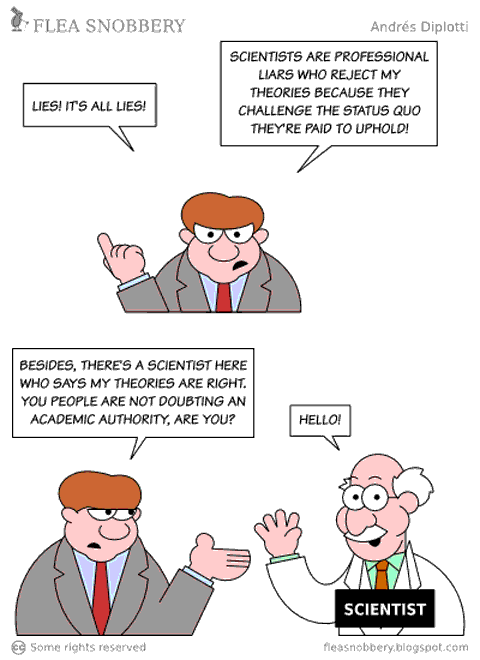
This perceptive little cartoon comes from Argentinian Andrés Diplotti’s Flea Snobbery blog (La Pulga Snob,  in the original Spanish), but perhaps most amusing is the way I found it… I noticed hits coming in from the comments under the Spanish version of the cartoon, and on investigation they turned out to be from a link (by Andrés) to my Don Easterbrook graph-fiddling exposé. I wonder if by chance there’s any resemblance between the elderly scientists? ;-)

Rees: scientists are citizens too

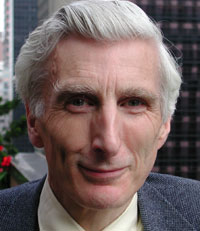
The BBC’s HARDtalk interviewer Stephen Sackur engaged this week with the eminently reasonable Martin Rees, President of the Royal Society. The interview covered a range of topics, and climate change was among them.  It could hardly not be, given the seriousness with which Rees regards it.  Sackur chose to introduce the subject by suggesting that some of the confusion over climate change among the general public may be “because some scientists can’t decide whether they’re scientists – completely impartial, independent, guided only by data – or whether they’re campaigners”. Who he had in mind he didn’t say, or more likely didn’t know. Perhaps he was suggesting Rees falls into that category.

If so, Rees didn’t rise to the bait but took the opportunity to affirm that there is wide acceptance in the scientific community that climate change is a matter for serious concern and that nothing that has happened in the last year weakens the evidence for this.


He acknowledged, however, that there is plenty of scope for debate as to what we should do about it because we have to decide what sacrifices we make now in order to guard against risks of uncertain magnitude in the future.

Incidentally, when Rees mentions the uncertainties of future predictions it should be noted that he means that it is uncertain whether the level of warming this century will be two degrees or as much as a catastrophic five or more degrees.

Confronted with Monbiot’s latest fear that climate enlightenment is dead Rees replied that he wouldn’t go as far as that but hoped rather that the debate could be reinvigorated. At this point he mentioned the article he and Anthony Giddens have just written and which has now been posted on Hot Topic. Sackur pounced, asking how that can be done by scientists who must follow the data rather than campaign.

Rees patiently agreed that it is important to separate out the science, which is the basis for the policy decisions, from the policy decisions themselves. As a scientist “I see it as my job to ensure that the science with all its uncertainties is made available to politicians.”

But then came the telling aspect of scientific responsibility: “But as citizens I think we want to make sure that issues which are longer term and important don’t always get trumped by the urgent and immediate.”

“Scientists need to get noisier do they?” asked Sackur.

“Not just scientists, but many people who are concerned about the long-term future of the environment and the climate need to urge our politicians to give some weight to long-term issues.”

Behind the politeness and carefulness of Rees’s statements there is clearly a refusal to accept the foolishly simplistic notion that climate scientists should be corralled in the domain of their science and should leave the policy makers of the world to work out for themselves whether they are going to respond to the science and how. The fact of the matter is that politicians need to be constantly challenged to face up to the seriousness of the issue. And scientists are citizens with the same interest as the rest of us in an appropriate level of political response to a grave threat.

The dichotomy which Sackur used to get the discussion under way is a false one. It’s also a very tired one. I was surprised that an accomplished interviewer such as Sackur wasn’t ready with an approach which showed a more alert awareness of why scientists like Rees are impelled to sound alarms. It seemed to fit with a critical Climate Progress post from Joseph Romm recently on what he discerns as a decline in the BBC’s coverage of climate change. In the post he  reports hearing from a former BBC producer colleague that internal editorial discussions now under way at the BBC on planning next year’s news agenda have explicitly parked climate change in the category “Done That Already, Nothing New to Say”!

Reinvigorating the debate, Rees’s preferred path, is not going to be made easy. But we can be thankful that he and other scientists are committed to the effort.

Wake the world

This is a guest post by Anthony Giddens and Martin Rees. Giddens is a former director of the London School of Economics, a fellow of King’s College, Cambridge and the author of The Politics of Climate Change. Rees is president of the Royal Society.

This year has seen outbreaks of extreme weather in many regions of the world. No one can say with certainty that events such as the flooding in Pakistan, the unprecedented weather episodes in some parts of the US, the heatwave and drought in Russia, or the floods and landslides in northern China were influenced by climate change. Yet they constitute a stark warning. Extreme weather events will grow in frequency and intensity as the world warms.

No binding agreements were reached at the meetings in Copenhagen last December. Leaked emails between scientists at the University of East Anglia, claimed by critics to show manipulation of data, received a great deal of attention – as did errors found in the volumes produced by the UN’s Intergovernmental Panel on Climate Change. Many newspapers, especially on the political right, have carried headlines that global warming has either stopped or is no longer a problem.

Continue reading “Wake the world”