

Simon Johnson guest posts on the mysterious number of emissions units allocated to emitters and a junk chart in the Ministry for the Environment’s Report on the New Zealand Emissions Trading Scheme.
You may recall that I previously commented on the low quality of data presentation in the Ministry for the Environment report Report on the New Zealand Emissions Trading Scheme.
My specific concern was that the report did not clearly indicate how many emission units (NZUs) had been allocated for free to emitters. Or, to say that again but slightly differently, what was the level of subsidy emitters had received in units?
Why am I going on about subsidies? Well, the point of an emissions trading scheme (ETS) is to place a carbon price on emissions. Free allocation of units to emitters unequivocally lessens the incentive effect of the carbon price. So free allocation is unequivocally a subsidy. The Australian Productivity Commission research report on carbon prices Carbon Emission Policies in Key Economies notes that all emissions policies involve either subsidies or prices and that imposing one measure implicitly imposes the other as well (page 49). Continue reading “The Minister’s chart-junk part 2”
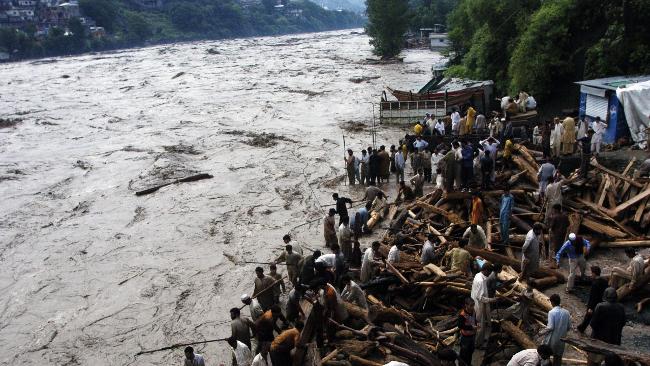 Al Gore didn’t hesitate to dwell on extreme weather events as evidence of the reality of climate change in his closing address for the 24-hour Climate Reality Project last week. There has certainly been no lack of them in the past year or so. Was he pushing the boundaries of the science? It wouldn’t worry me too much if he was because there’s plenty else in the scientific projections which is clearly under way, such as the melting polar ice or the acidification of the oceans. But Gore is a very intelligent and well-informed man and I don’t think he allowed himself to be carried away beyond the scientific mandate. Consider what is being said by some scientists right now.
  Academics
  Tim Naish’s lecture, of which we