
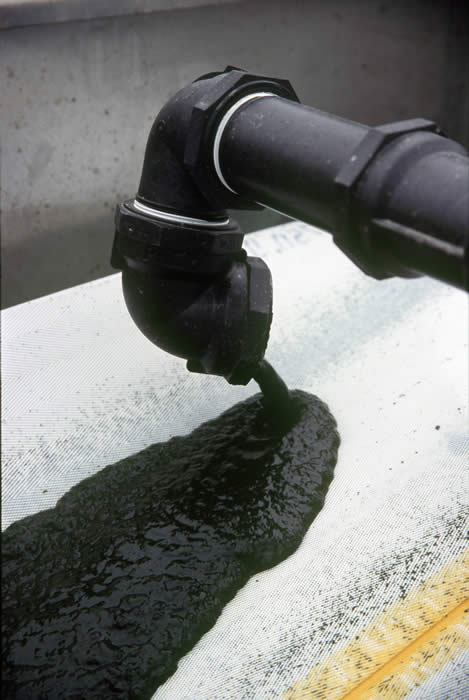
 Positive news this week from the Nelson-based algae company Aquaflow whose fortunes we have followed on Hot Topic over the past three years. I last reported on them in August 2011, when they had signed an agreement for joint testing and evaluation with Texas-based CRI Catalyst Company (CRI). Now they have announced a full technology cooperation agreement with that company which they believe leaves them poised to make refining next generation biofuels a commercial reality in New Zealand and in overseas projects within the two to three years it takes to build a refinery.
That’s big news if it comes to fruition. Director Nick Gerritsen says: “We should be able to produce renewable hydrocarbon fuel that is equivalent to fossil fuel at a cost that is highly competitive with the current per barrel price of crude oil.” He adds that New Zealand could turn its biomass into enough carbon-neutral biofuel to meet its renewable fuels requirement within ten years.
Continue reading “Aquaflow: next-gen biofuels a commercial reality”
 The latest
  I watched TVNZ’s Q+A on Sunday with dismay. Phil Heatley, the Minister of Energy and Resources, was
  Something stirred inside the carefully cultivated cocoon of ignorance at Richard Treadgold’s Climate “Conversation” blog, but I don’t think it was the butterfly of understanding preparing to inflate its wings. Something much more subterranean, I suspect. Needled by
  Tim Groser, the new Minister for Climate Change Issues, is adamant in his defence of the intention to further delay bringing the agricultural sector into the Emissions Trading Scheme beyond the current date of 2015 unless there are adequate abatement options open to them by then and unless other countries step up to the mark with mitigation measures. His remarks