
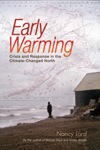
 Nancy Lord is a writer who has spent her adult life in Alaska. In her new book, Early Warming: Crisis and Response in the Climate-Changed North, she tells the stories of people and places and natural environments on whom climate change is impacting in her part of the world. She is climate science savvy, understanding why “in the north we live with disappearing sea ice, melting glaciers, thawing permafrost, drying wetlands, dying trees and changing landscapes, unusual animal sightings, and strange weather events”.
The science is woven into a narrative of her visits to people living in the midst of the change, some of them tracking the changes, some facing the challenge of re-shaping their lives to adapt to what is happening. Always the landscape figures strongly as the writer communicates a lively sense of place, whether in the wild or in the crumbling coastal villages where the people wonder what the uncertain future holds for their communities.
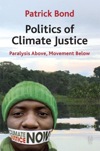 I warm to any writer who identifies the solution to climate change in the simple terms employed by

 In 1932 I was born into a world of 2 billion people. Nearly 80 years on there are 7 billion, more than three times as many. My own small country New Zealand has nearly tripled its population in that time. I confess to feeling anxiety about the capacity of the globe to sustain this level of population, let alone the further billions we can expect this century. Does that make me a populationist? That’s the term used by Ian Angus, editor of online journal